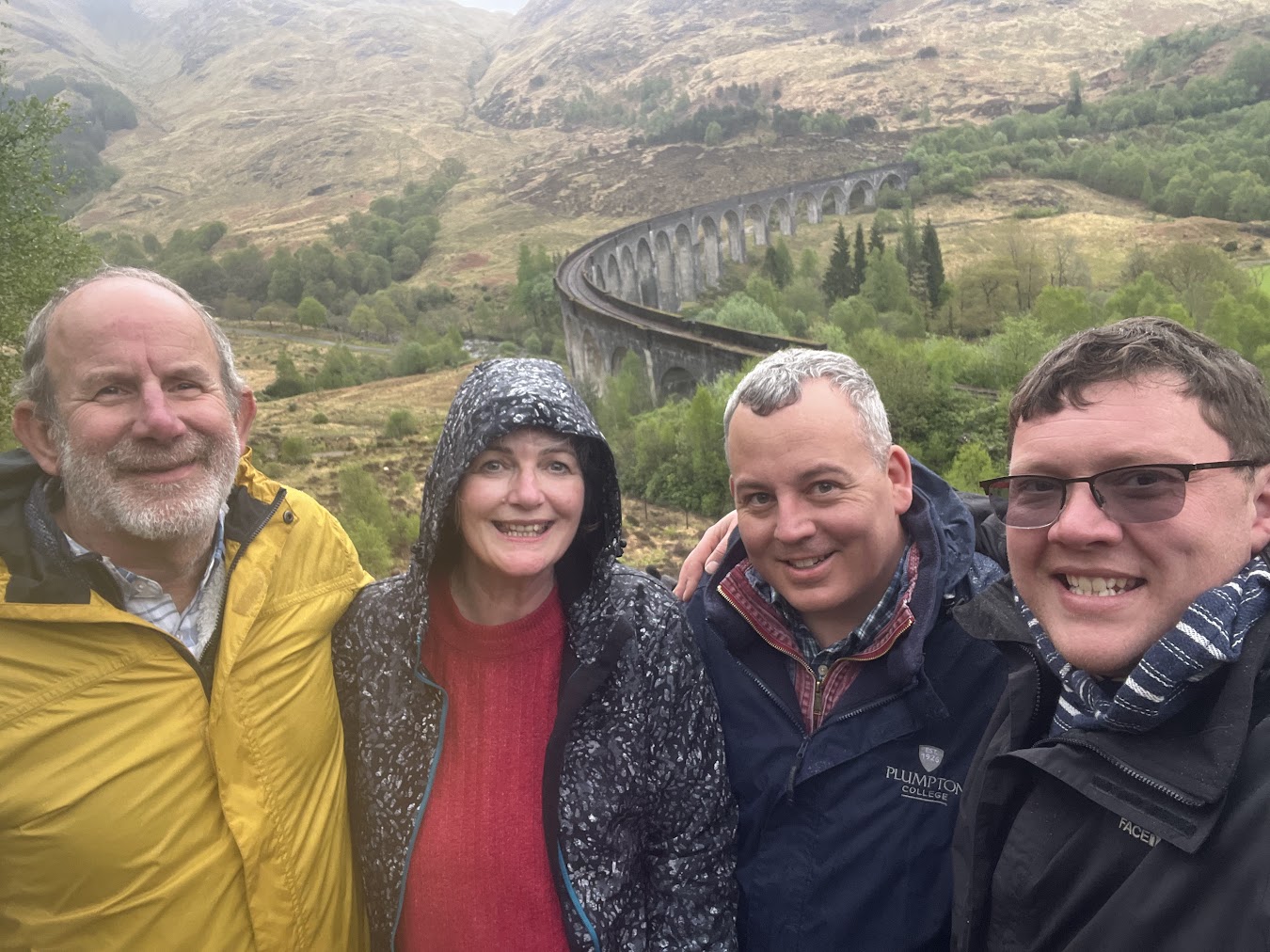
After returning to the Le Boat base at Laggan, we found ourselves with a few free hours and no immediate plans.
The rain made an afternoon aboard considerably less appealing, but having the car nearby gave us another option. We decided to leave the canal temporarily and drive to one of the Highlands’ most recognisable landmarks: Glenfinnan Viaduct.
It proved that even the wettest afternoon could become a memorable part of our Scottish adventure.
A journey through the rain
The drive from Laggan to Glenfinnan carried us through more spectacular Highland scenery.
Low clouds clung to the hills, rain swept across the landscape and distant mountains disappeared into the mist. It was not the bright Scottish panorama often seen on postcards, but the weather gave everything a wonderfully dramatic atmosphere.
As we approached Glenfinnan, the famous viaduct emerged against the rugged landscape. Its sweeping curve and enormous concrete arches looked even more impressive beneath the dark sky.
Glenfinnan Viaduct
Completed in 1901, Glenfinnan Viaduct forms part of the West Highland railway line between Fort William and Mallaig.
The structure crosses the valley on 21 arches and was built from mass concrete—an innovative construction method at the time. More than a century later, trains continue to cross it regularly.
The viaduct is now internationally famous for its appearances in the Harry Potter films, where it carries the Hogwarts Express towards the fictional school.
However, its importance extends far beyond the cinema. The railway helped connect remote Highland communities with the rest of Scotland, supporting travel, trade and the development of the region.
Seen in person, the viaduct felt less like a film location and more like an extraordinary piece of engineering shaped to fit the surrounding landscape.
Exploring Glenfinnan
Despite the persistent rain, we spent time exploring the area around the viaduct.
The mist hanging over the hills created a mysterious atmosphere, while the viaduct’s arches appeared and disappeared against the shifting clouds. Although the weather prevented the clear views we might have hoped for, it gave Glenfinnan a character entirely of its own.
We became thoroughly wet, but abandoning the visit would have meant missing one of the most memorable sights of the holiday.
Sometimes Scotland simply requires the correct clothing and a willingness to accept that remaining dry is no longer a realistic objective.
The Glenfinnan Monument
We also visited the nearby Glenfinnan Monument, standing at the head of Loch Shiel.
The monument commemorates the Jacobite Rising of 1745. It was here that Prince Charles Edward Stuart—better known as Bonnie Prince Charlie—raised his standard and gathered supporters at the beginning of his attempt to restore the Stuart monarchy.
The campaign initially achieved several dramatic victories before ending in defeat at the Battle of Culloden in April 1746.
Surrounded by mountains and overlooking Loch Shiel, the monument occupies a striking location. Even through the rain and mist, the landscape helped convey the scale and drama of the history associated with the site.
Returning to Laggan
After absorbing as much history, scenery and rainwater as we reasonably could, we returned to the car and began the journey back to Laggan.
Our visit had been an unplanned detour from the Caledonian Canal, but it added another dimension to the holiday. The waterways, railways and roads of the Highlands all tell parts of the same story: overcoming a vast and challenging landscape to connect communities.
Back aboard the boat, the rain continued to fall. We were grateful for shelter, dry clothes and the opportunity to reflect upon an afternoon well spent.
A memorable rainy-day detour
Glenfinnan showed us that poor weather did not have to mean a wasted day.
Instead of remaining aboard watching the rain, we had visited one of Scotland’s greatest railway structures, explored an important site in Jacobite history and experienced the Highlands at their most atmospheric.
The viaduct may have been familiar from films and photographs, but standing beneath it in the rain made it feel entirely different—larger, more impressive and rooted firmly in the landscape around it.
Tomorrow, we would return to our Caledonian Canal adventure. For now, we were content to settle aboard, listen to the rain and remember an unexpectedly rewarding afternoon at Glenfinnan.