Publié le

A Memorable Weekend Aboard Tilly Mint: Conquering Caen Hill

Some boating adventures begin with the gentle release of ropes and the reassuring rhythm of a narrowboat engine.

This one began with a breakdown on the M25.

We were joining our friends Neil and Naomi aboard Tilly Mint for a long-anticipated weekend on the Kennet and Avon Canal. The centrepiece would be Caen Hill—one of the most spectacular and demanding lock flights on Britain’s waterways.

First, however, we had to reach the boat.

Friday: The journey that refused to begin

We left home at 2pm, looking forward to an evening aboard Tilly Mint.

An hour later, our car broke down on the M25.

Three hours passed before the recovery service arrived and transported us to Basingstoke. We reached the rental-car office at around 7pm, only to face another two-hour wait for a replacement vehicle.

By the time we finally arrived at Tilly Mint, it was 10.30pm.

It was considerably later than planned, but Neil, Naomi and the boat were waiting. After the afternoon we had endured, simply stepping aboard felt like an achievement.

Saturday: Taking on Caen Hill

We began early on Saturday, setting off at 7am for the weekend’s principal challenge.

The full Caen Hill flight comprises 29 locks over approximately two miles, raising or lowering boats by 237 feet. Its most recognisable section is the central run of 16 locks, each accompanied by a large side pound.

Seen from a distance, the locks form an extraordinary piece of canal engineering.

Seen from the deck of a narrowboat, they also represent an enormous quantity of ropes, paddles and lock gates.

Working through the flight required concentration, coordination and considerable physical effort. There was little time to admire the view while moving between chambers, controlling the boat and preparing the next lock.

Nevertheless, the steady progress was immensely satisfying. Each opening gate took Tilly Mint another step through one of the greatest challenges on the Kennet and Avon Canal.

Reaching the end

We completed the day at around 5.40pm—more than ten hours after setting out.

We were tired, exhilarated and ready for a drink.

Fortunately, we found a wonderfully quirky pub where we could celebrate before continuing to an Italian restaurant for dinner and, inevitably, further refreshments.

After the motorway breakdown, recovery truck, rental-car delay and a full day working locks, it felt as though we had packed an entire holiday into little more than 24 hours.

Sunday: Lunch and the journey home

Sunday offered a much gentler conclusion.

We enjoyed a hearty lunch with Neil and Naomi before saying goodbye and beginning the journey home.

There were no major lock flights to tackle and, thankfully, no further roadside dramas.

A weekend to remember

The weekend had not begun as planned, but the difficult journey made finally reaching Tilly Mint feel even more rewarding.

Navigating Caen Hill was demanding, memorable and immensely satisfying—particularly when shared with good friends.

It was a short adventure containing a breakdown, a replacement car, 29 locks, excellent company and a well-earned celebration.

We would happily do most of it again.

Perhaps not the M25.

Publié le

A Tranquil Weekend on Tilly Mint—Cruising into Bath

Sometimes the shortest journeys provide exactly the escape we need.

For a peaceful weekend aboard Tilly Mint, we cruised along the Kennet and Avon Canal from Bathampton to Bath Top Lock. From there, the historic city centre—and an afternoon of relaxation at Thermae Bath Spa—was only a short walk away.

It was the perfect combination of slow travel, beautiful surroundings and time to unwind.

An evening cruise into Bath

We arrived at Bathampton on Friday evening and set off towards Bath as the sun began to sink across the canal.

Our journey was only a few miles, but there was no need to hurry. The pleasure came from settling aboard Tilly Mint, watching the scenery pass and feeling the working week gradually disappear behind us.

We moored near Bath Top Lock, approximately a mile from the city centre. It provided an ideal base from which to explore, combining a peaceful waterside setting with easy access to everything Bath had to offer.

Once Tilly Mint was safely secured, we walked into the city for dinner.

Bath’s Georgian architecture looked particularly beautiful in the evening light. We wandered through its historic streets before finding a restaurant and enjoying a relaxed meal together.

It was an excellent beginning to our weekend.

Exploring historic Bath

Saturday morning began with a leisurely walk around the city.

Rain was forecast, but the mild weather gave us time to explore before it arrived. Bath was already bustling with residents and visitors enjoying its shops, cafés and celebrated landmarks.

The city’s history is visible everywhere.

Its Roman Baths reflect its origins as a place of healing and relaxation, while Bath Abbey and the surrounding Georgian streets reveal later chapters in its remarkable development.

We explored at an unhurried pace, stopping at local shops and cafés before making our way towards the main event of the day.

Returning to Thermae Bath Spa

This was our third visit to Thermae Bath Spa, and it remained one of the highlights of spending time in the city.

The spa uses Bath’s naturally warm, mineral-rich waters, continuing a tradition that has attracted visitors for almost two thousand years.

Adam treated himself to a rejuvenating massage while Chris relaxed in the rooftop pool. Floating in warm water while looking across Bath’s historic rooftops provided a wonderful contrast to life aboard the boat.

The weather may have threatened rain, but that hardly mattered from the comfort of the pool.

After a few deeply relaxing hours, we emerged refreshed and ready to return to Tilly Mint.

Cruising back to Bathampton

Later that afternoon, we retraced our route along the Kennet and Avon Canal towards Bathampton.

Leaving the energy of the city behind, the gentle pace of the boat restored the tranquillity with which our weekend had begun.

This is one of the pleasures of visiting somewhere by narrowboat. A city break and a peaceful countryside escape do not need to be separate holidays—the canal connects the two.

By evening, we were back near Bathampton and ready for dinner at a cosy canalside pub.

Over classic pub food, we reflected upon a day of historic streets, warm spa waters and quiet cruising. Outside, the gentle movement of the canal provided the perfect backdrop.

One final morning aboard

Sunday arrived far too quickly.

After a relaxed breakfast aboard Tilly Mint, it was time to pack our belongings and head home.

We had travelled only a modest distance, but the weekend felt like a genuine escape. There had been no demanding itinerary and no pressure to cover miles—just time to enjoy the canal, explore Bath and relax together.

The pleasure of slow travel

Our weekend demonstrated that a memorable boating adventure does not need to involve a long journey.

Bathampton and Bath are separated by only a short stretch of the Kennet and Avon Canal, yet the route offered everything we needed: beautiful scenery, historic surroundings, excellent food and complete relaxation.

Cruising into the city aboard Tilly Mint made the experience feel particularly special.

It was a reminder that some of the greatest pleasures of canal travel can be found only a few peaceful miles away.

Publié le

Returning to the Scene of the Crime: Tilly Mint Remains in Newbury

Six days after we nearly sank Tilly Mint while attempting to moor in Newbury, Chris and I returned to check on the boat—and decide whether it was safe to move her.

Our plan appeared straightforward: inspect the water levels and, if conditions had improved sufficiently, carefully take Tilly Mint back downstream.

Unfortunately, the Kennet & Avon Canal had other ideas.

Back to Newbury

The memory of our previous visit remained painfully fresh.

Strong flows had caught Tilly Mint as we attempted to moor, forcing her sideways and wedging her across the navigation. For 15 frightening minutes, we had struggled to regain control before five members of the public helped us bring her safely alongside the bank.

Leaving the boat in Newbury had been the only sensible option. Nevertheless, we remained concerned about her and hoped that a week of calmer conditions might allow us to move her somewhere safer.

As we travelled back to Newbury, we were cautiously optimistic.

That optimism did not last long.

The flooding had worsened

Rather than subsiding, the floodwaters had continued to rise.

The railway was disrupted by flooding, while replacement buses offered little assistance because several local roads were also affected. Simply reaching Newbury became considerably more difficult than expected.

It felt as though the entire transport network was delivering the same unmistakable message:

Do not move the boat.

When we finally reached the canal, the conditions confirmed it. Water levels remained dangerously high, the flow was powerful and the familiar waterway looked increasingly unpredictable.

Any hope of a gentle cruise back downstream quickly disappeared.

Assessing Tilly Mint

Our first priority was checking that Tilly Mint remained safe.

After the drama of the previous weekend, it was an enormous relief to find her still securely moored. We inspected the ropes, checked the boat and considered whether there was any safe way to move her.

There was not.

Attempting to set off would mean releasing Tilly Mint back into the same powerful flow that had overwhelmed us only days earlier—except conditions were now even worse.

Moving downstream might sound easier than travelling against the current, but strong water can carry a narrowboat far more quickly than expected. Bridges, bends, locks, weirs and moored boats leave very little margin for error once control is lost.

We had already received one warning. Ignoring the second would have been reckless.

The hardest decision was to do nothing

We had returned prepared to move the boat, but the responsible decision was to leave her exactly where she was.

It was disappointing. We wanted to take Tilly Mint somewhere safer and had hoped to spend the weekend aboard. After all the effort involved in reaching Newbury, turning around without cruising felt frustrating.

However, boating safely sometimes means accepting that the conditions—not the crew—will determine the plan.

No journey was worth risking the boat, ourselves or anyone who might once again have to come to our assistance.

We checked that Tilly Mint was as secure as possible, stepped back onto the towpath and left her to wait out the floods.

A lesson in patience

Canal boating is usually associated with freedom: releasing the ropes, choosing a direction and travelling at your own pace.

This experience reminded us that the waterways always retain the final say.

After prolonged rainfall, water levels and flows can change quickly. A stretch that normally appears calm can become hazardous, and confidence gained in ordinary conditions may offer little protection when nature behaves differently.

Knowing how to handle a boat is important. Knowing when not to move it can be even more important.

Waiting for calmer water

Our return to Newbury was not the adventure we had hoped for.

There was no cruise, no peaceful evening aboard and no satisfying moment when we finally carried Tilly Mint away from the scene of our narrow escape.

Instead, there was a careful inspection, a difficult decision and a journey home.

Yet doing nothing was unquestionably the right choice.

Tilly Mint would remain in Newbury until the floods subsided and the Kennet & Avon Canal became safe enough to navigate again. Our next adventure would simply have to wait.

Sometimes the most successful boating trip is the one during which the boat does not move at all.

Publié le

We Nearly Sank Tilly Mint: A Narrow Escape in Newbury

Our journey aboard Neil and Naomi’s narrowboat, Tilly Mint, from Hungerford to Newbury should have been a peaceful cruise along the Kennet & Avon Canal.

Instead, persistent rain, unusually strong flows and one frightening attempt to moor turned it into the closest we had ever come to losing control of the boat—and possibly sinking her.

Leaving Hungerford in difficult conditions

The weather had been poor, with recent heavy rainfall raising water levels and strengthening the flow along the canalised sections of the route.

We knew conditions were more challenging than usual, but the journey began without incident. Despite the drizzle, the Kennet & Avon remained beautiful: green countryside, trees leaning over the water and the familiar rhythm of locks carrying us towards Newbury.

The stronger flow demanded more concentration at bridges, bends and lock approaches, but we continued making steady progress.

As the day drew to a close, we began looking forward to securing Tilly Mint and settling down for the evening. We thought the most demanding part of the journey was behind us.

We were wrong.

The current takes control

As we attempted to moor in Newbury, the current caught Tilly Mint before we could bring her safely alongside the bank.

Within moments, the boat was being pushed sideways across the navigation. One end became trapped against the bank while the other was forced towards a moored boat on the opposite side.

We were wedged across the canal.

Normally, a narrowboat responds slowly but predictably. This time, the force of the moving water was greater than the control available from the engine and tiller. Every attempt to correct the boat’s position seemed to make another part of the situation worse.

The canal was no longer the calm, sheltered waterway we knew. It had taken control of the boat—and us.

Fifteen frightening minutes

For approximately 15 minutes, we struggled to free Tilly Mint.

The current continued pressing against the side of the hull, pinning the boat more firmly in place. The engine could provide power, but there was little room to manoeuvre and no safe angle from which to escape.

As the boat remained trapped awkwardly across the flow, the situation became genuinely frightening. A narrowboat caught against a strong current can begin to list, allowing water to reach openings that would ordinarily remain safely above the surface.

We became increasingly concerned that water might enter the boat. What had begun as a difficult mooring attempt now carried the very real possibility of serious damage—or worse.

Help arrives from the towpath

Thankfully, people nearby quickly recognised that we were in trouble.

Five members of the public came to help, taking hold of ropes and adding the strength we desperately needed from the bank. Their assistance gave us something the engine alone could not: the ability to control the boat from several directions at once.

Working together, we gradually changed Tilly Mint’s angle against the current. It was not a quick or graceful manoeuvre, but centimetre by centimetre the boat began to move.

Eventually, she came free.

With the helpers controlling the ropes from the towpath and those aboard managing the engine and tiller, we finally brought Tilly Mint safely alongside the bank.

The ropes were secured, the engine was stopped and, for the first time in what felt considerably longer than 15 minutes, we could breathe properly.

The kindness of strangers

Our overwhelming feeling was relief—but also gratitude.

The five people who stopped to help had no obligation to become involved. They saw a boat and its crew in difficulty and responded immediately.

Without them, freeing Tilly Mint against the force of the water would have been considerably harder and the outcome could have been very different.

Their kindness transformed a frightening situation into a powerful reminder of the community surrounding Britain’s waterways. When something goes wrong, assistance often comes from people who were strangers only moments earlier.

Respecting the water

The experience changed how we thought about boating in poor conditions.

Canals can appear gentle and predictable, particularly during calm weather. However, many sections interact with rivers, weirs, sluices and changing water levels. After prolonged rainfall, familiar stretches can behave very differently.

A heavy narrowboat may feel reassuringly solid, but it remains vulnerable when caught broadside by moving water. Once the flow takes control, the weight and momentum of the boat can make recovery extremely difficult.

Conditions must always be treated with respect, particularly when approaching locks, bridges, bends and moorings where space is limited.

Lessons from a narrow escape

Once Tilly Mint was safely secured, we could begin reflecting upon what had happened.

The experience reinforced several important lessons:

  • Check water conditions and warnings before setting out.
  • Allow considerably more room and time when manoeuvring in a strong flow.
  • Prepare ropes early and agree clearly who will do what.
  • Avoid becoming trapped broadside to moving water.
  • Never hesitate to accept—or call for—help.
  • If conditions feel unsafe, stopping early is better than pressing ahead.

Most importantly, never underestimate the power of water simply because it happens to be flowing through a canal.

An adventure we will never forget

Our cruise from Hungerford to Newbury became one of the most dramatic journeys we had experienced aboard Tilly Mint.

There was no triumphant arrival or elegant mooring—just an exhausted crew, a securely tied boat and enormous relief that everyone was safe.

It may become a story we can laugh about with the benefit of hindsight, but we will never forget the fear of being pinned across the canal or the sight of strangers rushing forward to help us.

Canal boating brings freedom, tranquillity and wonderful adventures. Occasionally, it also provides a sharp reminder that the waterways deserve our complete respect.

That day, teamwork and the kindness of five strangers prevented our narrow escape from becoming something much more serious.

Publié le

From Hungerford to Crofton aboard Tilly Mint

Two days after exploring the remarkable Crofton Beam Engines, we returned to the Kennet & Avon Canal aboard Tilly Mint to enjoy the journey through the landscape that those engines have helped sustain for more than two centuries.

Beginning in Hungerford, our route carried us through the peaceful countryside of the North Wessex Downs towards Crofton—a journey combining narrowboat life, beautiful scenery and some extraordinary waterways heritage.

Beginning in Hungerford

Our day began in the historic market town of Hungerford.

Known for its antiques shops and ancient Hocktide traditions, the town is surrounded by some of southern England’s most attractive countryside. The Kennet & Avon Canal passes quietly through it, offering a particularly inviting starting point for a journey by boat.

Once aboard Tilly Mint, we prepared to cast off and leave the town behind. Ropes were released, the engine settled into its familiar rhythm and we returned to the wonderfully unhurried pace of canal travel.

Into the North Wessex Downs

Beyond Hungerford, the canal enters a tranquil rural landscape within the North Wessex Downs.

Trees and hedgerows lined the water while open fields stretched towards the surrounding hills. Sheep grazed beyond the towpath, birds moved between the branches and the occasional waterside cottage appeared through the greenery.

From the stern of Tilly Mint, the landscape unfolded gradually. There was time to notice reflections moving across the water, listen to birdsong and enjoy the small details that would be missed when travelling by road.

The gentle sound of the boat moving through the water provided the soundtrack to our journey.

Life at narrowboat pace

A day aboard Tilly Mint was never simply about reaching our destination.

Canal travel creates its own rhythm. Locks and bridges divide the journey into a succession of small tasks, while stretches of open water provide time to relax, talk and enjoy the surroundings.

There is always something requiring attention: the position of the boat, an approaching bridge, activity at the next lock or wildlife deciding that the centre of the canal is the only reasonable place to be.

Yet none of it feels hurried. Progress is measured in miles rather than minutes, and the journey becomes every bit as important as the destination.

Approaching Crofton

As we continued towards Crofton, the engineering behind the canal became increasingly apparent.

The Kennet & Avon must climb to its summit before descending again towards Wiltshire and the Avon Valley. Maintaining sufficient water at this highest section was one of the greatest challenges faced by the canal’s original engineers.

Every boat passing through a lock carries water downhill. Without a reliable means of replacing it, the summit pound would gradually become unnavigable.

The solution was Crofton Pumping Station, built between 1807 and 1809 to raise water from the springs and reservoir below into the canal above.

Seeing Crofton from the water

Approaching Crofton aboard Tilly Mint gave us a different perspective from our earlier visit on foot.

The tall chimney and historic engine house rise beside the canal, immediately distinguishing the site from the surrounding countryside. It is an impressive reminder that even the most peaceful waterways depend upon substantial infrastructure.

Inside the Grade I-listed pumping station are two working steam-powered beam engines dating from 1812 and 1846. The older Boulton & Watt engine is celebrated as the world’s oldest working beam engine remaining in its original location and capable of performing its original purpose.

On selected steaming days, the engines still lift water into the summit pound—living machinery continuing the work for which it was created more than two centuries ago. Crofton Beam Engines

Engineering brought to life

Having recently explored the engine house, we could now connect the machinery inside with the waterway outside.

The great beams, pistons and pumps were no longer isolated museum exhibits. They formed part of the landscape through which Tilly Mint was travelling and helped explain how boats could continue navigating this elevated section of canal.

That connection made Crofton particularly memorable. The engines are magnificent examples of Industrial Revolution engineering, but their real significance becomes clearest when viewed alongside the canal they were built to serve.

Watching the water beside our boat, it was remarkable to consider the effort required to maintain something that appeared so calm and natural.

A pause beside the canal

Crofton provided an ideal place to pause and enjoy the surroundings.

The grounds overlook the canal and nearby railway, with the Wiltshire countryside extending beyond. It is a landscape shaped by several generations of transport history: canal boats moving at walking pace, trains passing nearby and historic steam engines standing between them.

After exploring, there was time to relax and reflect on the journey before returning to Tilly Mint.

A picnic beside the canal is one of boating’s simplest pleasures. Food somehow tastes better after a morning on the water, particularly when accompanied by attractive views and nowhere urgent to be.

Heritage that remains alive

The Kennet & Avon Canal has survived because generations of volunteers and campaigners refused to allow it to disappear.

The same spirit is evident at Crofton, where volunteers maintain the buildings, boilers and engines, operate the machinery and share its history with visitors.

Without their skill and commitment, the pumping station might have become a static monument—or been lost entirely. Instead, it remains connected to the working canal and continues to demonstrate the ingenuity of its original designers.

The Canal & River Trust describes the 1812 and 1846 engines as being among the world’s oldest working steam beam engines. Seeing their setting from the canal reinforced just how exceptional their survival is.

A journey through two landscapes

Our cruise from Hungerford to Crofton brought together two contrasting elements of the inland waterways.

There was the natural beauty of the North Wessex Downs: green fields, mature trees, wildlife and tranquil water. Alongside it stood the engineered landscape of locks, reservoirs, channels and pumping machinery that makes navigation possible.

Neither exists independently of the other. The apparent tranquillity of the canal is sustained by centuries of engineering, continual maintenance and the efforts of those who care for it today.

Travelling aboard Tilly Mint allowed us to experience both.

More than a destination

Crofton Beam Engines may have been our destination, but the journey from Hungerford was an essential part of the experience.

At narrowboat pace, we watched the landscape change, worked through the canal’s structures and gained a deeper appreciation of the infrastructure supporting the water beneath us.

It was another memorable day aboard Tilly Mint—and a wonderful reminder that Britain’s canals are not merely routes through the countryside. They are living pieces of history, best understood by travelling slowly through them.
Publié le

Our First Trip on Tilly Mint – An Unforgettable Adventure

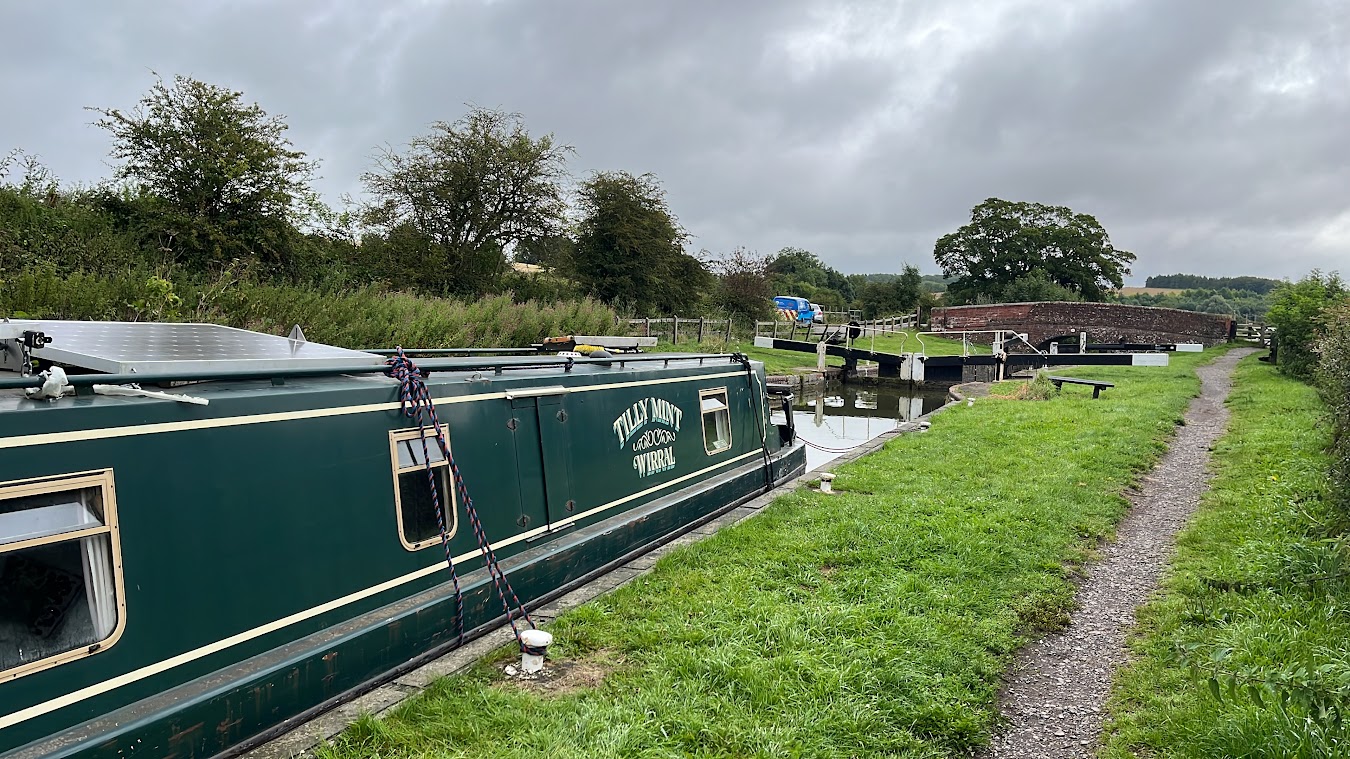
Long before Priscilla, Queen of the Canal became our dream, another narrowboat gave us our first real taste of life on the waterways.

Our first trip aboard Tilly Mint, Nail and Naomi’s new narrowboat, was intended to be a peaceful autumn escape along the Kennet and Avon Canal. For most of the day, that was exactly what it was. But as anyone familiar with boating will know, the canal does not always follow the plan.

Setting off

We joined Nail and Naomi aboard their beautiful new boat with considerable excitement. There is something particularly special about stepping onto a narrowboat for the first time: exploring every corner, learning where everything is kept and imagining all the journeys that lie ahead.

We set off along the Kennet and Avon Canal in high spirits. The autumn colours reflected beautifully on the water, while the steady rhythm of the engine provided a calming soundtrack to the journey.

Chris, Adam, Nail and Naomi spent the day catching up, enjoying the scenery and gradually settling into the unhurried pace of canal life. The waterway wound through the landscape beneath overhanging trees, past towpaths and moored boats, carrying us gently towards our planned evening stop.

It was peaceful, sociable and wonderfully relaxing—everything we had hoped our first trip aboard Tilly Mint would be.

As the light began to fade

Our plan was to moor near The Cunning Man, where the promise of a warm pub and a good evening meal awaited us.

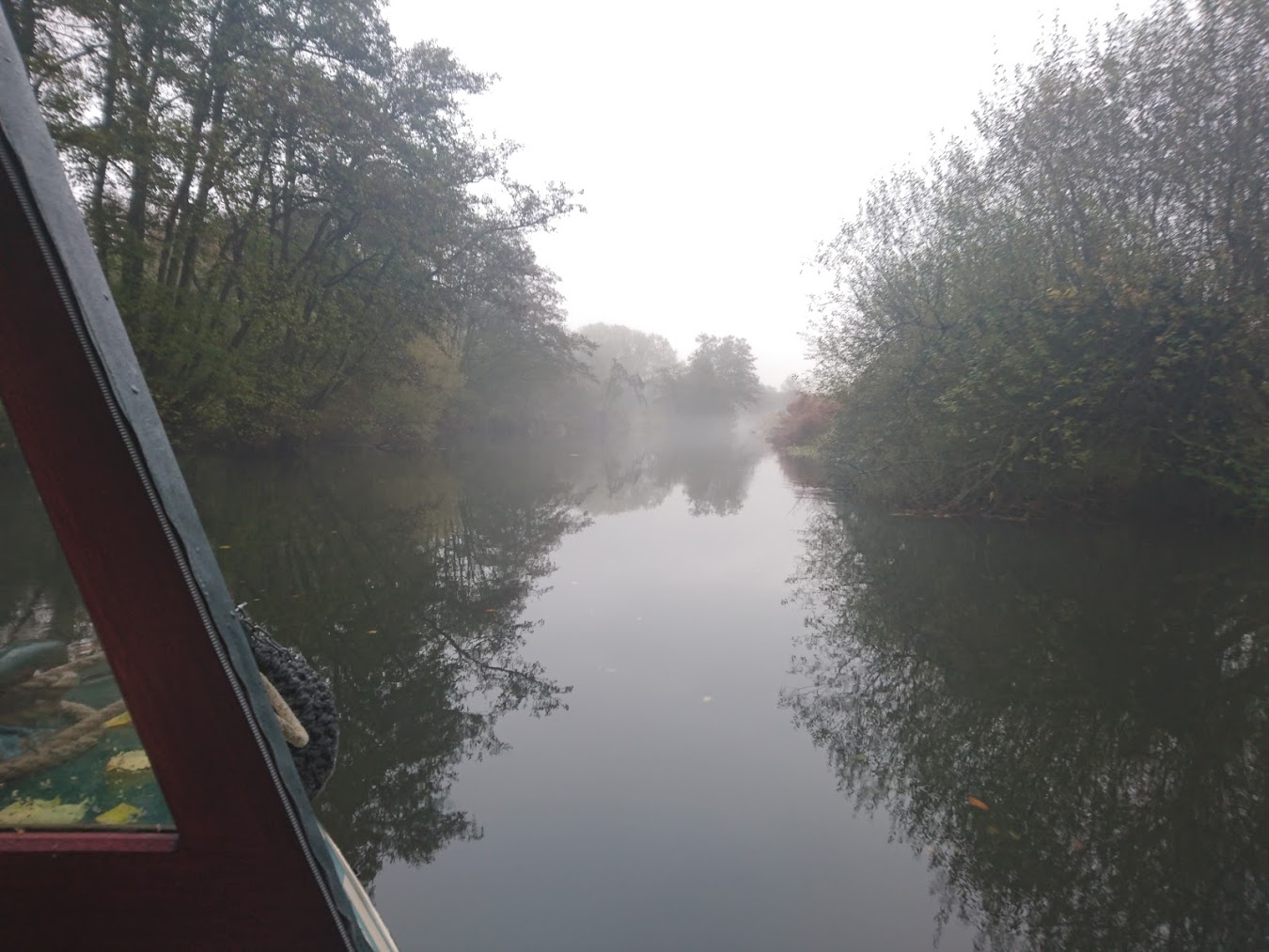
As daylight faded, however, a thick mist began rising from the water. At first, it added an atmospheric quality to the canal, softening the surrounding landscape and making the autumn evening feel almost magical.

Then it became thicker.

The canal banks began to disappear. Trees became shadowy outlines and moored boats emerged from the gloom with very little warning. Before long, visibility had fallen to around 50 yards—and our peaceful cruise had become a much more demanding exercise in navigation.

The canal ahead resembled a mysterious passage through the fog. Unfortunately, mysterious passages are rather less romantic when you are responsible for steering several tonnes of narrowboat through them.

All hands on deck

Adam took up position at the bow, peering through the mist for signs of the canal bank, mooring posts, overhanging branches and other boats.

His job was to relay clear and helpful directions to the helm.

That was the theory, at least.

“Left! Left!”

A pause followed as another indistinct shape emerged from the fog.

“No—right! Go right! HARD RIGHT!”

What had started as a serene autumn cruise had become an improvised team navigation exercise. Directions were shouted along the boat, hazards appeared with little warning and everyone tried to determine whether a dark shape ahead was a tree, a moored narrowboat or simply more mist.

There were tense moments, but there was also something exhilarating about it. We were working together, responding to the canal and discovering that boating could be unpredictable, challenging and enormous fun—all within the space of a few foggy minutes.

Reaching The Cunning Man

Eventually, the welcoming lights of our destination appeared through the mist.

After carefully bringing Tilly Mint alongside, we secured the ropes and switched off the engine. The sudden quiet was accompanied by a collective sense of relief: we had made it.

Stepping from the cold, damp towpath into the warmth of The Cunning Man felt particularly satisfying. The stress of the final approach quickly began to fade as we settled around the table and looked forward to dinner.

Food always seems to taste better after a day on the water, but that evening it felt especially well earned. Over drinks and hearty pub fare, we replayed the journey and laughed about Adam’s increasingly urgent directions from the bow.

What had felt tense in the mist had already become a story—and one we knew would be told again.

The beginning of something special

Our first journey aboard Tilly Mint gave us far more than a pleasant weekend away. It offered an early glimpse of everything we would come to love about narrowboating: the slower pace, the changing landscape, the companionship and the unexpected moments that turn an ordinary journey into an adventure.

The mist had made the final stretch difficult, but it had also made the experience unforgettable. It reminded us that the best boating memories are not always created when everything goes perfectly. Often, they emerge from the diversions, surprises and moments of mild chaos along the way.

Looking back, that foggy evening feels like an important early chapter in our waterways story. It strengthened friendships, introduced us to the realities of life aboard a narrowboat and left us eager to return.

Here’s to many more adventures aboard Tilly Mint—although, next time, perhaps with a little less mist and slightly more consistent directions from the bow.