Publié le

From Tranquil Waters to Glasgow’s Bustling Streets

After our first evening aboard Green Sandpiper at Falkirk, it was finally time to begin our Scottish canal journey.

Chris, Dan, Jeff and I cast off and headed west along the Forth & Clyde Canal towards Port Dundas in Glasgow. Ahead of us lay a day of peaceful cruising through the Scottish countryside, followed by an evening exploring the energy, flavours and nightlife of the city.

Leaving Falkirk behind

We set off from Falkirk with the excitement that accompanies the first proper day of any boating holiday.

The Falkirk Wheel and the anticipation of the previous evening were now behind us. Green Sandpiper was unpacked, the crew had settled aboard and we were ready to discover the canal linking Falkirk with Glasgow.

The gentle sound of the engine and the water moving against the hull soon established the unhurried rhythm of the journey.

After two days spent travelling by car, it felt wonderful to be moving at narrowboat pace.

Cruising the Forth & Clyde Canal

The Forth & Clyde Canal stretches for approximately 35 miles between the River Forth and the River Clyde.

Completed in 1790, it once provided an important commercial route across central Scotland. Today, its restored waters offer a fascinating journey through countryside, towns and the increasingly urban landscape approaching Glasgow.

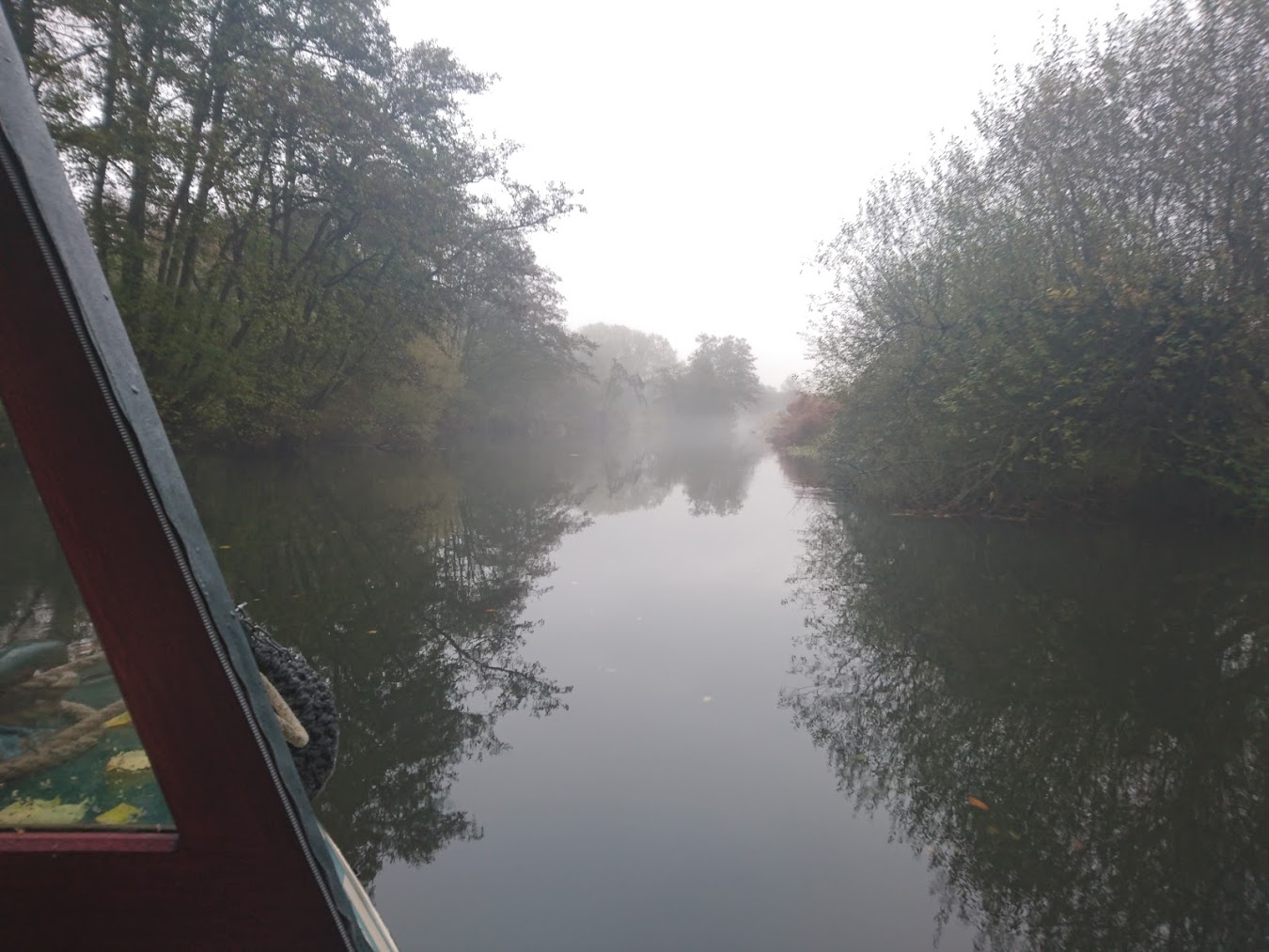
Our route carried us through lush greenery, with trees arching over parts of the canal and patches of sunlight moving across the water.

The peaceful surroundings encouraged us to slow down and appreciate the landscape properly. Wildlife appeared along the banks, the occasional boat passed us and everyday life seemed comfortably distant.

Locks, bridges and canal history

The journey towards Glasgow involved more than simply following the water.

Locks and bridges punctuated the route, each one introducing another small task for the crew. Ropes were handled, gates and paddles operated and Green Sandpiper was carefully guided from one level to the next.

Working through the canal’s structures gave us a much closer connection with the waterway and its history. These practical features are reminders that the canal was created as a working transport route rather than merely somewhere for modern leisure cruising.

They also ensured that nobody aboard could become too comfortable for long.

Countryside gives way to the city

As we drew closer to Glasgow, the character of the journey gradually changed.

The quiet greenery began to give way to roads, bridges, buildings and the unmistakable signs of a major city. The contrast was striking: we had travelled from peaceful countryside into the heart of urban Scotland without leaving the canal.

That transformation is one of the pleasures of travelling by narrowboat. Landscapes do not change abruptly as they might from a car or train. Instead, the countryside slowly becomes suburban and the suburbs gradually merge into the city.

Glasgow seemed to unfold around us.

Arriving at Port Dundas

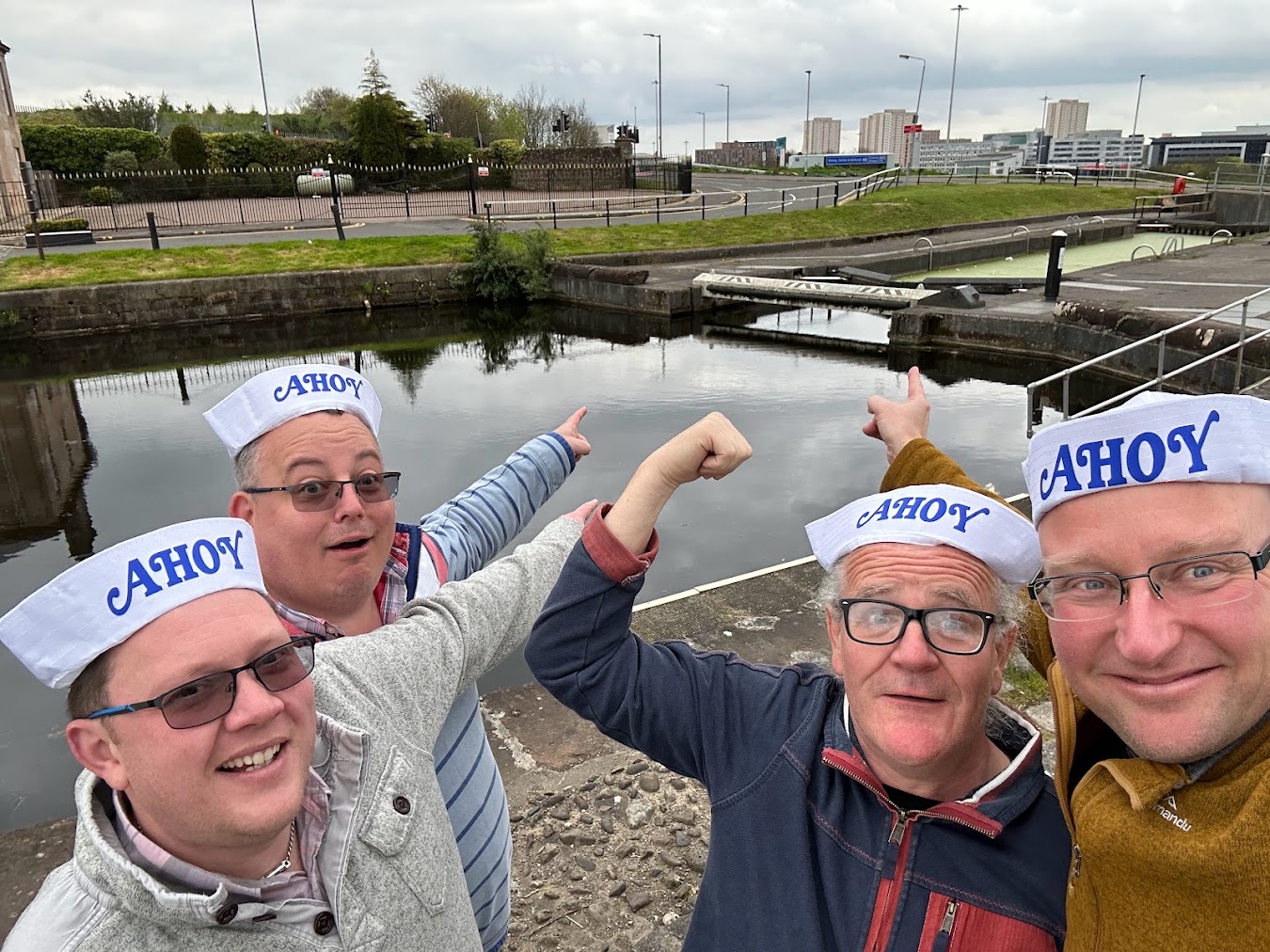
Our destination was Port Dundas, once an important industrial canal basin and the historic Glasgow terminus of the Forth & Clyde Canal.

Reaching it felt like a genuine achievement. We had travelled into Glasgow by boat, following a route shaped by more than two centuries of industrial and waterways history.

Once Green Sandpiper was safely moored, we exchanged the tranquillity of the canal for the bustle of the city streets.

The change of pace was immediate. After a day governed by locks, bridges and narrowboat speed, Glasgow offered traffic, crowds, restaurants and an entirely different kind of energy.

An evening in Glasgow

We set out to explore the city and enjoy the lively atmosphere.

Glasgow’s mixture of impressive architecture, busy streets and famously sociable character made it an exciting destination after our peaceful day aboard.

Dinner was at a highly regarded local Indian restaurant. Glasgow has an excellent reputation for Indian food, and our meal certainly lived up to expectations.

After eating extremely well—and perhaps enjoying the evening a little too enthusiastically—we decided that walking back to Port Dundas was no longer an attractive proposition.

An Uber returned us safely to the canal and our waiting boat.

Home to Green Sandpiper

Stepping back aboard felt like returning home.

Despite having known Green Sandpiper for only a short time, its compact and familiar interior already offered a comforting contrast to the busy city outside.

We settled down for a peaceful night, tired from the day’s cruising and our evening in Glasgow.

Tomorrow, we would retrace our route towards Falkirk. For now, the boat was secure, the crew was content and Port Dundas provided our unlikely city-centre home.

Two sides of Scotland in one day

Our journey from Falkirk to Glasgow revealed two very different sides of Scotland.

The day began with tranquil water, greenery and the measured rhythm of locks. It ended among the restaurants, streets and vibrant atmosphere of one of Britain’s great cities.

Travelling by canal allowed the transition between them to unfold slowly, turning the journey itself into an essential part of the experience.

From the peaceful waters of the Forth & Clyde Canal to dinner in the heart of Glasgow, it had been another memorable chapter in our Scottish adventure.

Next, we would turn Green Sandpiper around and begin our return journey to Falkirk.
Publié le

The Kelpies and the Beginning of Our Scottish Canal Adventure

After the long drive from London to Glasgow—and our cold, wet diversion to Hadrian’s Wall—the second stage of our Scottish adventure took us to Falkirk.

Chris, Dan, Jeff and I left the DoubleTree by Hilton after breakfast, excited to reach the canal and collect our boat. Before boarding, however, we had one important stop to make: The Kelpies.

Leaving Glasgow

Rested after a comfortable night in Glasgow, we repacked the car and prepared for the relatively short journey to Falkirk.

Chris resumed his role as designated driver, while Jeff once again took responsibility for the soundtrack. Dan and I contributed through encouragement, navigation and the occasional unnecessary observation from the passenger seats.

Unlike the previous day’s long journey north, Falkirk was now within easy reach. Our Scottish canal holiday was about to move from roads to waterways.

First, though, two enormous horses were waiting for us.

Our first sight of The Kelpies

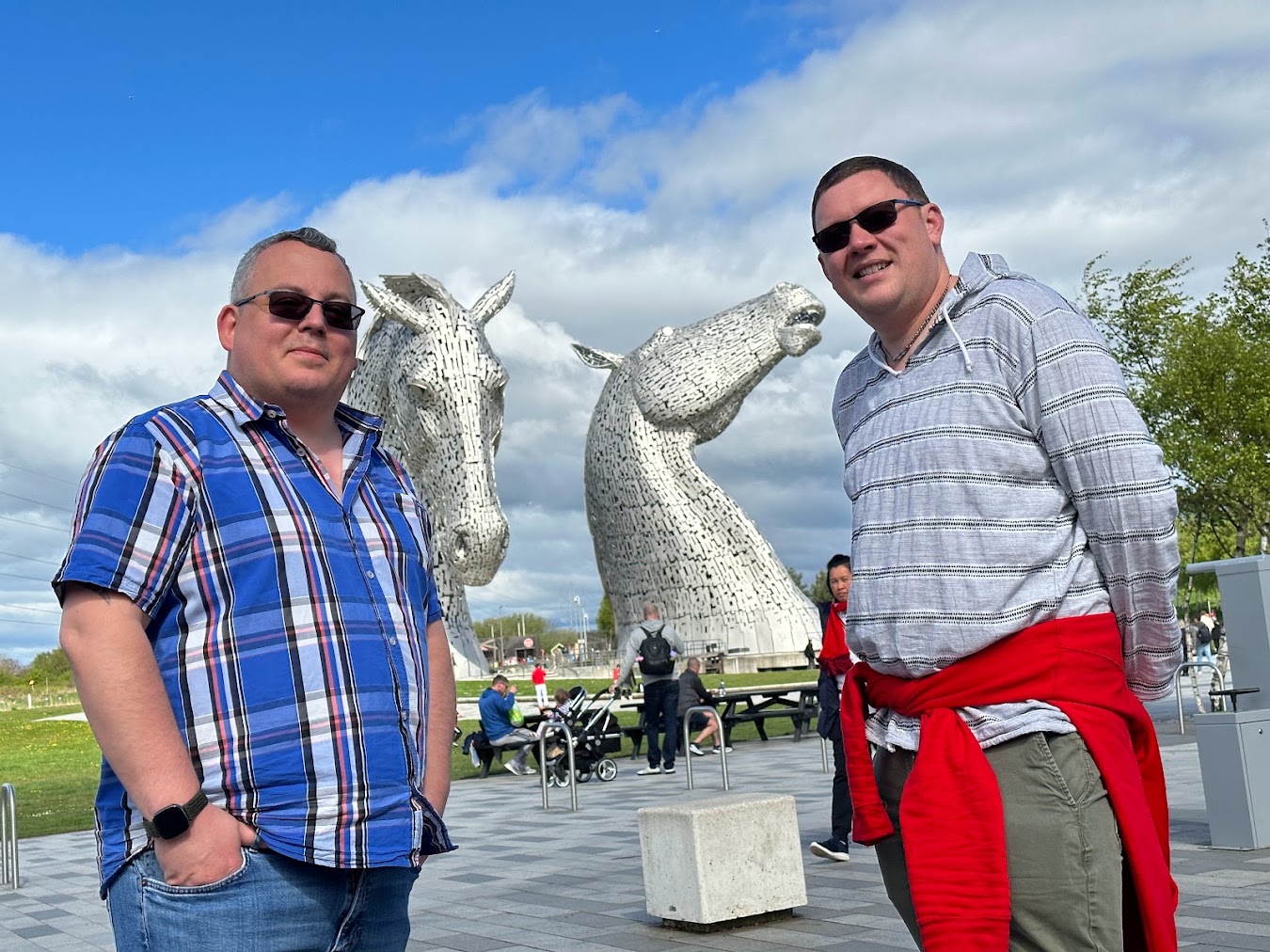
The Kelpies are difficult to appreciate fully until you stand beneath them.

Rising approximately 30 metres above the surrounding landscape, the two steel-clad horse heads dominate The Helix park near Falkirk. Their scale is extraordinary, but so too is the detail in their construction: thousands of individual steel plates combine to create expressions that appear to change as you move around them.

Designed by sculptor Andy Scott, The Kelpies celebrate the powerful working horses that once helped drive Scotland’s industries and pulled boats along its canals.

The sculptures therefore felt like an especially appropriate place to visit at the beginning of our boating holiday.

Giants beside the canal

From a distance, The Kelpies appear almost impossibly polished and precise. Up close, their size becomes overwhelming.

We walked around their bases, looking upwards as the light moved across the steel surfaces. Each change of position revealed a different shape, expression or reflection.

Jeff’s road-trip playlist had accompanied us into the car park, providing an unexpectedly dramatic soundtrack to our arrival. After many hours of music on the road, it seemed fitting that DJ Jeff’s contribution should continue right up to one of Scotland’s most impressive modern landmarks.

The Kelpies also stand beside a specially created extension of the Forth & Clyde Canal, forming a striking eastern gateway to the historic waterway.

A Silver Propeller destination

Our visit also carried particular significance because The Kelpies are one of the locations associated with the Inland Waterways Association’s Silver Propeller Challenge.

The challenge encourages boaters to explore the more distant and less frequently visited parts of Britain’s connected inland waterways. Reaching qualifying locations provides a compelling reason to venture beyond familiar cruising routes and experience places that might otherwise be overlooked.

Although we had arrived by car on this occasion, seeing The Kelpies strengthened our ambition to explore as much of the inland waterway network as possible.

It was another landmark added to our growing waterways story—and certainly one of the largest.

Onwards to Falkirk

After taking photographs and admiring the sculptures from every reasonable angle, it was time to continue towards Falkirk.

The Kelpies gradually disappeared behind us as we returned to the road. Leaving them felt slightly bittersweet, but our main adventure was now only minutes away.

As we approached our destination, another extraordinary structure appeared: the Falkirk Wheel.

The world’s only rotating boat lift reconnects the Forth & Clyde Canal with the Union Canal. Its sweeping arms raise and lower boats between the two waterways, replacing the historic flight of locks that once performed the same task.

Having seen photographs and videos of the Wheel, arriving beside it was an exciting moment. This was not simply another attraction on our itinerary—it was the starting point for our journey across Scotland’s central canal network.

Meeting Green Sandpiper

Waiting for us at Falkirk was our home for the next few days: Green Sandpiper.

We unloaded the car and transferred our luggage aboard, gradually transforming an unfamiliar hire boat into our temporary floating home.

There is always a particular excitement when stepping aboard at the beginning of a boating holiday. Cupboards must be explored, beds allocated and controls understood. Bags occupy every available surface until someone decides where everything should live.

Despite the inevitable unpacking chaos, Green Sandpiper quickly began to feel comfortable and welcoming.

Once we had settled in, we spent time exploring the boat and preparing for the journey ahead.

Our first evening aboard

Rather than rushing away from Falkirk, we remained aboard for the rest of the afternoon and evening.

It gave us time to relax after two days of travelling and to become familiar with the boat before setting off. Board games emerged, drinks were poured and laughter soon filled the cabin.

There was something deeply satisfying about finally being on the water. The long drive from London, our rain-soaked visit to Hadrian’s Wall and the morning’s encounter with The Kelpies had all brought us to this point.

Outside, the Falkirk Wheel provided a remarkable backdrop. Inside, Green Sandpiper already felt like home.

Tomorrow: towards Glasgow

The following morning, we would begin our cruise west towards Glasgow along the Forth & Clyde Canal.

The route promised historic locks, aqueducts, bridges and constantly changing scenery. Later in the holiday, the Falkirk Wheel would lift us onto the Union Canal for the journey east towards Edinburgh.

For now, however, there was no need to think too far ahead.

Our luggage was aboard, our crew was assembled and our Scottish canal adventure had officially begun.

The Kelpies had provided a spectacular introduction. The Falkirk Wheel was waiting. Tomorrow, we would finally cast off.

Publié le

Driving to Scotland via Hadrian’s Wall

Every narrowboat holiday begins with a journey to the water—and our adventure across Scotland’s canals began with a road trip of its own.

Chris, our friends Dan and Jeff, and I set off from our former home at the Royal Arsenal in London, bound for Glasgow. The following day, we would continue to Falkirk and board our narrowboat for a journey along the Forth & Clyde and Union canals to Edinburgh.

Before reaching Scotland, however, we had planned a suitably historic diversion: Hadrian’s Wall.

Leaving London behind

We loaded the luggage into the car early that morning, anticipating the long journey north.

Chris assumed responsibility for the driving, while the rest of us settled into our considerably less demanding roles as navigator, refreshment coordinator and provider of unsolicited driving advice.

Jeff took charge of the music. His playlist moved confidently between classic rock and contemporary pop, transforming the car into a mobile concert venue as we left London behind.

The familiar urban landscape gradually gave way to open countryside. Although many hours on the A1(M) separated us from Glasgow, the shared excitement about the holiday ahead made the journey feel like part of the adventure.

Heading north

Long-distance driving can easily become something to endure rather than enjoy, but travelling together made the miles pass surprisingly quickly.

The conversation moved between memories, music and increasingly enthusiastic speculation about the coming week. We imagined the canals, the Falkirk Wheel and the experience of travelling by narrowboat between two of Scotland’s great cities.

Chris remained dependable behind the wheel while the rest of us offered support by eating snacks and occasionally announcing information already displayed by the satnav.

As the landscape became increasingly dramatic, we left the main route and headed towards Hadrian’s Wall.

A cold welcome at Hadrian’s Wall

Built from AD 122 on the orders of Emperor Hadrian, the wall once extended for 73 miles across northern England. Nearly two millennia later, its surviving remains still follow the contours of the landscape in an extraordinary demonstration of Roman ambition and engineering.

Our arrival was accompanied by cold air, persistent rain and strong winds.

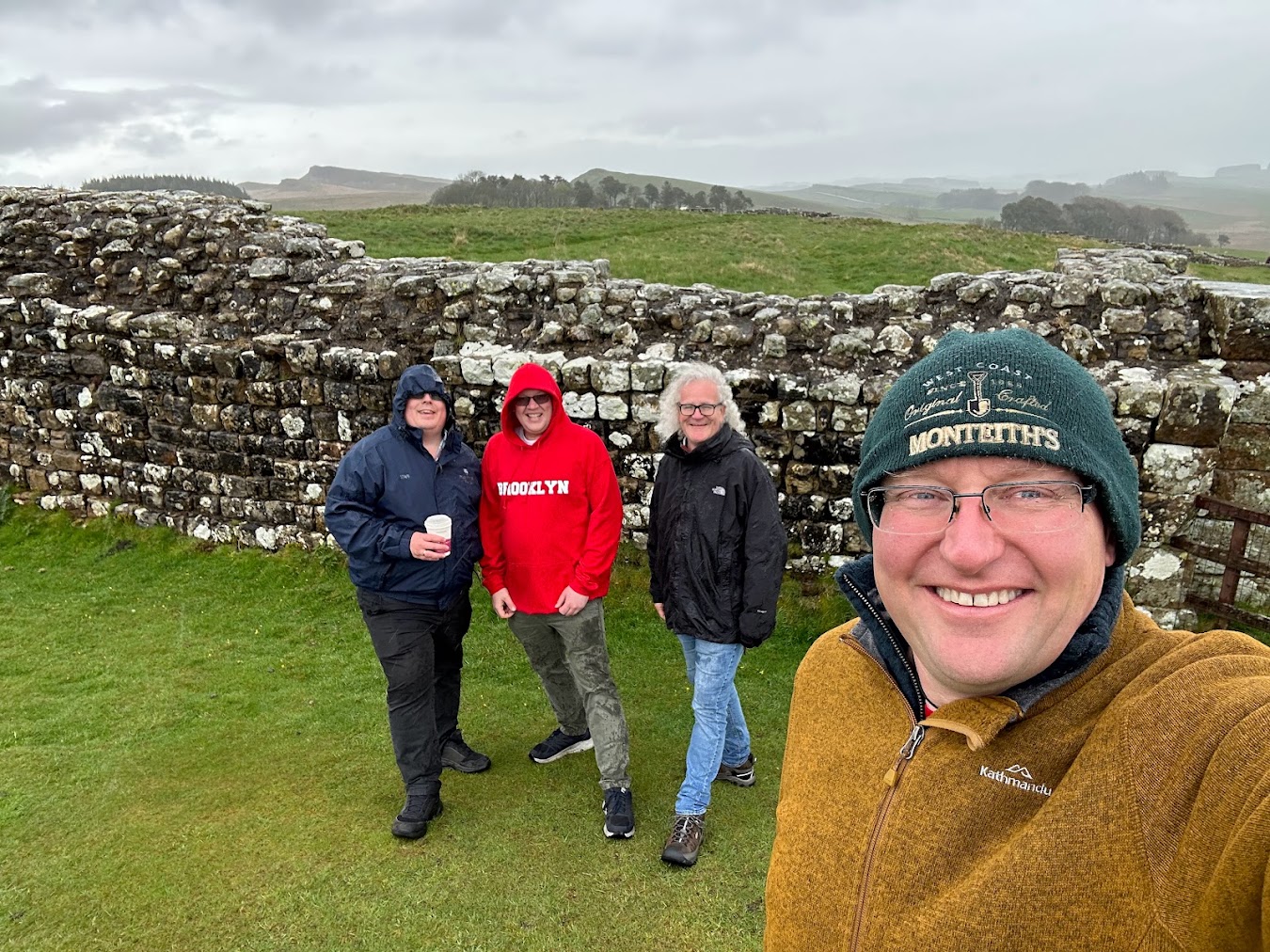
It was not ideal sightseeing weather, but the conditions gave the landscape a suitably rugged atmosphere. Wrapped in coats and layers, we stepped out to explore the remains and take in the views.

The wall crossed the countryside ahead of us, its weathered stonework surrounded by open fields and rolling hills. Even beneath grey skies, it was easy to appreciate the scale of the undertaking and the history embedded in the landscape.

Coffee with Neil and Naomi

Hadrian’s Wall also provided the meeting point for a brief reunion with our friends Neil and Naomi.

A warm coffee was particularly welcome after our encounter with the Cumbrian weather. We caught up, exchanged news and enjoyed the slightly improbable pleasure of meeting friends beside one of Britain’s most significant Roman landmarks during a journey to Scotland.

It was only a short stop, but it added another memorable moment to the day.

Eventually, we said goodbye, returned to the warmth of the car and resumed our journey north.

Crossing into Scotland

With Hadrian’s Wall behind us, the focus returned to reaching Glasgow.

The weather remained changeable as Chris guided us along the final stretch. Conversation became quieter, the playlist continued and the accumulated miles gradually began to make themselves felt.

Even so, crossing into Scotland brought a renewed sense of excitement. Our canal holiday was no longer an idea discussed in London; it was waiting for us just beyond Glasgow.

By the time the city appeared, we were ready for a proper meal, comfortable beds and a rest from the road.

An evening in Glasgow

Our overnight base was the DoubleTree by Hilton in Glasgow.

After the early start, many hours in the car and our wet visit to Hadrian’s Wall, the hotel offered exactly what we needed. We checked in, unloaded the luggage and finally allowed ourselves to relax.

Tomorrow would bring a very different form of transport.

We would travel to Falkirk, collect our narrowboat and begin exploring the remarkable waterways linking Glasgow and Edinburgh. The road journey would give way to locks, aqueducts and canal cruising—with the Falkirk Wheel waiting near the beginning of our route.

The adventure before the adventure

Our drive from London to Glasgow could have been treated simply as the practical journey required to reach the boat.

Instead, good company, Jeff’s music, dramatic scenery and a rain-soaked encounter with Hadrian’s Wall made it a memorable part of the holiday.

The day carried us from our former home at the Royal Arsenal to the edge of Scotland’s canal network, passing one of Britain’s most extraordinary ancient landmarks along the way.

By bedtime, we were tired but excited. The bags were packed, the journey north was complete and our Scottish waterways adventure was about to begin.

Next stop: Falkirk.

Publié le

Cruising the Grand Union Canal Through Harefield

There are few better places to spend a hot summer’s day than aboard a narrowboat.

With the sun shining and the countryside at its most colourful, our cruise aboard Tilly Mint through Harefield offered a wonderfully peaceful escape. Although we were still within Greater London, the wooded banks, open water and abundant wildlife made the city feel remarkably distant.

It was one of those simple days on the waterways when the journey itself was more than enough.

A glorious day for cruising

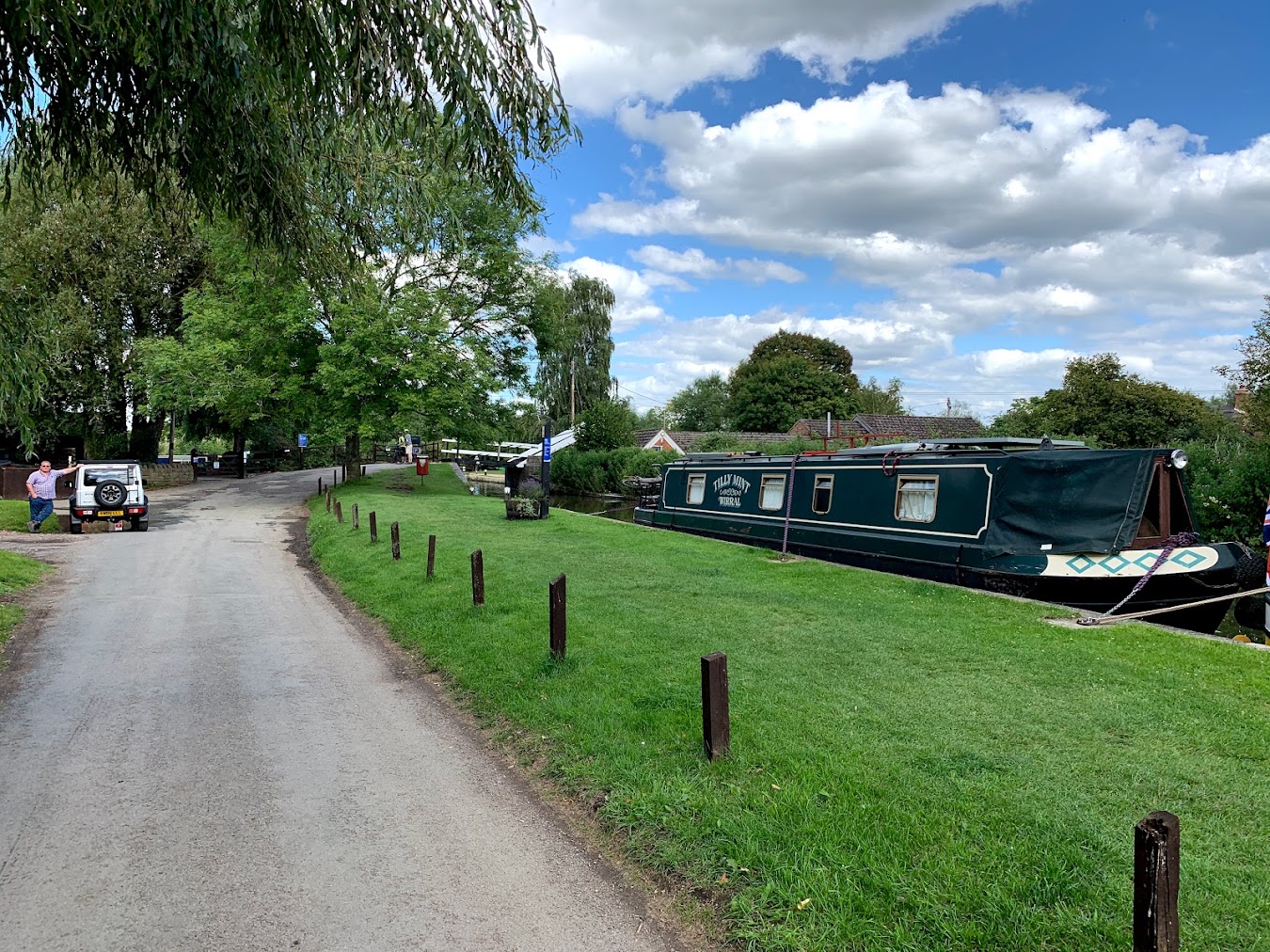
The morning was already warm when Chris and I prepared Tilly Mint and set off along the Grand Union Canal.

Under a clear blue sky, the water reflected the surrounding trees and passing boats. The steady rhythm of the engine and the gentle movement of the canal immediately encouraged us to slow down and enjoy the day.

There was no need to hurry. We had sunshine, beautiful surroundings and another stretch of historic waterway ahead of us.

Through Harefield

As we cruised through Harefield, the canal became increasingly rural.

Harefield lies within the London Borough of Hillingdon, but from the water it feels far removed from London. Woodland, lakes and stretches of open countryside surround the canal, creating a landscape that seems much farther from the capital than it really is.

The trees offered occasional relief from the heat, their branches casting broken shadows across the water. Elsewhere, the canal opened beneath the full summer sun, leaving whoever was at the tiller with very little opportunity to escape it.

Fortunately, travelling at narrowboat speed produces just enough breeze to maintain the illusion of air conditioning.

Life at the tiller

Adam took the tiller for part of the journey while Chris relaxed aboard and enjoyed the scenery.

On a calm day, steering a narrowboat can feel almost effortless. The boat responds slowly, the canal unfolds gently ahead and there is time to appreciate details that would disappear at any greater speed.

Even so, narrowboats have an impressive ability to drift towards an overhanging branch whenever the person steering becomes too distracted by the view.

We passed other boats along the way, exchanging the familiar waves and greetings that are such an enjoyable part of life on the waterways. Some crews appeared entirely relaxed; others had the unmistakable expression of people approaching a bridge hole with more confidence than accuracy.

A landscape shaped by water

The canal through Harefield forms part of a much broader waterside landscape.

Nearby lakes, many created through historic gravel extraction, now provide valuable habitats for birds and other wildlife. Together with the canal, River Colne and surrounding woodland, they give this part of West London an unexpectedly wild character.

Swans moved elegantly across the water, ducks gathered along the banks and birds called from the trees above us. Every so often, movement among the reeds drew our attention away from the canal ahead.

The wildlife appeared largely unconcerned by Tilly Mint—although ducks continued their traditional practice of waiting until the last possible moment before swimming directly across our path.

The pleasure of slowing down

Hot weather can make almost any activity feel like hard work, but canal cruising provides its own solution: travel slowly, find occasional shade and keep plenty of cold drinks within reach.

The heat encouraged us to take the day gently. We paused when we wanted, enjoyed the quieter stretches and allowed the canal to determine our pace.

That is one of the greatest pleasures of narrowboating. A relatively short journey can occupy an entire day, not because progress is difficult, but because there is no reason for it to be fast.

The waterway invites you to notice the reflections, wildlife, historic bridges and small details along the bank that would otherwise pass unseen.

Evening on the canal

As the afternoon softened into evening, the light became warmer and the canal increasingly peaceful.

The fierce heat began to ease, replaced by a gentler breeze. Shadows lengthened across the water and the passing landscape took on the golden colour that makes summer evenings aboard a narrowboat feel particularly special.

Once Tilly Mint was safely moored, we could sit back with a drink and watch the remaining daylight fade across the canal.

Nothing extraordinary needed to happen. After a day spent travelling through sunshine and greenery, simply being beside the water was enough.

A summer day to remember

Our cruise through Harefield captured everything we enjoy about Britain’s inland waterways.

It combined beautiful scenery, wildlife and the freedom to travel at an unhurried pace. Most surprisingly, it offered a genuine sense of countryside and tranquillity while remaining within the boundaries of Greater London.

Days like this remind us that a narrowboat journey does not need dramatic locks, long tunnels or mechanical mishaps to become memorable.

Sometimes all you need is Tilly Mint, a peaceful stretch of canal and rather more sunshine than the person standing at the tiller expected.

Publié le

Through the Tunnels from Tardebigge to Alvechurch

Some canal journeys are remembered for their locks, landscapes or waterside villages. This one was defined by the moment daylight disappeared and Tilly Mint carried us into the hidden darkness beneath the Worcestershire countryside.

Cruising from Tardebigge towards Alvechurch took us through two historic canal tunnels, separated by a peaceful stretch of the Worcester & Birmingham Canal. It was a relatively short journey, but one filled with atmosphere, impressive engineering and the unmistakable thrill of travelling underground by narrowboat.

Leaving Tardebigge

Our journey began at Tardebigge, best known for its remarkable flight of 30 locks—the longest continuous flight in Britain.

Having previously experienced the considerable physical effort required to navigate the flight, we were pleased that today’s adventure involved a level stretch of canal. There would be no paddles to raise, heavy gates to push or hurried walks between locks. Instead, two tunnels stood between us and Alvechurch.

With Tilly Mint prepared and the tunnel light switched on, we left the wharf and headed north.

The canal was beautifully calm. Trees crowded the banks, their branches forming a leafy canopy above the water, while the surrounding countryside felt quiet and remote. It was a wonderfully peaceful beginning, although the dark entrance of Tardebigge Tunnel was already waiting ahead.

Into Tardebigge Tunnel

At approximately 580 yards long, Tardebigge Tunnel is modest compared with some of Britain’s great canal tunnels—but its entrance still appeared suitably dramatic from the deck of a narrowboat.

As Tilly Mint passed through the portal, daylight rapidly faded behind us. The warmth of the September afternoon gave way to cool, damp air, and the sound of the engine became louder as it echoed from the brick-lined walls.

Chris took the tiller, keeping the boat aligned with the distant point of daylight ahead, while Adam watched the cabin roof and tunnel sides carefully.

Travelling through a canal tunnel requires a different kind of concentration. Without the usual landmarks along the bank, judging the boat’s position becomes more difficult. The tunnel light illuminates only a small area ahead, while every sound seems magnified in the confined space.

There was something both peaceful and slightly unnerving about it. Above us, everyday life continued entirely unaware that Tilly Mint was moving slowly through the hillside below.

Back into the daylight

The far portal gradually grew larger until we emerged into brilliant daylight.

After the darkness of the tunnel, even an ordinary stretch of canal felt unexpectedly vivid. The greens appeared brighter, the sky seemed wider and the fresh air was particularly welcome.

The canal continued north through a quiet, wooded landscape. With Tardebigge Tunnel behind us, we had time to relax and enjoy the open water before reaching the second underground passage of the day.

It was not long, however, before the trees closed in again and the entrance to Shortwood Tunnel appeared ahead.

Shortwood Tunnel

At approximately 613 yards, Shortwood is slightly longer than Tardebigge Tunnel.

Once again, the tunnel swallowed the boat and the outside world disappeared. Water dripped from the roof, shadows moved across the brickwork and the engine’s steady rhythm echoed around us.

Although this was our second tunnel of the journey, the experience had lost none of its atmosphere. Each tunnel has its own character, created by the shape of its passage, the condition of its brickwork and the particular way every engine note reverberates through it.

The temptation is to focus entirely on the darkness, but there is also much to admire. These passages were created with limited machinery more than two centuries ago, allowing boats to travel through the landscape rather than negotiate steep climbs around it.

They remain working pieces of transport history—still carrying narrowboats beneath the same hills today.

Emerging towards Alvechurch

When Tilly Mint emerged from Shortwood Tunnel, we left the darkness behind for the final time.

The remaining cruise towards Alvechurch was gentle and relaxed. The canal wound through attractive countryside, passing beneath bridges and between stretches of woodland as we approached the village.

Alvechurch is one of those places that feels naturally connected to its waterway. Its pleasant moorings and welcoming pubs make it a popular stopping point, while the railway provides an unexpectedly convenient connection for anyone exploring the canal.

We found a suitable mooring, secured Tilly Mint and stepped ashore, ready for a well-earned drink.

An evening in Alvechurch

After the cool darkness of the tunnels, the warmth of the pub was particularly inviting.

We settled down over drinks and reflected on the journey. It had not involved many miles or a demanding series of locks, yet it had felt like a genuine adventure.

Canal tunnels transform an otherwise peaceful cruise into something much more atmospheric. For a few minutes, the familiar countryside disappears completely, leaving only the boat, the water and a distant opening of daylight.

Once safely moored, it was easy to enjoy the mystery of it all—without needing to worry about keeping several tonnes of narrowboat in the middle of a narrow underground passage.

Hidden history beneath the countryside

Our journey from Tardebigge to Alvechurch revealed another side of Britain’s inland waterways.

From above, the landscape appears peaceful and undisturbed. Beneath it lies an extraordinary network of historic engineering, created to carry working boats between Worcester and Birmingham and still serving boaters centuries later.

Passing through Tardebigge and Shortwood tunnels aboard Tilly Mint gave us the opportunity to experience that history rather than simply read about it.

It was a journey between two places, but also a passage between darkness and daylight, past and present, and the visible countryside and the remarkable waterway concealed beneath it.

Publié le

A Relaxing Journey from Banbury to Thrupp

There is something wonderfully restorative about travelling slowly through the English countryside by narrowboat.

With no timetables to follow and nowhere we needed to reach quickly, our journey aboard Tilly Mint from Banbury to Thrupp offered the perfect opportunity to escape everyday life and settle into the gentle rhythm of the Oxford Canal.

It was a weekend of historic locks, peaceful moorings, beautiful countryside and the simple pleasure of spending time together on the water.

Leaving Banbury

Our journey began in Banbury, a historic market town whose prosperity was once closely connected to the wool trade and the arrival of the Oxford Canal.

Close to our starting point stood Tooley’s Boatyard, one of the oldest working dry docks on Britain’s inland waterways. With more than two centuries of boatbuilding and repair behind it, it was a fitting place from which to begin another adventure aboard Tilly Mint.

After negotiating Banbury Lock, the buildings of the town gradually receded and the canal led us into open countryside.

The change of pace was almost immediate. Traffic noise gave way to birdsong, the engine settled into its steady rhythm and the water stretched quietly ahead beneath a warm July sky.

Settling into canal time

One of the great pleasures of narrowboating is how quickly ordinary ideas about time begin to disappear.

Progress is measured not in motorway junctions or train stations but in locks, bridges and the occasional waterside pub. There is always something to do, yet very little reason to hurry.

Chris took his turn at the tiller while Adam prepared lunch aboard. Later, we found a suitable place to moor, brought out the chairs and ate beside the towpath with uninterrupted views across the surrounding countryside.

It was a simple lunch, but that was part of its charm. Food somehow tastes better outdoors after several hours on the water—particularly when accompanied by passing boats, birds in the hedgerows and the satisfaction of having nowhere else to be.

An evening near Twyford Wharf

As the afternoon drew on, we reached the quiet stretch around Twyford Wharf and found a peaceful place to spend the night.

Once an important canal wharf, the location is now a tranquil stopping point surrounded by rural Oxfordshire. After the engine was switched off, the silence returned almost instantly.

We spent the evening talking, watching the light fade across the water and enjoying the wonderfully uncomplicated nature of life aboard Tilly Mint. There were ropes to check and tomorrow’s route to consider, but otherwise the evening belonged entirely to us.

The towpath became quieter, the canal settled and the boat gently moved against its mooring as darkness fell.

Through the Oxfordshire countryside

The following morning, we continued south towards Aynho.

This section of the Oxford Canal follows a wonderfully meandering course through open countryside. Rather than cutting directly through the landscape, it curves around fields and follows the natural contours of the land, revealing a fresh view around almost every bend.

Adam kept his camera close, capturing the wildlife, historic brick bridges and passing narrowboats. Herons watched from the bank while ducks appeared entirely unconcerned by our presence—until deciding, at the last possible moment, to cross directly in front of the boat.

The route brought us to Aynho Weir Lock, an unusual diamond-shaped lock where the canal connects with the River Cherwell. Its broad central chamber provides additional capacity to accommodate the changing water levels created by the river.

It was another reminder that even the most peaceful canal journey depends upon centuries of engineering, maintenance and careful water management.

The final approach to Thrupp

From Aynho, we continued south through the Oxfordshire countryside towards Thrupp.

By this point, we had settled completely into life aboard. Steering, locks, ropes and cups of tea formed the pattern of the day, while the landscape moved past at walking pace.

There was no desire to arrive any sooner than necessary. The journey itself had become the purpose of the weekend.

Eventually, the attractive moorings of Thrupp came into view. Narrowboats lined the water’s edge, walkers passed along the towpath and the village possessed the relaxed atmosphere that makes it one of the Oxford Canal’s most popular stopping places.

We brought Tilly Mint alongside, secured the ropes and stepped ashore to explore.

A warm welcome at The Boat Inn

After several days on the canal, a hearty meal at The Boat Inn felt thoroughly deserved.

Situated beside the water in the heart of Thrupp, the pub provided a cosy conclusion to our journey. Over food and drinks, we looked back over the miles travelled, the locks negotiated and the quiet moments that had made the trip so enjoyable.

Nothing dramatic had happened. There had been no navigational crisis, mechanical disaster or unexpected encounter with dense fog. Instead, the journey had given us something equally memorable: time to slow down, enjoy each other’s company and appreciate the landscape through which we were travelling.

Sometimes the best adventures are the peaceful ones.

Rediscovering the pleasure of slow travel

Our journey from Banbury to Thrupp was about far more than moving a narrowboat between two places.

It was an opportunity to experience the Oxford Canal as it was meant to be enjoyed: slowly and without unnecessary urgency. We had time to notice the wildlife, admire the bridges, pause beside the towpath and watch the countryside unfold around us.

Trips like this remind us why the waterways hold such a special place in our lives. They offer freedom without speed, adventure without pressure and a connection to both landscape and history that is difficult to find elsewhere.

By the time we reached Thrupp, we felt rested, reconnected and already reluctant to leave Tilly Mint behind.

The Oxford Canal had once again demonstrated that travelling slowly does not make a journey less interesting. It simply gives you more time to enjoy it.

Publié le

A Weekend in Thrupp and Classic Cars at Blenheim Palace

Some weekends offer peaceful days on the water. Others promise spectacular locations, historic surroundings and rows of beautifully preserved classic cars.

This weekend managed to combine both.

With Tilly Mint moored beside the Oxford Canal at Thrupp, we enjoyed the tranquillity of one of Oxfordshire’s best-known canalside villages before heading to Blenheim Palace for its Classic Car Show. It was a wonderful combination of relaxed boating life and magnificent British motoring heritage.

A peaceful morning in Thrupp

Thrupp is the sort of place that seems perfectly suited to the gentle pace of canal life.

The Oxford Canal passes quietly through the village, bordered by moored narrowboats, leafy towpaths and welcoming waterside pubs. With Tilly Mint safely moored, there was no need to rush anywhere. We could simply enjoy being beside the water and watch the canal gradually come to life.

Boats passed at an unhurried pace while walkers and cyclists made their way along the towpath. It was a pleasantly slow beginning to the day and a welcome contrast to the considerably more polished machinery awaiting us later.

Before leaving, there was time to explore the village and enjoy the atmosphere around the canal. Thrupp may be small, but its character, attractive moorings and proximity to Oxford make it a particularly memorable stopping place.

From narrowboats to classic cars

After a relaxing morning, we exchanged the waterways for the grandeur of Blenheim Palace.

The journey from Thrupp was short, but the surroundings could hardly have been more different. Instead of towpaths, lock gates and narrowboats, we were greeted by sweeping parkland, monumental architecture and an extraordinary collection of classic vehicles.

Even before reaching the show, the approach to Blenheim Palace felt suitably impressive. The magnificent house and Capability Brown landscape provided a backdrop capable of making even the most glamorous classic car work hard for attention.

It was an ideal setting for a celebration of motoring history.

Classic motoring in a magnificent setting

The show brought together an enormous variety of vehicles, from elegant British classics to distinctive American cars and much-loved models that immediately transported their admirers back to another era.

Rows of beautifully presented cars filled the grounds, their chrome gleaming and paintwork polished to near perfection. Some represented the height of motoring luxury, while others were cherished everyday cars that had survived long enough to become part of Britain’s social history.

Adam was in his element, stopping to examine particular models and discussing their finer details. Each row revealed something new: familiar badges, unusual designs and vehicles that had clearly benefited from many hours of devoted restoration.

That was part of the pleasure of the event. These were not simply machines placed on display. Every vehicle had a history, and many had an owner who was delighted to explain its restoration, peculiarities and place in their life.

Chris, meanwhile, could appreciate the elegance of the cars while also enjoying the spectacular surroundings. With Blenheim Palace rising beyond the displays, almost every view offered an irresistible photograph.

A celebration of preservation

Although narrowboats and classic cars may initially appear to belong to different worlds, the day revealed how much they have in common.

Both inspire devoted communities of enthusiasts. Both require considerable maintenance and practical knowledge. Most importantly, both allow people to experience history as something living rather than something confined to a museum.

A historic narrowboat travelling along the Oxford Canal and a lovingly restored car crossing the Blenheim estate each preserve a small but important part of Britain’s story.

The show celebrated not only beautiful vehicles but also the dedication of the people who keep them running. Their enthusiasm was infectious, even if it left us wondering whether maintaining one narrowboat might ultimately prove sufficient.

Returning to Tilly Mint

After an afternoon surrounded by polished chrome, powerful engines and grand architecture, returning to Tilly Mint felt wonderfully peaceful.

The activity of the show gave way once again to the quiet rhythm of the Oxford Canal. As evening settled over Thrupp, the water became still and the moored boats formed dark reflections beneath the fading sky.

That contrast made the day particularly memorable. We had begun beside the canal, spent the afternoon among some remarkable examples of motoring history and returned to the comfort of the boat as daylight disappeared.

There was time to reflect on our favourite cars, the scale of Blenheim Palace and whether any vehicle at the show could truly compete with the character of Tilly Mint.

We may have been slightly biased.

The best of both worlds

Our weekend in Thrupp offered a perfect mixture of relaxation, heritage and adventure.

Life aboard Tilly Mint gave us the freedom to slow down and enjoy the Oxford Canal, while the Classic Car Show provided colour, excitement and an impressive glimpse into Britain’s motoring past.

It was another reminder that a narrowboat journey is about far more than travelling along the water. Mooring in the right place can open the door to historic houses, special events and experiences well beyond the towpath.

One day we were admiring narrowboats on the Oxford Canal; the next, classic cars beneath the towers of Blenheim Palace. It was an unlikely combination—but an exceptionally enjoyable one.

Publié le

Cruising Down the River Lee Navigation

After our first memorable adventure aboard Tilly Mint, we were delighted to return for another journey with Neil and Naomi—this time cruising south along the River Lee Navigation towards London’s Queen Elizabeth Olympic Park.

The day began under encouraging blue skies, but the closer we came to London, the greyer the weather became. Before long, the sunshine had disappeared entirely, replaced by persistent rain and the unmistakable feeling that spring had reconsidered its arrival.

Fortunately, a wet day on the waterways is still a day on the waterways.

Setting off aboard Tilly Mint

With Neil at the helm and Naomi keeping a watchful eye on proceedings, we set off aboard Tilly Mint.

There is a calming rhythm to travelling by narrowboat. The gentle movement of the water, the steady hum of the engine and the changing scenery encourage you to slow down and enjoy the journey rather than rush towards the destination.

Initially, the weather appeared to be on our side. The riverbanks looked fresh and green, the water was calm and the journey ahead promised a relaxing day’s cruising.

Then the clouds gathered.

Cruising through the rain

By the time the rain arrived, it had clearly committed itself to the entire day.

The light drizzle soon became persistent, indifferent rain—the sort that ignores waterproof clothing, finds its way down the back of your neck and makes anyone standing at the helm question the fairness of enclosed steering positions.

Neil remained remarkably calm as he guided Tilly Mint along the navigation. Naomi stayed close beside him, offering loyal companionship and, presumably, silent moral support. Whether she was also judging everyone who had chosen to remain inside remains unknown.

The soft patter of rain on the roof became the soundtrack to our journey. Occasionally, it was interrupted by the call of a waterbird, the engine changing note or the splash of rain striking the river’s surface.

Where countryside meets the city

One of the pleasures of the Lee Navigation is the way its surroundings gradually change.

We passed stretches bordered by reeds, trees and pockets of greenery, where herons stood motionless at the water’s edge and the city felt surprisingly distant. Elsewhere, bridges, warehouses and remnants of the area’s industrial past revealed the waterway’s long connection with the growth of London.

The transition was gradual rather than sudden. Nature, industry and modern regeneration sat alongside one another, each contributing a different layer to the landscape.

Even beneath heavy grey skies, there was plenty to see. Trees and buildings shimmered in broken reflections, their shapes distorted by the rain and the movement of Tilly Mint. The muted colours gave the navigation an atmospheric, almost watercolour-like appearance.

Approaching the Olympic Park

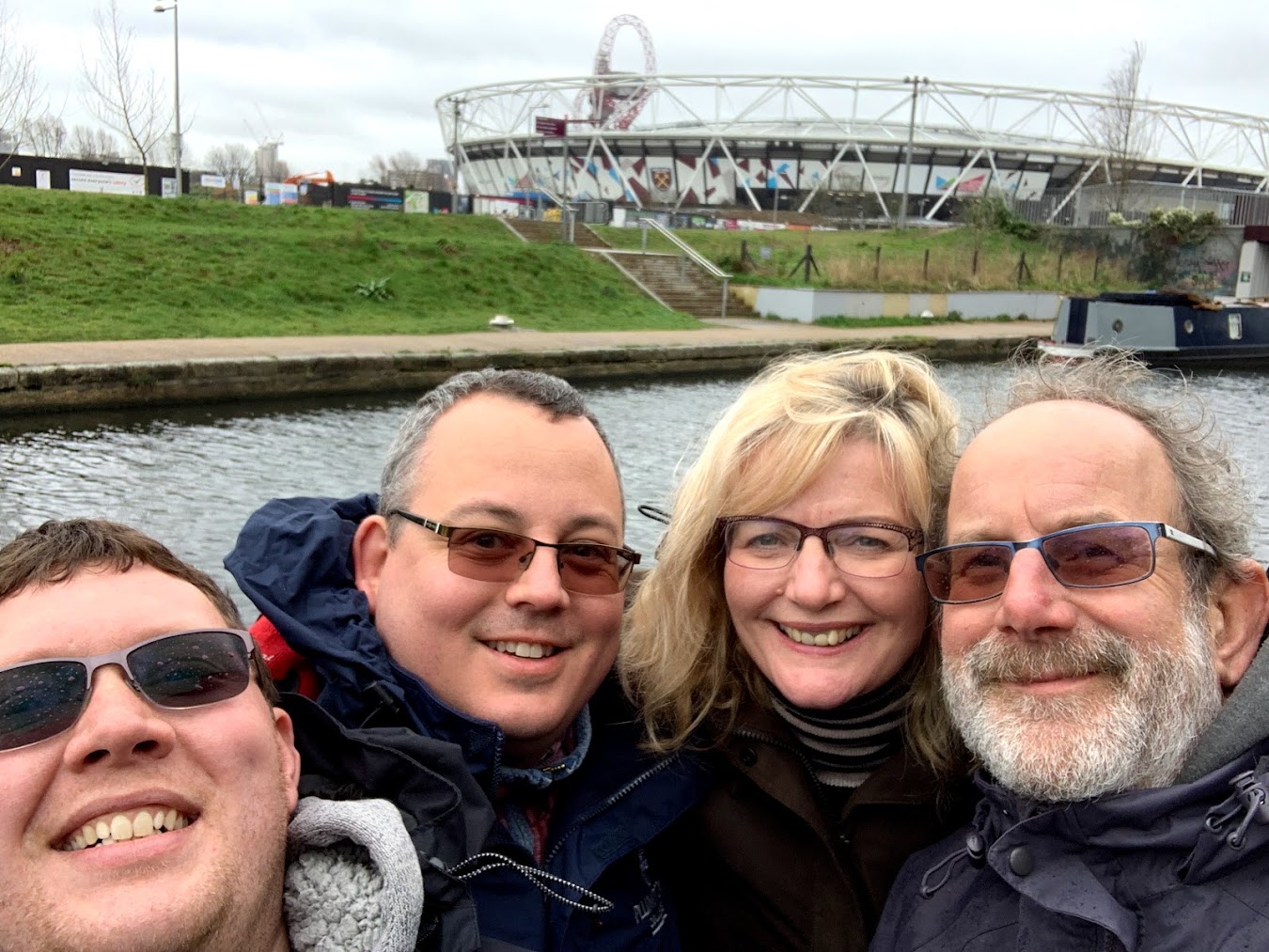
As we continued south, the unmistakable structures of the Queen Elizabeth Olympic Park began to appear.

Only seven years earlier, this part of East London had welcomed the world for the 2012 Olympic and Paralympic Games. Arriving by water offered a very different perspective from approaching by road or rail. Modern landmarks rose above a historic navigation that had carried boats through the area for generations.

It was a striking contrast: the slow, traditional pace of a narrowboat set against one of London’s most prominent areas of modern regeneration.

Despite the rain, there was something special about reaching the Olympic Park aboard Tilly Mint. We had watched the landscape evolve around us, from quieter green stretches to an unmistakably urban waterway, all at the wonderfully unhurried pace of canal travel.

The simple pleasure of slow travel

By the end of the journey, the weather had tested both our waterproofs and Neil’s endurance at the helm. Yet the rain had not spoilt the day. If anything, it had given the cruise a character of its own.

Travelling slowly allows you to notice the details that would otherwise pass unnoticed: a heron among the reeds, an old industrial building beside the water, rain dancing across the surface or a famous London landmark gradually emerging ahead.

That is one of the great pleasures of narrowboating. The destination matters, but the journey is never simply the space between where you started and where you planned to finish.

We arrived damp but content, having enjoyed another memorable day aboard Tilly Mint. We would not have changed a thing—although Neil, after spending hours exposed to the rain at the helm, might reasonably have requested better weather, a hot drink and a considerably longer break.

Publié le

Our First Trip on Tilly Mint – An Unforgettable Adventure

Long before Priscilla, Queen of the Canal became our dream, another narrowboat gave us our first real taste of life on the waterways.

Our first trip aboard Tilly Mint, Nail and Naomi’s new narrowboat, was intended to be a peaceful autumn escape along the Kennet and Avon Canal. For most of the day, that was exactly what it was. But as anyone familiar with boating will know, the canal does not always follow the plan.

Setting off

We joined Nail and Naomi aboard their beautiful new boat with considerable excitement. There is something particularly special about stepping onto a narrowboat for the first time: exploring every corner, learning where everything is kept and imagining all the journeys that lie ahead.

We set off along the Kennet and Avon Canal in high spirits. The autumn colours reflected beautifully on the water, while the steady rhythm of the engine provided a calming soundtrack to the journey.

Chris, Adam, Nail and Naomi spent the day catching up, enjoying the scenery and gradually settling into the unhurried pace of canal life. The waterway wound through the landscape beneath overhanging trees, past towpaths and moored boats, carrying us gently towards our planned evening stop.

It was peaceful, sociable and wonderfully relaxing—everything we had hoped our first trip aboard Tilly Mint would be.

As the light began to fade

Our plan was to moor near The Cunning Man, where the promise of a warm pub and a good evening meal awaited us.

As daylight faded, however, a thick mist began rising from the water. At first, it added an atmospheric quality to the canal, softening the surrounding landscape and making the autumn evening feel almost magical.

Then it became thicker.

The canal banks began to disappear. Trees became shadowy outlines and moored boats emerged from the gloom with very little warning. Before long, visibility had fallen to around 50 yards—and our peaceful cruise had become a much more demanding exercise in navigation.

The canal ahead resembled a mysterious passage through the fog. Unfortunately, mysterious passages are rather less romantic when you are responsible for steering several tonnes of narrowboat through them.

All hands on deck

Adam took up position at the bow, peering through the mist for signs of the canal bank, mooring posts, overhanging branches and other boats.

His job was to relay clear and helpful directions to the helm.

That was the theory, at least.

“Left! Left!”

A pause followed as another indistinct shape emerged from the fog.

“No—right! Go right! HARD RIGHT!”

What had started as a serene autumn cruise had become an improvised team navigation exercise. Directions were shouted along the boat, hazards appeared with little warning and everyone tried to determine whether a dark shape ahead was a tree, a moored narrowboat or simply more mist.

There were tense moments, but there was also something exhilarating about it. We were working together, responding to the canal and discovering that boating could be unpredictable, challenging and enormous fun—all within the space of a few foggy minutes.

Reaching The Cunning Man

Eventually, the welcoming lights of our destination appeared through the mist.

After carefully bringing Tilly Mint alongside, we secured the ropes and switched off the engine. The sudden quiet was accompanied by a collective sense of relief: we had made it.

Stepping from the cold, damp towpath into the warmth of The Cunning Man felt particularly satisfying. The stress of the final approach quickly began to fade as we settled around the table and looked forward to dinner.

Food always seems to taste better after a day on the water, but that evening it felt especially well earned. Over drinks and hearty pub fare, we replayed the journey and laughed about Adam’s increasingly urgent directions from the bow.

What had felt tense in the mist had already become a story—and one we knew would be told again.

The beginning of something special

Our first journey aboard Tilly Mint gave us far more than a pleasant weekend away. It offered an early glimpse of everything we would come to love about narrowboating: the slower pace, the changing landscape, the companionship and the unexpected moments that turn an ordinary journey into an adventure.

The mist had made the final stretch difficult, but it had also made the experience unforgettable. It reminded us that the best boating memories are not always created when everything goes perfectly. Often, they emerge from the diversions, surprises and moments of mild chaos along the way.

Looking back, that foggy evening feels like an important early chapter in our waterways story. It strengthened friendships, introduced us to the realities of life aboard a narrowboat and left us eager to return.

Here’s to many more adventures aboard Tilly Mint—although, next time, perhaps with a little less mist and slightly more consistent directions from the bow.

Publié le

A Journey Down Memory Lane: Our First Canal Trip Together

Long before Priscilla—and before many of the adventures that would shape our love of the waterways—there was a hire boat on the River Thames.

In November 2011, before we were married or had moved to Sussex, we joined our good friends Dan and Jeff for our first canal and river trip together.

None of us could have known quite where that first journey might eventually lead.

Setting out on the Thames

The November air was crisp as we settled aboard and began following the Thames.

It was our first experience of cruising together: the gentle rhythm of the engine, the changing riverside scenery and the simple pleasure of travelling without any need to hurry.

We soon found our rhythm, helped by plenty of laughter and light-hearted banter between the four of us.

As we passed Windsor, the castle rose above the surrounding landscape. Framed by the golden colours of late autumn and reflected in the calm water, it gave the journey an appropriately grand backdrop.

For two people just beginning to discover boating together, it was difficult to imagine a better introduction.

An evening in Bray

We moored near Bray with something particularly special planned for the evening: dinner at Heston Blumenthal’s celebrated restaurant, The Fat Duck.

The meal was far more than dinner. Every course brought another surprise, combining unexpected flavours, textures and theatrical touches into an experience unlike anything we had encountered before.

Just as memorable was the company. Sitting around the table with Dan and Jeff, sharing stories and laughter, transformed an extraordinary meal into a cherished memory.

It remains one of those rare evenings that still feels vivid many years later.

More than our first boating holiday

Looking back, the trip represented much more than a weekend on the Thames.

We were not yet married. Sussex had not yet become home. Many of the plans that would shape our life together were still only ideas.

The journey gave us a first glimpse of something that would become increasingly important: the pleasure of travelling slowly, experiencing the landscape from the water and sharing an adventure with people we cared about.

Many more boating holidays would follow, but this was where our story on the waterways began.

The beginning of something

Our first trip together contained beautiful scenery, excellent food, close friendship and the excitement of discovering an entirely new way to travel.

At the time, it was simply a memorable weekend.

Looking back from everything that followed, it feels more like the beginning of something.