Posted on

From Hungerford to Crofton aboard Tilly Mint

Two days after exploring the remarkable Crofton Beam Engines, we returned to the Kennet & Avon Canal aboard Tilly Mint to enjoy the journey through the landscape that those engines have helped sustain for more than two centuries.

Beginning in Hungerford, our route carried us through the peaceful countryside of the North Wessex Downs towards Crofton—a journey combining narrowboat life, beautiful scenery and some extraordinary waterways heritage.

Beginning in Hungerford

Our day began in the historic market town of Hungerford.

Known for its antiques shops and ancient Hocktide traditions, the town is surrounded by some of southern England’s most attractive countryside. The Kennet & Avon Canal passes quietly through it, offering a particularly inviting starting point for a journey by boat.

Once aboard Tilly Mint, we prepared to cast off and leave the town behind. Ropes were released, the engine settled into its familiar rhythm and we returned to the wonderfully unhurried pace of canal travel.

Into the North Wessex Downs

Beyond Hungerford, the canal enters a tranquil rural landscape within the North Wessex Downs.

Trees and hedgerows lined the water while open fields stretched towards the surrounding hills. Sheep grazed beyond the towpath, birds moved between the branches and the occasional waterside cottage appeared through the greenery.

From the stern of Tilly Mint, the landscape unfolded gradually. There was time to notice reflections moving across the water, listen to birdsong and enjoy the small details that would be missed when travelling by road.

The gentle sound of the boat moving through the water provided the soundtrack to our journey.

Life at narrowboat pace

A day aboard Tilly Mint was never simply about reaching our destination.

Canal travel creates its own rhythm. Locks and bridges divide the journey into a succession of small tasks, while stretches of open water provide time to relax, talk and enjoy the surroundings.

There is always something requiring attention: the position of the boat, an approaching bridge, activity at the next lock or wildlife deciding that the centre of the canal is the only reasonable place to be.

Yet none of it feels hurried. Progress is measured in miles rather than minutes, and the journey becomes every bit as important as the destination.

Approaching Crofton

As we continued towards Crofton, the engineering behind the canal became increasingly apparent.

The Kennet & Avon must climb to its summit before descending again towards Wiltshire and the Avon Valley. Maintaining sufficient water at this highest section was one of the greatest challenges faced by the canal’s original engineers.

Every boat passing through a lock carries water downhill. Without a reliable means of replacing it, the summit pound would gradually become unnavigable.

The solution was Crofton Pumping Station, built between 1807 and 1809 to raise water from the springs and reservoir below into the canal above.

Seeing Crofton from the water

Approaching Crofton aboard Tilly Mint gave us a different perspective from our earlier visit on foot.

The tall chimney and historic engine house rise beside the canal, immediately distinguishing the site from the surrounding countryside. It is an impressive reminder that even the most peaceful waterways depend upon substantial infrastructure.

Inside the Grade I-listed pumping station are two working steam-powered beam engines dating from 1812 and 1846. The older Boulton & Watt engine is celebrated as the world’s oldest working beam engine remaining in its original location and capable of performing its original purpose.

On selected steaming days, the engines still lift water into the summit pound—living machinery continuing the work for which it was created more than two centuries ago. Crofton Beam Engines

Engineering brought to life

Having recently explored the engine house, we could now connect the machinery inside with the waterway outside.

The great beams, pistons and pumps were no longer isolated museum exhibits. They formed part of the landscape through which Tilly Mint was travelling and helped explain how boats could continue navigating this elevated section of canal.

That connection made Crofton particularly memorable. The engines are magnificent examples of Industrial Revolution engineering, but their real significance becomes clearest when viewed alongside the canal they were built to serve.

Watching the water beside our boat, it was remarkable to consider the effort required to maintain something that appeared so calm and natural.

A pause beside the canal

Crofton provided an ideal place to pause and enjoy the surroundings.

The grounds overlook the canal and nearby railway, with the Wiltshire countryside extending beyond. It is a landscape shaped by several generations of transport history: canal boats moving at walking pace, trains passing nearby and historic steam engines standing between them.

After exploring, there was time to relax and reflect on the journey before returning to Tilly Mint.

A picnic beside the canal is one of boating’s simplest pleasures. Food somehow tastes better after a morning on the water, particularly when accompanied by attractive views and nowhere urgent to be.

Heritage that remains alive

The Kennet & Avon Canal has survived because generations of volunteers and campaigners refused to allow it to disappear.

The same spirit is evident at Crofton, where volunteers maintain the buildings, boilers and engines, operate the machinery and share its history with visitors.

Without their skill and commitment, the pumping station might have become a static monument—or been lost entirely. Instead, it remains connected to the working canal and continues to demonstrate the ingenuity of its original designers.

The Canal & River Trust describes the 1812 and 1846 engines as being among the world’s oldest working steam beam engines. Seeing their setting from the canal reinforced just how exceptional their survival is.

A journey through two landscapes

Our cruise from Hungerford to Crofton brought together two contrasting elements of the inland waterways.

There was the natural beauty of the North Wessex Downs: green fields, mature trees, wildlife and tranquil water. Alongside it stood the engineered landscape of locks, reservoirs, channels and pumping machinery that makes navigation possible.

Neither exists independently of the other. The apparent tranquillity of the canal is sustained by centuries of engineering, continual maintenance and the efforts of those who care for it today.

Travelling aboard Tilly Mint allowed us to experience both.

More than a destination

Crofton Beam Engines may have been our destination, but the journey from Hungerford was an essential part of the experience.

At narrowboat pace, we watched the landscape change, worked through the canal’s structures and gained a deeper appreciation of the infrastructure supporting the water beneath us.

It was another memorable day aboard Tilly Mint—and a wonderful reminder that Britain’s canals are not merely routes through the countryside. They are living pieces of history, best understood by travelling slowly through them.

Posted on

Crofton Beam Engines: Where Steam Still Powers the Canal

Hidden beside the Kennet & Avon Canal in the Wiltshire countryside stands one of Britain’s most remarkable pieces of working industrial heritage.

Crofton Beam Engines has supplied water to the canal’s summit for more than two centuries. Its magnificent steam engines survive in their original engine house—and, on selected steaming days, still perform the job for which they were built.

Solving the canal’s water problem

The Kennet & Avon Canal created a navigable route between Bristol and Reading, linking the Bristol Channel with the River Thames and London.

One of its greatest engineering challenges was maintaining the water supply at its summit near Crofton. Every time a boat passed through the locks, water flowed downhill and had to be replaced.

The solution was to construct a pumping station beside the canal. Water could be drawn from natural springs and Wilton Water, then lifted approximately 12 metres into the summit pound.

Crofton Pumping Station began operating in 1809, shortly before the canal fully opened in 1810.

The oldest working beam engine in the world

The oldest surviving engine at Crofton was manufactured by Boulton & Watt and installed in 1812.

It is recognised as the world’s oldest working beam engine still in its original location and capable of performing its intended task.

Watching the machinery reveals the impressive simplicity of its design. Steam drives a piston connected to the enormous rocking beam overhead. At the opposite end, pump rods descend into the well and lift water towards the canal.

The beam moves slowly and rhythmically, but the apparent gentleness disguises the tremendous power involved.

Crofton’s second engine

The second engine dates from 1846 and was originally constructed as a compound engine using components supplied by Harvey of Hayle.

It was substantially rebuilt by the Great Western Railway at Swindon in 1905, becoming the single-cylinder engine seen today.

Together, the two engines demonstrate how steam technology developed and how working machinery was repeatedly adapted rather than simply discarded.

These were practical machines, expected to operate reliably for decades. Their survival owes much to both the quality of their construction and the generations of engineers who maintained them.

Steam, sound and movement

Even when stationary, the scale of the machinery is impressive. The beams dominate the engine house, surrounded by polished metalwork, pipework, valves and the accumulated details of more than two centuries of engineering.

On steaming days, however, the building truly comes alive.

Heat rises through the engine house, the machinery settles into its measured rhythm and the sounds of steam and moving metal fill the space. It becomes easier to imagine Crofton as a working pumping station rather than a museum.

When the steam engines are operating, the modern electric pumps are switched off and the historic machinery once again supplies water to the canal.

Decline and rescue

By the twentieth century, commercial traffic on the Kennet & Avon Canal had declined considerably, and much of the waterway became virtually impassable.

Crofton’s steam engines nevertheless continued working because water was still required for nearby farms and railway locomotives. The 1812 engine remained operational until 1958.

The Kennet & Avon Canal Trust acquired the redundant pumping station for preservation in 1968. Volunteers then undertook the enormous task of restoring the engines, returning both to working order by 1971.

Their achievement formed part of the wider campaign to save the canal. Following decades of restoration, the Kennet & Avon reopened throughout in 1990.

Preserved by volunteers

Crofton’s survival is an extraordinary example of volunteer-led conservation.

Maintaining large steam engines, boilers and a Grade I-listed pumping station requires specialist knowledge, considerable expense and continual work. Volunteers operate the site, care for its collections and pass the skills needed to run the machinery to future generations.

Without that dedication, the engines could easily have become static exhibits—or disappeared entirely.

Instead, visitors can still experience them as their designers intended: moving, pumping and serving the canal.

More than a museum

Crofton is special because its story remains connected to the living waterway outside.

The engines were created to solve a practical problem, and more than two centuries later they can still fulfil that purpose. The canal may now be used principally for leisure, but its continued operation depends upon the same careful management of water that challenged its original engineers.

Visiting Crofton helped us appreciate the hidden infrastructure behind a canal journey. Locks and boats may receive most of the attention, but reservoirs, pumping stations and countless acts of engineering keep the entire system functioning.

A monument that still works

The Crofton Beam Engines are far more than impressive relics of the Industrial Revolution.

They represent ingenious engineering, generations of skilled maintenance and the extraordinary determination of volunteers who refused to allow an important part of Britain’s waterways heritage to disappear.

There is something deeply satisfying about seeing historic machinery continue to perform its original purpose. At Crofton, steam does not merely recreate the past—it still helps keep the Kennet & Avon Canal alive.

Posted on

Crick Boat Show 2023: The Countdown to Priscilla Begins

The May Bank Holiday weekend of 2023 marked an important milestone for us: our first visit to the Crick Boat Show and the beginning of our seven-year countdown to retirement aboard our own narrowboat.

We had enjoyed narrowboat holidays and trips with friends for years, but Crick offered something different. It was our first opportunity to step aboard a wide selection of newly built boats, meet the people shaping the future of inland boating and begin turning a distant ambition into something more tangible.

Our first Crick Boat Show

We arrived on Saturday to find Crick Marina transformed into the heart of the inland waterways world.

Rows of narrowboats and wide-beams filled the marina, while boatbuilders, equipment suppliers and waterways organisations occupied the surrounding showground. Everywhere we looked, there was another boat to explore, product to investigate or idea to consider.

Crick is the UK’s largest inland waterways festival and hosts the country’s biggest display of new inland boats. For two people beginning to think seriously about commissioning a narrowboat, it was difficult to imagine a better place to start. Crick Boat Show

Stepping aboard our possible future

Our priority was viewing the new boats.

Walking through them was exciting, but it also encouraged us to look beyond attractive interiors and consider how a narrowboat would function as our future home. Layouts, storage, lighting, kitchens, bathrooms and living spaces all began to take on greater significance.

Some boats impressed us with their contemporary styling; others offered ingenious solutions to the practical limitations of life in a long, narrow space. Even features that did not suit us helped clarify what we might eventually want aboard our own boat.

For the first time, we were not simply admiring narrowboats. We were studying them.

Learning what matters to us

The show gave us an opportunity to compare different builders and approaches in quick succession.

We began noticing how much character could be created through materials, colours and detailing. We also saw the importance of less visible decisions: power systems, heating, insulation, ventilation and ease of maintenance.

Our eventual boat build was still around six years away, so we were not ready to choose a builder or finalise a specification. Instead, the weekend was about learning the language of boat design and beginning to distinguish passing trends from features that could genuinely improve our life aboard.

A notebook quickly began filling with ideas, questions and things we wanted to research further.

Meeting the waterways community

Crick was about far more than boats.

The show brought together builders, suppliers, experienced boaters, aspiring owners and familiar faces from the waterways world. We also had the chance to meet some of the vloggers whose journeys we had followed online.

Those conversations made the prospect of our own future afloat feel more real. Each person offered a different perspective on buying, building and living aboard, reinforcing the importance of taking our time and learning from those already doing it.

Saturday night at Crick

When the boat viewing finished, the entertainment continued.

The beer tent became the social centre of the show, with live music, drinks and a wonderfully relaxed atmosphere. After a day spent discussing layouts, engines and equipment, it was time to enjoy ourselves.

We raised a glass to the future, surrounded by people united by a shared enthusiasm for boats and waterways.

Our base for the weekend was the nearby Holiday Inn at a motorway service area. It lacked the romance of sleeping beside the canal, but after full days walking around the show, it provided a comfortable and conveniently located retreat.

Neil and Naomi join us

Our friends Neil and Naomi arrived on Sunday, bringing their own experience of narrowboat ownership.

They were considering whether to upgrade their existing boat, so we explored the show together, comparing layouts, discussing features and exchanging opinions about what worked—and what most certainly did not.

Their practical perspective was invaluable. Ideas that looked impressive at first glance could be tested against the realities of spending time aboard, while seemingly modest details sometimes proved far more important than elaborate finishes.

Sharing the experience with friends also made the weekend considerably more entertaining.

From a dream to a plan

By the time we left Crick, we had gathered far more than brochures.

We had a growing list of ideas, a better understanding of the decisions ahead and renewed excitement about the life we were working towards. Our future boat remained several years away, but the route towards it had begun to feel clearer.

This was not yet Priscilla, Queen of the Canal. We did not know precisely what she would look like, who would build her or how all our ambitions would eventually fit within the confines of a narrowboat.

What we did know was that we wanted to create something distinctly ours: a comfortable home, an adventurous base and a boat capable of carrying us into the next chapter of our lives.

Crick Boat Show 2023 was where that long countdown truly began.

Posted on

Bowling Basin: Where the Canal Meets the Clyde

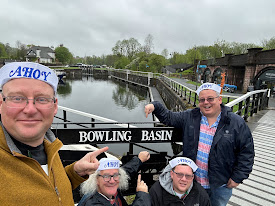
At the western end of the Forth & Clyde Canal lies Bowling Basin, where the sheltered inland waterway meets the broad tidal waters of the River Clyde.

Once a busy industrial harbour, the basin has been transformed into an attractive destination for walkers, cyclists and visitors. Its railway heritage, regenerated arches and expansive views make it a fascinating place to explore—but we could not help feeling that it deserves to welcome many more visitors by water.

Reaching the western end of the canal

After our Scottish waterways holiday, we visited Bowling Basin to see where the Forth & Clyde Canal completes its journey west.

The canal stretches across central Scotland, linking the Clyde with the Forth and creating a navigable route between the country’s east and west coasts. Bowling therefore feels like more than simply another canal basin: it is the threshold between inland cruising and considerably more adventurous tidal waters.

Standing beside the basin, we could look beyond the protective sea lock towards the Clyde and enjoy those wonderful views “doon the watter”.

A harbour shaped by industry

Bowling Basin was once a thriving centre of trade, boatbuilding and industry.

Canal boats brought goods westwards to meet vessels using the Clyde, while the surrounding railways connected the harbour with Scotland’s expanding industrial network. The surviving railway arches, disused tracks and swing bridge all provide reminders of the basin’s working past.

Although the commercial traffic has largely disappeared, its history remains clearly visible. This is not a heritage site preserved behind barriers; it is a landscape that has been adapted and given a new purpose.

A railway transformed

One of Bowling Basin’s most distinctive features is its former railway infrastructure.

The abandoned tracks and striking swing railway bridge have been incorporated into a linear park, allowing visitors to walk through parts of the site that were once dominated by industry. The old railway arches have also been restored and repurposed for small businesses and visitor facilities.

The result is an atmospheric mixture of canal, harbour and railway heritage. Rusting metalwork and old stone structures sit alongside improved paths, landscaped areas and modern activity.

It is regeneration that respects the site’s character rather than attempting to erase it.

Views “doon the watter”

The views from Bowling are tremendous.

Looking west, the Clyde opens towards Dumbarton and the distant hills, creating a dramatic contrast with the narrow, sheltered canal behind. The broad water and changing light give the basin an atmosphere unlike anywhere else along the Forth & Clyde Canal.

It feels simultaneously like the end of one journey and the beginning of another.

For generations of Glaswegians, travelling “doon the watter” meant heading along the Clyde towards the coastal resorts and holiday towns beyond. Standing at Bowling, it was easy to understand the enduring pull of that journey.

A destination deserving more boats

The regeneration work has helped establish Bowling Basin as a popular destination for walkers, cyclists and day visitors.

However, we would love to see more people arriving in the way that feels most appropriate: by boat.

More visiting boats would bring additional life and activity to the basin while strengthening its connection with the wider canal network. It could become a natural destination for boaters travelling west along the Forth & Clyde Canal, rather than simply somewhere to reach, turn around and leave.

With its history, views and restored surroundings, Bowling has all the ingredients needed to become one of Scotland’s most memorable waterways destinations.

Where canal, river and history meet

Our visit to Bowling Basin offered a fitting conclusion to our exploration of the Forth & Clyde Canal.

From the Falkirk Wheel and the journey into Glasgow to the open views across the Clyde, the canal had revealed engineering, industrial heritage and extraordinary contrasts throughout its length.

Bowling brings all those elements together. It is a canal terminus, a former industrial harbour, a regenerated public space and a gateway to the Clyde.

Most importantly, it is a place with enormous potential—both as a destination on land and as somewhere that could once again come alive with boats.

Posted on

Exploring Edinburgh Quay: Where the Union Canal Meets the City

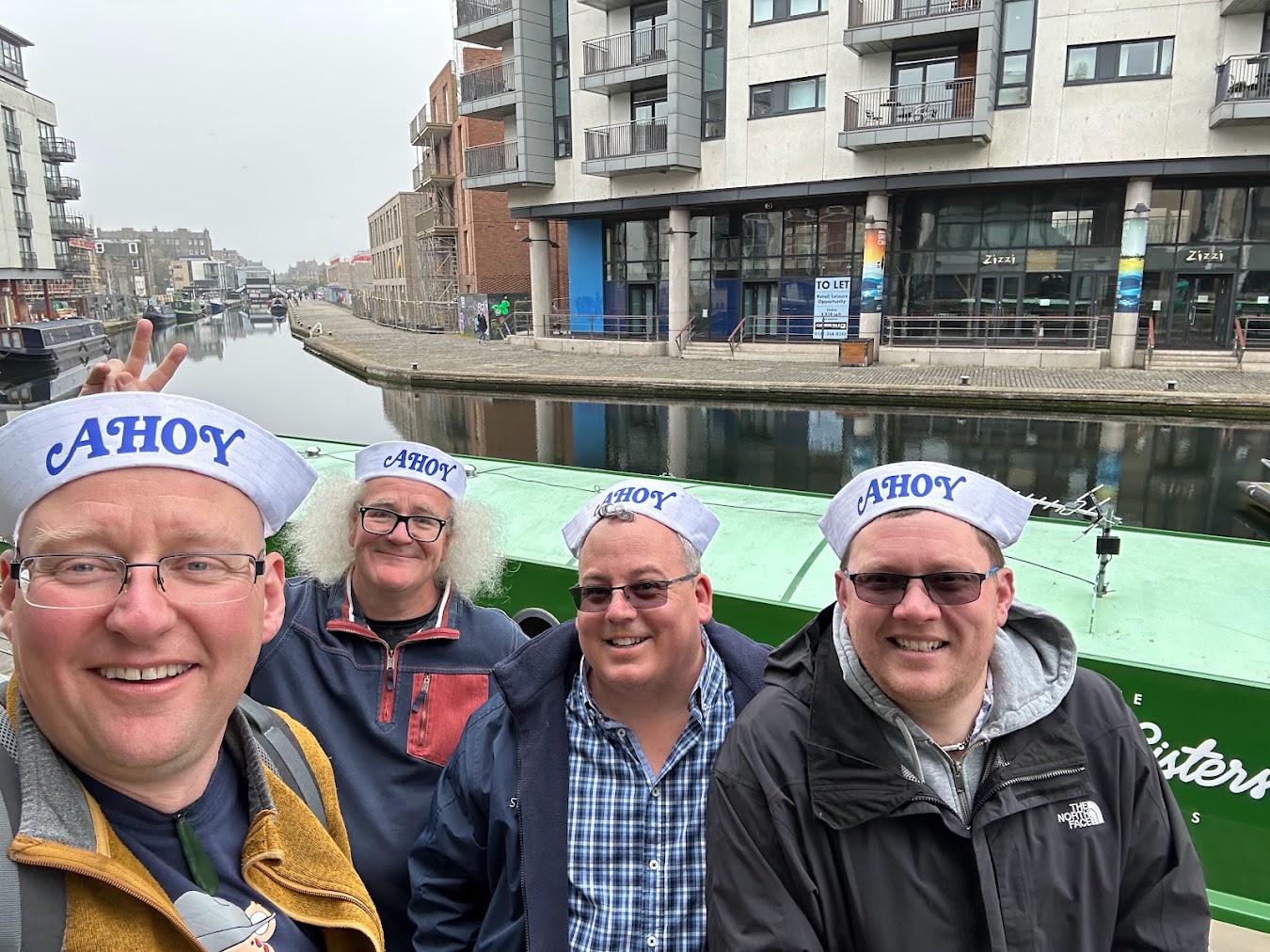
After arriving on the outskirts of Edinburgh aboard Green Sandpiper, we continued our Scottish canal adventure on foot.

Our destination was Edinburgh Quay, the eastern terminus of the Union Canal. Here, the tranquillity of the waterway meets the energy of Scotland’s capital, creating a striking combination of canal heritage and modern city life.

Walking towards Edinburgh Quay

Edinburgh Quay lies at Fountainbridge, within easy walking distance of the city centre.

As we approached, the busy streets gradually gave way to the calmer surroundings of the canal. The towpath offered a welcome escape from the traffic, despite being only a short distance from central Edinburgh.

The contrast was part of its appeal. Modern buildings rose beside the water while narrowboats rested below, creating an unexpected waterside setting in the heart of the city.

The end of the Union Canal

Edinburgh Quay marks the eastern end of the Union Canal, which stretches westwards towards the Falkirk Wheel.

The canal opened in 1822 and was originally used to transport goods and passengers between Edinburgh and central Scotland. After years of decline, it was restored and reopened in 2001 as part of the Millennium Link project.

Standing beside the basin gave us a chance to appreciate the full extent of our journey. We had travelled from Falkirk towards Edinburgh along the same historic waterway that now ended quietly among offices, homes, restaurants and city streets.

A modern waterside destination

The former industrial area around Fountainbridge has changed considerably.

Contemporary buildings now surround the basin, their glass, steel and brickwork reflected in the water below. Cafés, bars and restaurants bring activity to the waterfront, while the towpath remains popular with walkers, runners and cyclists.

Despite the development, the canal retains its distinctive atmosphere. Ducks moved between the moored boats, the water remained calm and the pace felt noticeably slower than the surrounding city.

It was a place where Edinburgh’s industrial heritage and modern identity sat comfortably beside one another.

Exploring the towpath

We spent time walking beside the canal and enjoying the views around the basin.

The level, well-maintained towpath made exploring easy. Benches and open areas offered places to pause, while the boats and waterside architecture provided plenty to photograph.

Following the towpath west would eventually lead all the way back towards Falkirk. From Edinburgh Quay, however, we were content to enjoy a shorter and considerably less ambitious walk.

After several days aboard Green Sandpiper, seeing the canal from the towpath offered a different perspective. Features that pass quickly from the boat could now be examined properly, while the waterway’s relationship with the surrounding city became much clearer.

Canal calm in the capital

Edinburgh is famous for its castle, historic streets and dramatic skyline, but the Union Canal reveals another side of the city.

Edinburgh Quay offered the calm of the waterways without taking us far from the capital’s main attractions. It felt peaceful without being isolated and modern without losing sight of its industrial past.

For us, it was also a fitting destination after travelling east aboard Green Sandpiper. The canal had carried our adventure from the Falkirk Wheel towards the centre of Edinburgh; exploring its terminus on foot brought that part of our journey to a satisfying conclusion.

Posted on

The Falkirk Wheel and Our Journey Towards Edinburgh

After cruising from Falkirk to Glasgow and back again, our Scottish canal adventure was ready to take us in a new direction.

Today, Green Sandpiper carried us to the Falkirk Wheel, where Neil and Naomi joined us for the next stage of our journey. Together, we would experience one of the world’s most remarkable pieces of waterways engineering before continuing east along the Union Canal towards Edinburgh.

Returning to the Falkirk Wheel

We left our overnight mooring and continued towards Falkirk, excited to return to the structure that had provided such an impressive backdrop at the beginning of our holiday.

The Falkirk Wheel reconnects the Forth & Clyde Canal with the Union Canal, overcoming a height difference of approximately 35 metres. Opened in 2002, it replaced the historic flight of locks that once linked the two waterways.

As the Wheel came into view, it was difficult not to be impressed by its scale and distinctive design. Even after seeing it from the towpath, travelling through it aboard Green Sandpiper promised an entirely different experience.

Reunited with Neil and Naomi

Neil and Naomi met us at the Falkirk Wheel, ready to join the adventure.

Warm greetings quickly gave way to laughter and stories from our respective journeys. Having shared many previous boating experiences, their arrival felt less like welcoming visitors and more like reassembling a familiar crew.

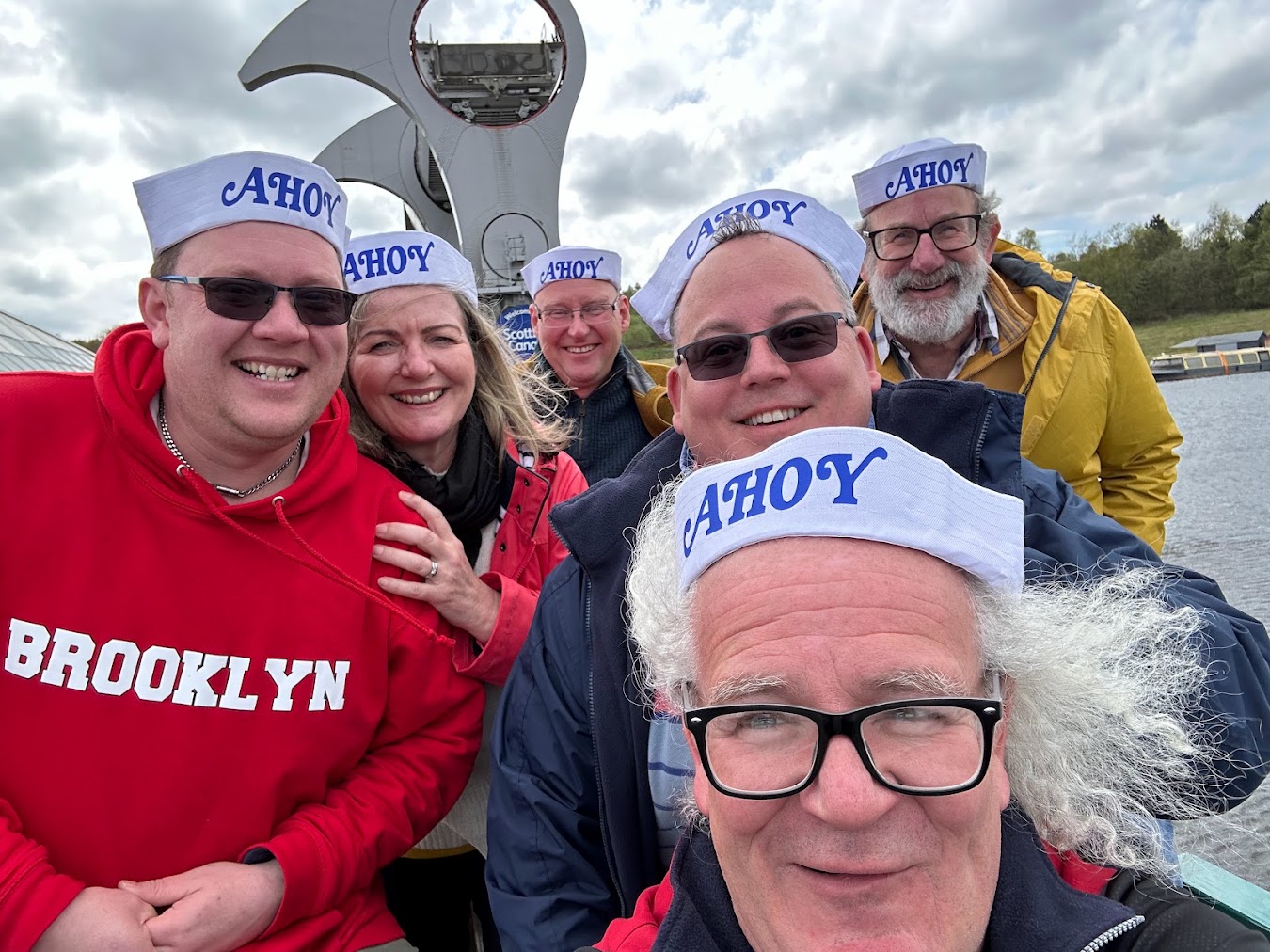
With everyone aboard, it was time for the moment we had been anticipating: taking Green Sandpiper through the Falkirk Wheel.

Travelling through the Falkirk Wheel

We guided the boat into one of the Wheel’s water-filled gondolas and waited for the gates to close behind us.

The Wheel then began its slow rotation, lifting Green Sandpiper smoothly upwards as the opposite gondola descended. Despite carrying the combined weight of boats and water, the movement felt controlled and surprisingly gentle.

As we rose, the surrounding landscape gradually opened before us. The higher we travelled, the more extensive the views became, revealing Falkirk and the green countryside beyond.

It was a remarkable experience: part boat journey, part engineering demonstration and unlike anything else on Britain’s inland waterways.

From the Wheel to the Union Canal

Reaching the upper level did not quite complete the ascent.

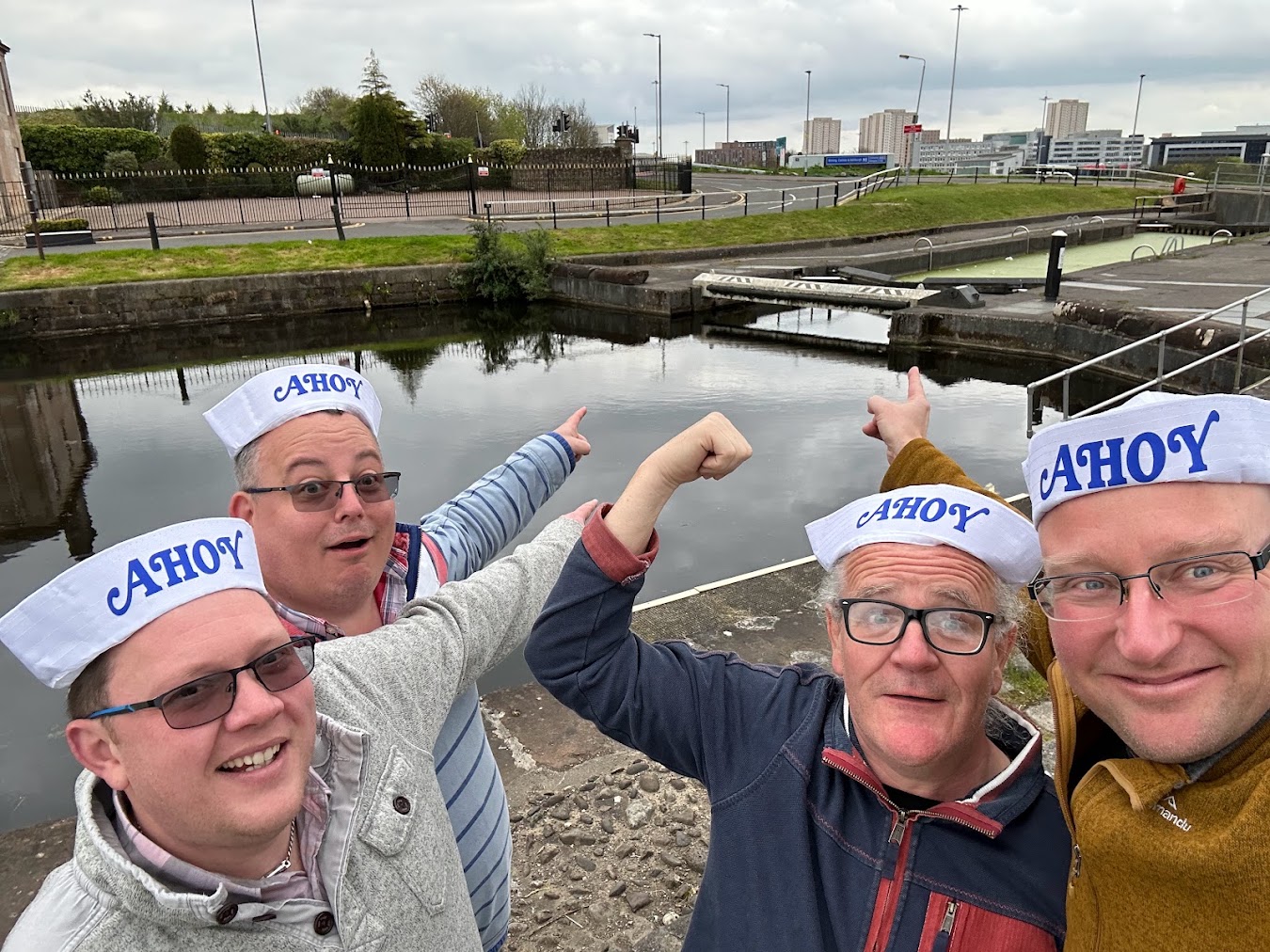
After leaving the Wheel, we passed through the Roughcastle Tunnel and continued towards a pair of locks that raised us through the remaining height difference to the Union Canal.

Emerging onto the canal felt like crossing a threshold. Behind us lay the Forth & Clyde Canal and our journey to Glasgow; ahead was a largely lock-free route stretching east towards Edinburgh.

With the Wheel safely negotiated and the crew reunited, we turned Green Sandpiper towards the capital.

Cruising towards Edinburgh

The Union Canal offered a noticeably different cruising experience.

Built as a contour canal, it follows the landscape at a relatively consistent level, avoiding the frequent locks found on many other waterways. This allowed us to settle into a gentler rhythm as we travelled east.

The canal carried us through peaceful countryside, past woodland, villages and open views. Travelling at narrowboat pace gave us time to appreciate details that would have disappeared quickly from a road or railway journey.

Conversations flowed easily aboard the boat. Stories, jokes and memories filled the day as familiar friendships slipped naturally back into place.

An evening near Edinburgh

By the end of the day, we had reached the outskirts of Edinburgh.

After the excitement of the Falkirk Wheel and a long afternoon of cruising, we found a suitable place to moor for the night. The boat was secured, dinner prepared and the crew began settling down after another memorable day.

Edinburgh now felt tantalisingly close. Tomorrow would bring the final approach into Scotland’s capital and the opportunity to explore another vibrant city from the water.

A landmark day on the waterways

Travelling through the Falkirk Wheel was always going to be one of the defining moments of our Scottish canal holiday.

The extraordinary engineering alone made the experience special, but sharing it with Chris, Dan, Jeff, Neil and Naomi made it even more memorable.

Our journey had already taken us from Falkirk to Glasgow and back. Now, lifted onto the Union Canal, Green Sandpiper was carrying us towards Edinburgh and the next chapter of our adventure.

Posted on

From Tranquil Waters to Glasgow’s Bustling Streets

After our first evening aboard Green Sandpiper at Falkirk, it was finally time to begin our Scottish canal journey.

Chris, Dan, Jeff and I cast off and headed west along the Forth & Clyde Canal towards Port Dundas in Glasgow. Ahead of us lay a day of peaceful cruising through the Scottish countryside, followed by an evening exploring the energy, flavours and nightlife of the city.

Leaving Falkirk behind

We set off from Falkirk with the excitement that accompanies the first proper day of any boating holiday.

The Falkirk Wheel and the anticipation of the previous evening were now behind us. Green Sandpiper was unpacked, the crew had settled aboard and we were ready to discover the canal linking Falkirk with Glasgow.

The gentle sound of the engine and the water moving against the hull soon established the unhurried rhythm of the journey.

After two days spent travelling by car, it felt wonderful to be moving at narrowboat pace.

Cruising the Forth & Clyde Canal

The Forth & Clyde Canal stretches for approximately 35 miles between the River Forth and the River Clyde.

Completed in 1790, it once provided an important commercial route across central Scotland. Today, its restored waters offer a fascinating journey through countryside, towns and the increasingly urban landscape approaching Glasgow.

Our route carried us through lush greenery, with trees arching over parts of the canal and patches of sunlight moving across the water.

The peaceful surroundings encouraged us to slow down and appreciate the landscape properly. Wildlife appeared along the banks, the occasional boat passed us and everyday life seemed comfortably distant.

Locks, bridges and canal history

The journey towards Glasgow involved more than simply following the water.

Locks and bridges punctuated the route, each one introducing another small task for the crew. Ropes were handled, gates and paddles operated and Green Sandpiper was carefully guided from one level to the next.

Working through the canal’s structures gave us a much closer connection with the waterway and its history. These practical features are reminders that the canal was created as a working transport route rather than merely somewhere for modern leisure cruising.

They also ensured that nobody aboard could become too comfortable for long.

Countryside gives way to the city

As we drew closer to Glasgow, the character of the journey gradually changed.

The quiet greenery began to give way to roads, bridges, buildings and the unmistakable signs of a major city. The contrast was striking: we had travelled from peaceful countryside into the heart of urban Scotland without leaving the canal.

That transformation is one of the pleasures of travelling by narrowboat. Landscapes do not change abruptly as they might from a car or train. Instead, the countryside slowly becomes suburban and the suburbs gradually merge into the city.

Glasgow seemed to unfold around us.

Arriving at Port Dundas

Our destination was Port Dundas, once an important industrial canal basin and the historic Glasgow terminus of the Forth & Clyde Canal.

Reaching it felt like a genuine achievement. We had travelled into Glasgow by boat, following a route shaped by more than two centuries of industrial and waterways history.

Once Green Sandpiper was safely moored, we exchanged the tranquillity of the canal for the bustle of the city streets.

The change of pace was immediate. After a day governed by locks, bridges and narrowboat speed, Glasgow offered traffic, crowds, restaurants and an entirely different kind of energy.

An evening in Glasgow

We set out to explore the city and enjoy the lively atmosphere.

Glasgow’s mixture of impressive architecture, busy streets and famously sociable character made it an exciting destination after our peaceful day aboard.

Dinner was at a highly regarded local Indian restaurant. Glasgow has an excellent reputation for Indian food, and our meal certainly lived up to expectations.

After eating extremely well—and perhaps enjoying the evening a little too enthusiastically—we decided that walking back to Port Dundas was no longer an attractive proposition.

An Uber returned us safely to the canal and our waiting boat.

Home to Green Sandpiper

Stepping back aboard felt like returning home.

Despite having known Green Sandpiper for only a short time, its compact and familiar interior already offered a comforting contrast to the busy city outside.

We settled down for a peaceful night, tired from the day’s cruising and our evening in Glasgow.

Tomorrow, we would retrace our route towards Falkirk. For now, the boat was secure, the crew was content and Port Dundas provided our unlikely city-centre home.

Two sides of Scotland in one day

Our journey from Falkirk to Glasgow revealed two very different sides of Scotland.

The day began with tranquil water, greenery and the measured rhythm of locks. It ended among the restaurants, streets and vibrant atmosphere of one of Britain’s great cities.

Travelling by canal allowed the transition between them to unfold slowly, turning the journey itself into an essential part of the experience.

From the peaceful waters of the Forth & Clyde Canal to dinner in the heart of Glasgow, it had been another memorable chapter in our Scottish adventure.

Next, we would turn Green Sandpiper around and begin our return journey to Falkirk.

Posted on

The Kelpies and the Beginning of Our Scottish Canal Adventure

After the long drive from London to Glasgow—and our cold, wet diversion to Hadrian’s Wall—the second stage of our Scottish adventure took us to Falkirk.

Chris, Dan, Jeff and I left the DoubleTree by Hilton after breakfast, excited to reach the canal and collect our boat. Before boarding, however, we had one important stop to make: The Kelpies.

Leaving Glasgow

Rested after a comfortable night in Glasgow, we repacked the car and prepared for the relatively short journey to Falkirk.

Chris resumed his role as designated driver, while Jeff once again took responsibility for the soundtrack. Dan and I contributed through encouragement, navigation and the occasional unnecessary observation from the passenger seats.

Unlike the previous day’s long journey north, Falkirk was now within easy reach. Our Scottish canal holiday was about to move from roads to waterways.

First, though, two enormous horses were waiting for us.

Our first sight of The Kelpies

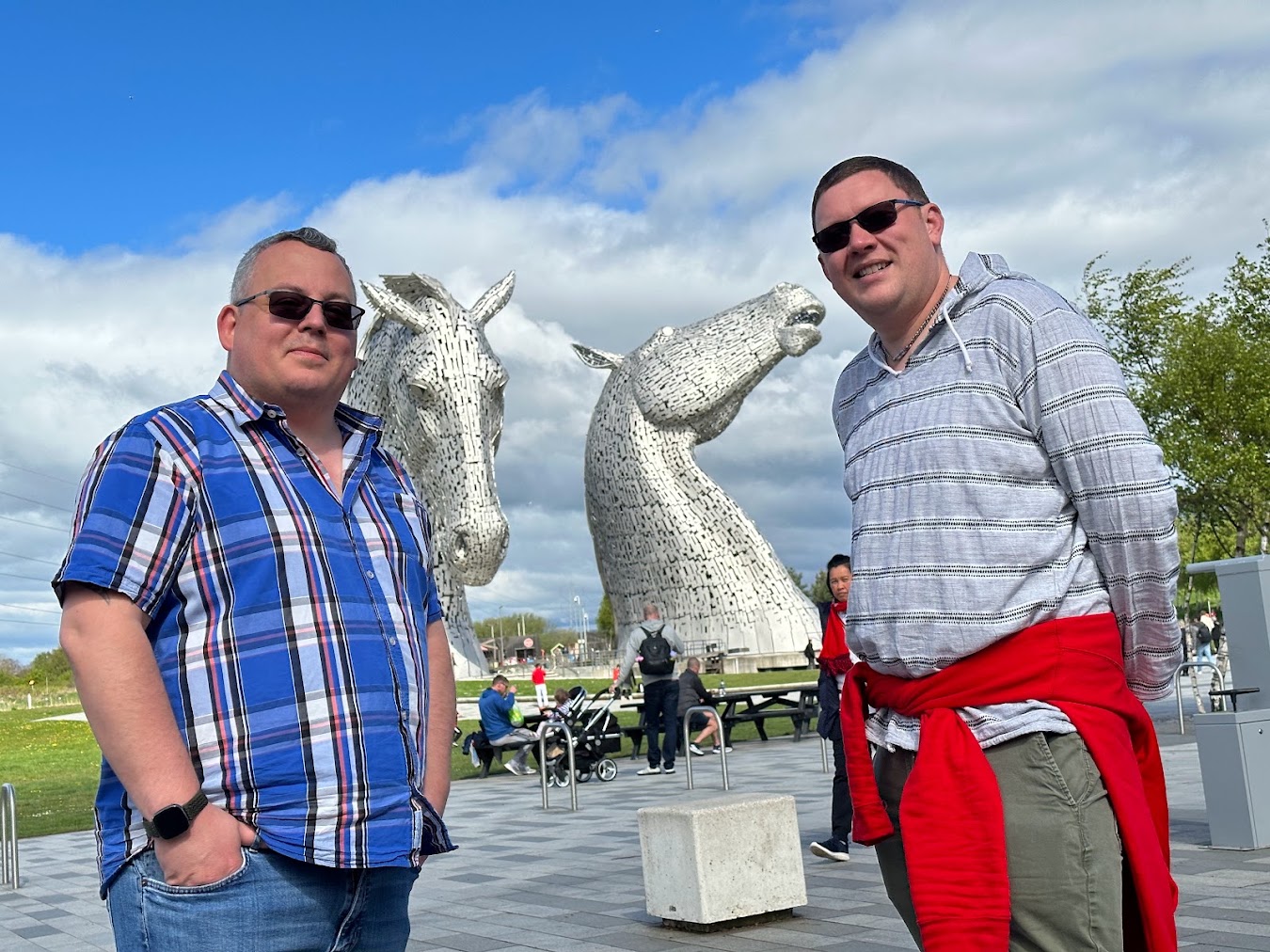
The Kelpies are difficult to appreciate fully until you stand beneath them.

Rising approximately 30 metres above the surrounding landscape, the two steel-clad horse heads dominate The Helix park near Falkirk. Their scale is extraordinary, but so too is the detail in their construction: thousands of individual steel plates combine to create expressions that appear to change as you move around them.

Designed by sculptor Andy Scott, The Kelpies celebrate the powerful working horses that once helped drive Scotland’s industries and pulled boats along its canals.

The sculptures therefore felt like an especially appropriate place to visit at the beginning of our boating holiday.

Giants beside the canal

From a distance, The Kelpies appear almost impossibly polished and precise. Up close, their size becomes overwhelming.

We walked around their bases, looking upwards as the light moved across the steel surfaces. Each change of position revealed a different shape, expression or reflection.

Jeff’s road-trip playlist had accompanied us into the car park, providing an unexpectedly dramatic soundtrack to our arrival. After many hours of music on the road, it seemed fitting that DJ Jeff’s contribution should continue right up to one of Scotland’s most impressive modern landmarks.

The Kelpies also stand beside a specially created extension of the Forth & Clyde Canal, forming a striking eastern gateway to the historic waterway.

A Silver Propeller destination

Our visit also carried particular significance because The Kelpies are one of the locations associated with the Inland Waterways Association’s Silver Propeller Challenge.

The challenge encourages boaters to explore the more distant and less frequently visited parts of Britain’s connected inland waterways. Reaching qualifying locations provides a compelling reason to venture beyond familiar cruising routes and experience places that might otherwise be overlooked.

Although we had arrived by car on this occasion, seeing The Kelpies strengthened our ambition to explore as much of the inland waterway network as possible.

It was another landmark added to our growing waterways story—and certainly one of the largest.

Onwards to Falkirk

After taking photographs and admiring the sculptures from every reasonable angle, it was time to continue towards Falkirk.

The Kelpies gradually disappeared behind us as we returned to the road. Leaving them felt slightly bittersweet, but our main adventure was now only minutes away.

As we approached our destination, another extraordinary structure appeared: the Falkirk Wheel.

The world’s only rotating boat lift reconnects the Forth & Clyde Canal with the Union Canal. Its sweeping arms raise and lower boats between the two waterways, replacing the historic flight of locks that once performed the same task.

Having seen photographs and videos of the Wheel, arriving beside it was an exciting moment. This was not simply another attraction on our itinerary—it was the starting point for our journey across Scotland’s central canal network.

Meeting Green Sandpiper

Waiting for us at Falkirk was our home for the next few days: Green Sandpiper.

We unloaded the car and transferred our luggage aboard, gradually transforming an unfamiliar hire boat into our temporary floating home.

There is always a particular excitement when stepping aboard at the beginning of a boating holiday. Cupboards must be explored, beds allocated and controls understood. Bags occupy every available surface until someone decides where everything should live.

Despite the inevitable unpacking chaos, Green Sandpiper quickly began to feel comfortable and welcoming.

Once we had settled in, we spent time exploring the boat and preparing for the journey ahead.

Our first evening aboard

Rather than rushing away from Falkirk, we remained aboard for the rest of the afternoon and evening.

It gave us time to relax after two days of travelling and to become familiar with the boat before setting off. Board games emerged, drinks were poured and laughter soon filled the cabin.

There was something deeply satisfying about finally being on the water. The long drive from London, our rain-soaked visit to Hadrian’s Wall and the morning’s encounter with The Kelpies had all brought us to this point.

Outside, the Falkirk Wheel provided a remarkable backdrop. Inside, Green Sandpiper already felt like home.

Tomorrow: towards Glasgow

The following morning, we would begin our cruise west towards Glasgow along the Forth & Clyde Canal.

The route promised historic locks, aqueducts, bridges and constantly changing scenery. Later in the holiday, the Falkirk Wheel would lift us onto the Union Canal for the journey east towards Edinburgh.

For now, however, there was no need to think too far ahead.

Our luggage was aboard, our crew was assembled and our Scottish canal adventure had officially begun.

The Kelpies had provided a spectacular introduction. The Falkirk Wheel was waiting. Tomorrow, we would finally cast off.

Posted on

Driving to Scotland via Hadrian’s Wall

Every narrowboat holiday begins with a journey to the water—and our adventure across Scotland’s canals began with a road trip of its own.

Chris, our friends Dan and Jeff, and I set off from our former home at the Royal Arsenal in London, bound for Glasgow. The following day, we would continue to Falkirk and board our narrowboat for a journey along the Forth & Clyde and Union canals to Edinburgh.

Before reaching Scotland, however, we had planned a suitably historic diversion: Hadrian’s Wall.

Leaving London behind

We loaded the luggage into the car early that morning, anticipating the long journey north.

Chris assumed responsibility for the driving, while the rest of us settled into our considerably less demanding roles as navigator, refreshment coordinator and provider of unsolicited driving advice.

Jeff took charge of the music. His playlist moved confidently between classic rock and contemporary pop, transforming the car into a mobile concert venue as we left London behind.

The familiar urban landscape gradually gave way to open countryside. Although many hours on the A1(M) separated us from Glasgow, the shared excitement about the holiday ahead made the journey feel like part of the adventure.

Heading north

Long-distance driving can easily become something to endure rather than enjoy, but travelling together made the miles pass surprisingly quickly.

The conversation moved between memories, music and increasingly enthusiastic speculation about the coming week. We imagined the canals, the Falkirk Wheel and the experience of travelling by narrowboat between two of Scotland’s great cities.

Chris remained dependable behind the wheel while the rest of us offered support by eating snacks and occasionally announcing information already displayed by the satnav.

As the landscape became increasingly dramatic, we left the main route and headed towards Hadrian’s Wall.

A cold welcome at Hadrian’s Wall

Built from AD 122 on the orders of Emperor Hadrian, the wall once extended for 73 miles across northern England. Nearly two millennia later, its surviving remains still follow the contours of the landscape in an extraordinary demonstration of Roman ambition and engineering.

Our arrival was accompanied by cold air, persistent rain and strong winds.

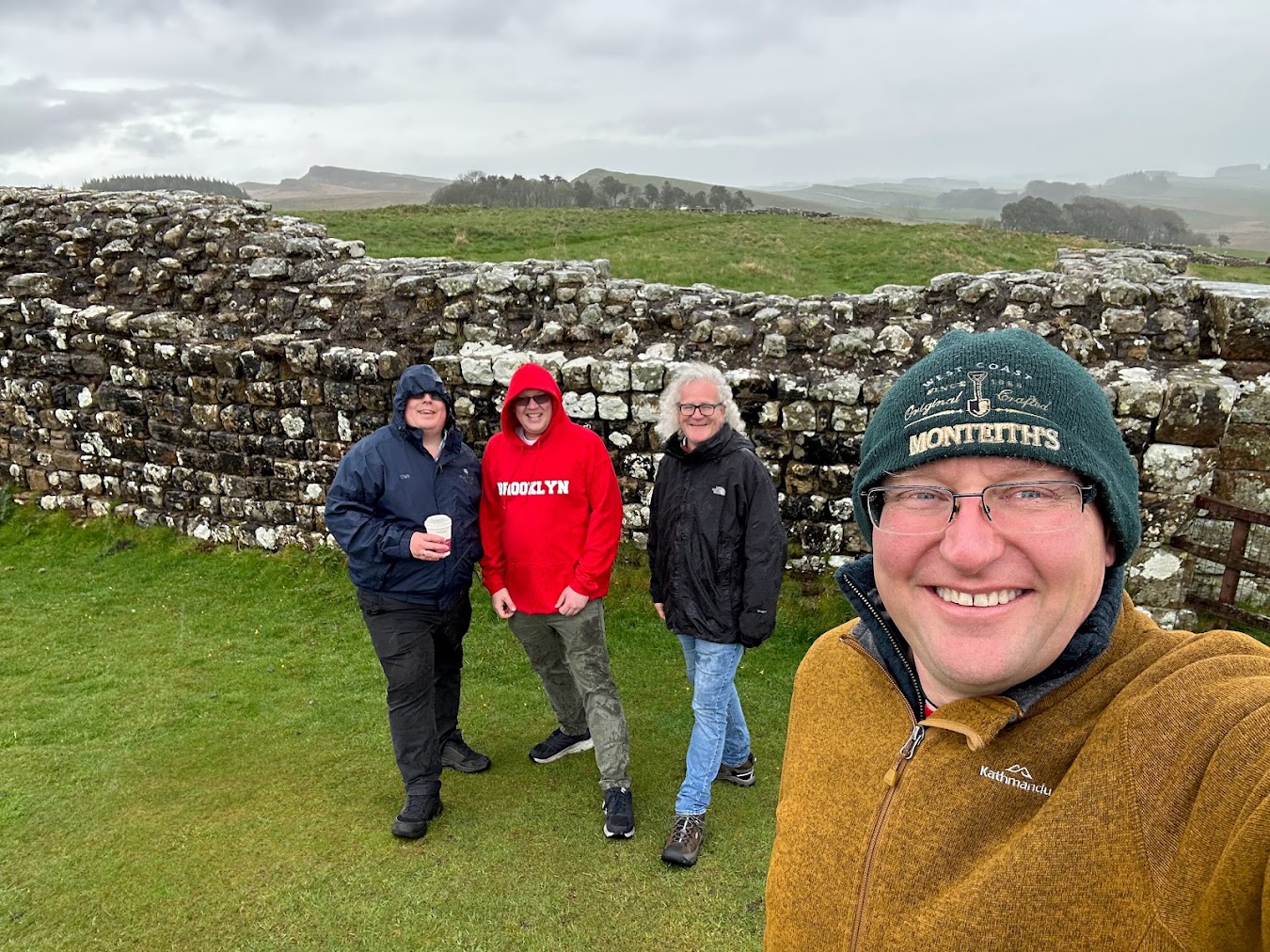
It was not ideal sightseeing weather, but the conditions gave the landscape a suitably rugged atmosphere. Wrapped in coats and layers, we stepped out to explore the remains and take in the views.

The wall crossed the countryside ahead of us, its weathered stonework surrounded by open fields and rolling hills. Even beneath grey skies, it was easy to appreciate the scale of the undertaking and the history embedded in the landscape.

Coffee with Neil and Naomi

Hadrian’s Wall also provided the meeting point for a brief reunion with our friends Neil and Naomi.

A warm coffee was particularly welcome after our encounter with the Cumbrian weather. We caught up, exchanged news and enjoyed the slightly improbable pleasure of meeting friends beside one of Britain’s most significant Roman landmarks during a journey to Scotland.

It was only a short stop, but it added another memorable moment to the day.

Eventually, we said goodbye, returned to the warmth of the car and resumed our journey north.

Crossing into Scotland

With Hadrian’s Wall behind us, the focus returned to reaching Glasgow.

The weather remained changeable as Chris guided us along the final stretch. Conversation became quieter, the playlist continued and the accumulated miles gradually began to make themselves felt.

Even so, crossing into Scotland brought a renewed sense of excitement. Our canal holiday was no longer an idea discussed in London; it was waiting for us just beyond Glasgow.

By the time the city appeared, we were ready for a proper meal, comfortable beds and a rest from the road.

An evening in Glasgow

Our overnight base was the DoubleTree by Hilton in Glasgow.

After the early start, many hours in the car and our wet visit to Hadrian’s Wall, the hotel offered exactly what we needed. We checked in, unloaded the luggage and finally allowed ourselves to relax.

Tomorrow would bring a very different form of transport.

We would travel to Falkirk, collect our narrowboat and begin exploring the remarkable waterways linking Glasgow and Edinburgh. The road journey would give way to locks, aqueducts and canal cruising—with the Falkirk Wheel waiting near the beginning of our route.

The adventure before the adventure

Our drive from London to Glasgow could have been treated simply as the practical journey required to reach the boat.

Instead, good company, Jeff’s music, dramatic scenery and a rain-soaked encounter with Hadrian’s Wall made it a memorable part of the holiday.

The day carried us from our former home at the Royal Arsenal to the edge of Scotland’s canal network, passing one of Britain’s most extraordinary ancient landmarks along the way.

By bedtime, we were tired but excited. The bags were packed, the journey north was complete and our Scottish waterways adventure was about to begin.

Next stop: Falkirk.

Posted on

Cruising the Grand Union Canal Through Harefield

There are few better places to spend a hot summer’s day than aboard a narrowboat.

With the sun shining and the countryside at its most colourful, our cruise aboard Tilly Mint through Harefield offered a wonderfully peaceful escape. Although we were still within Greater London, the wooded banks, open water and abundant wildlife made the city feel remarkably distant.

It was one of those simple days on the waterways when the journey itself was more than enough.

A glorious day for cruising

The morning was already warm when Chris and I prepared Tilly Mint and set off along the Grand Union Canal.

Under a clear blue sky, the water reflected the surrounding trees and passing boats. The steady rhythm of the engine and the gentle movement of the canal immediately encouraged us to slow down and enjoy the day.

There was no need to hurry. We had sunshine, beautiful surroundings and another stretch of historic waterway ahead of us.

Through Harefield

As we cruised through Harefield, the canal became increasingly rural.

Harefield lies within the London Borough of Hillingdon, but from the water it feels far removed from London. Woodland, lakes and stretches of open countryside surround the canal, creating a landscape that seems much farther from the capital than it really is.

The trees offered occasional relief from the heat, their branches casting broken shadows across the water. Elsewhere, the canal opened beneath the full summer sun, leaving whoever was at the tiller with very little opportunity to escape it.

Fortunately, travelling at narrowboat speed produces just enough breeze to maintain the illusion of air conditioning.

Life at the tiller

Adam took the tiller for part of the journey while Chris relaxed aboard and enjoyed the scenery.

On a calm day, steering a narrowboat can feel almost effortless. The boat responds slowly, the canal unfolds gently ahead and there is time to appreciate details that would disappear at any greater speed.

Even so, narrowboats have an impressive ability to drift towards an overhanging branch whenever the person steering becomes too distracted by the view.

We passed other boats along the way, exchanging the familiar waves and greetings that are such an enjoyable part of life on the waterways. Some crews appeared entirely relaxed; others had the unmistakable expression of people approaching a bridge hole with more confidence than accuracy.

A landscape shaped by water

The canal through Harefield forms part of a much broader waterside landscape.

Nearby lakes, many created through historic gravel extraction, now provide valuable habitats for birds and other wildlife. Together with the canal, River Colne and surrounding woodland, they give this part of West London an unexpectedly wild character.

Swans moved elegantly across the water, ducks gathered along the banks and birds called from the trees above us. Every so often, movement among the reeds drew our attention away from the canal ahead.

The wildlife appeared largely unconcerned by Tilly Mint—although ducks continued their traditional practice of waiting until the last possible moment before swimming directly across our path.

The pleasure of slowing down

Hot weather can make almost any activity feel like hard work, but canal cruising provides its own solution: travel slowly, find occasional shade and keep plenty of cold drinks within reach.

The heat encouraged us to take the day gently. We paused when we wanted, enjoyed the quieter stretches and allowed the canal to determine our pace.

That is one of the greatest pleasures of narrowboating. A relatively short journey can occupy an entire day, not because progress is difficult, but because there is no reason for it to be fast.

The waterway invites you to notice the reflections, wildlife, historic bridges and small details along the bank that would otherwise pass unseen.

Evening on the canal

As the afternoon softened into evening, the light became warmer and the canal increasingly peaceful.

The fierce heat began to ease, replaced by a gentler breeze. Shadows lengthened across the water and the passing landscape took on the golden colour that makes summer evenings aboard a narrowboat feel particularly special.

Once Tilly Mint was safely moored, we could sit back with a drink and watch the remaining daylight fade across the canal.

Nothing extraordinary needed to happen. After a day spent travelling through sunshine and greenery, simply being beside the water was enough.

A summer day to remember

Our cruise through Harefield captured everything we enjoy about Britain’s inland waterways.

It combined beautiful scenery, wildlife and the freedom to travel at an unhurried pace. Most surprisingly, it offered a genuine sense of countryside and tranquillity while remaining within the boundaries of Greater London.

Days like this remind us that a narrowboat journey does not need dramatic locks, long tunnels or mechanical mishaps to become memorable.

Sometimes all you need is Tilly Mint, a peaceful stretch of canal and rather more sunshine than the person standing at the tiller expected.