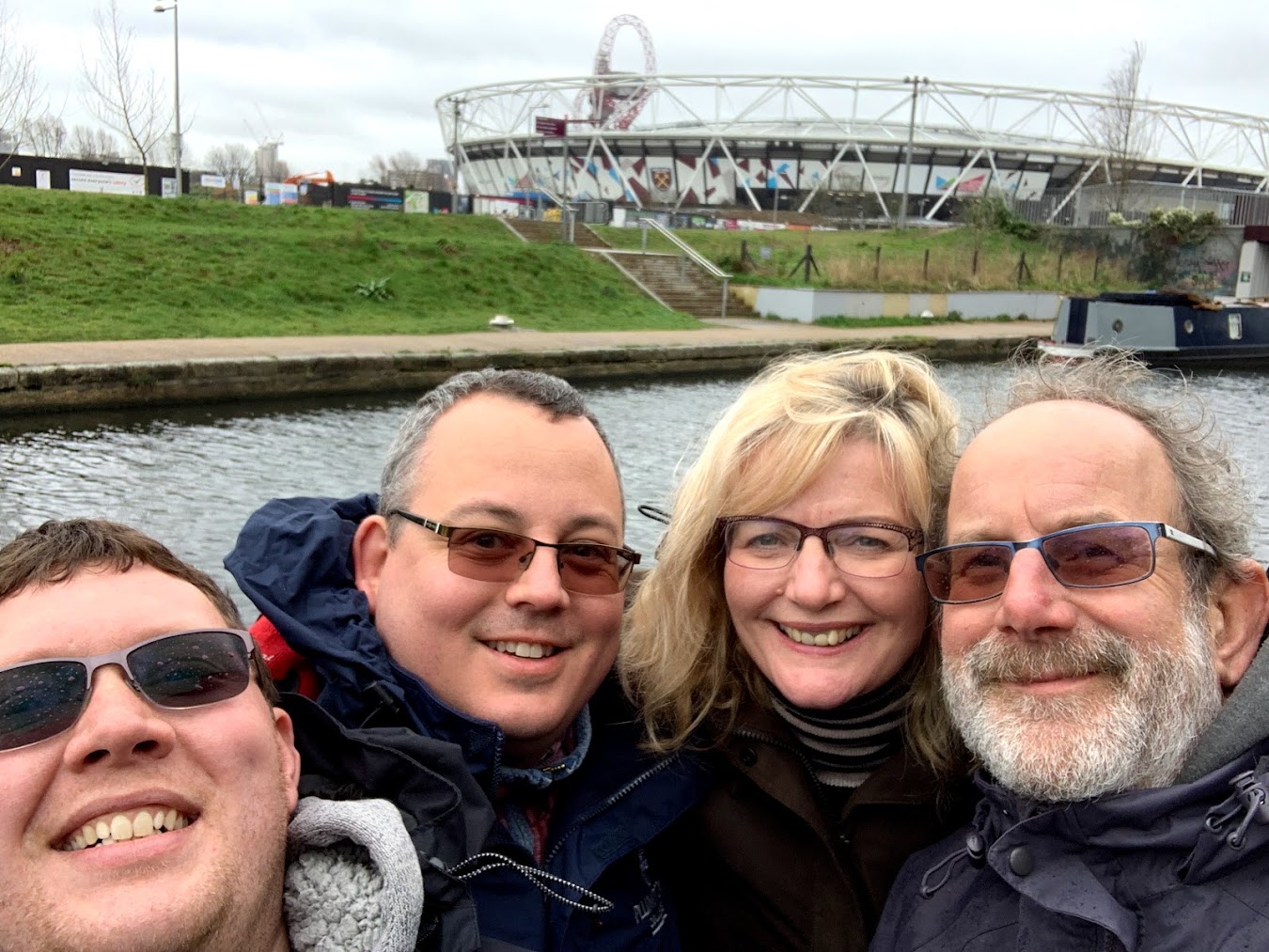
After our first memorable adventure aboard Tilly Mint, we were delighted to return for another journey with Neil and Naomi—this time cruising south along the River Lee Navigation towards London’s Queen Elizabeth Olympic Park.
The day began under encouraging blue skies, but the closer we came to London, the greyer the weather became. Before long, the sunshine had disappeared entirely, replaced by persistent rain and the unmistakable feeling that spring had reconsidered its arrival.
Fortunately, a wet day on the waterways is still a day on the waterways.
Setting off aboard Tilly Mint
With Neil at the helm and Naomi keeping a watchful eye on proceedings, we set off aboard Tilly Mint.
There is a calming rhythm to travelling by narrowboat. The gentle movement of the water, the steady hum of the engine and the changing scenery encourage you to slow down and enjoy the journey rather than rush towards the destination.
Initially, the weather appeared to be on our side. The riverbanks looked fresh and green, the water was calm and the journey ahead promised a relaxing day’s cruising.
Then the clouds gathered.
Cruising through the rain
By the time the rain arrived, it had clearly committed itself to the entire day.
The light drizzle soon became persistent, indifferent rain—the sort that ignores waterproof clothing, finds its way down the back of your neck and makes anyone standing at the helm question the fairness of enclosed steering positions.
Neil remained remarkably calm as he guided Tilly Mint along the navigation. Naomi stayed close beside him, offering loyal companionship and, presumably, silent moral support. Whether she was also judging everyone who had chosen to remain inside remains unknown.
The soft patter of rain on the roof became the soundtrack to our journey. Occasionally, it was interrupted by the call of a waterbird, the engine changing note or the splash of rain striking the river’s surface.
Where countryside meets the city
One of the pleasures of the Lee Navigation is the way its surroundings gradually change.
We passed stretches bordered by reeds, trees and pockets of greenery, where herons stood motionless at the water’s edge and the city felt surprisingly distant. Elsewhere, bridges, warehouses and remnants of the area’s industrial past revealed the waterway’s long connection with the growth of London.
The transition was gradual rather than sudden. Nature, industry and modern regeneration sat alongside one another, each contributing a different layer to the landscape.
Even beneath heavy grey skies, there was plenty to see. Trees and buildings shimmered in broken reflections, their shapes distorted by the rain and the movement of Tilly Mint. The muted colours gave the navigation an atmospheric, almost watercolour-like appearance.
Approaching the Olympic Park
As we continued south, the unmistakable structures of the Queen Elizabeth Olympic Park began to appear.
Only seven years earlier, this part of East London had welcomed the world for the 2012 Olympic and Paralympic Games. Arriving by water offered a very different perspective from approaching by road or rail. Modern landmarks rose above a historic navigation that had carried boats through the area for generations.
It was a striking contrast: the slow, traditional pace of a narrowboat set against one of London’s most prominent areas of modern regeneration.
Despite the rain, there was something special about reaching the Olympic Park aboard Tilly Mint. We had watched the landscape evolve around us, from quieter green stretches to an unmistakably urban waterway, all at the wonderfully unhurried pace of canal travel.
The simple pleasure of slow travel
By the end of the journey, the weather had tested both our waterproofs and Neil’s endurance at the helm. Yet the rain had not spoilt the day. If anything, it had given the cruise a character of its own.
Travelling slowly allows you to notice the details that would otherwise pass unnoticed: a heron among the reeds, an old industrial building beside the water, rain dancing across the surface or a famous London landmark gradually emerging ahead.
That is one of the great pleasures of narrowboating. The destination matters, but the journey is never simply the space between where you started and where you planned to finish.
We arrived damp but content, having enjoyed another memorable day aboard Tilly Mint. We would not have changed a thing—although Neil, after spending hours exposed to the rain at the helm, might reasonably have requested better weather, a hot drink and a considerably longer break.