We had originally planned to arrive at Braunston aboard Tilly Mint.
Cruising into one of Britain’s best-known canal gatherings by narrowboat seemed the perfect way to experience it. However, reports of heavy traffic, crowded locks and slow progress persuaded us to exchange the waterways for the road.
It was not quite the entrance we had imagined—but it gave us more time to enjoy one of the highlights of the canal calendar.
A change of plan
Braunston occupies a special place within Britain’s inland waterway network.
Situated close to the junction of the Grand Union and Oxford canals, the village has been an important centre for boating and canal trade for centuries. Each summer, its marina welcomes an extraordinary gathering of historic narrowboats and former working boats.
Our original plan had been to cruise there aboard Tilly Mint. Arriving among a flotilla of other boats would undoubtedly have added to the occasion.
As the event approached, however, we began hearing reports of congestion, long queues at locks and exceptionally busy waterways. With only a weekend available, travelling by boat risked turning an enjoyable outing into a race against time.
We reluctantly left Tilly Mint behind and drove instead.
Arriving at Braunston Marina
Any disappointment quickly disappeared when we reached Braunston Marina.
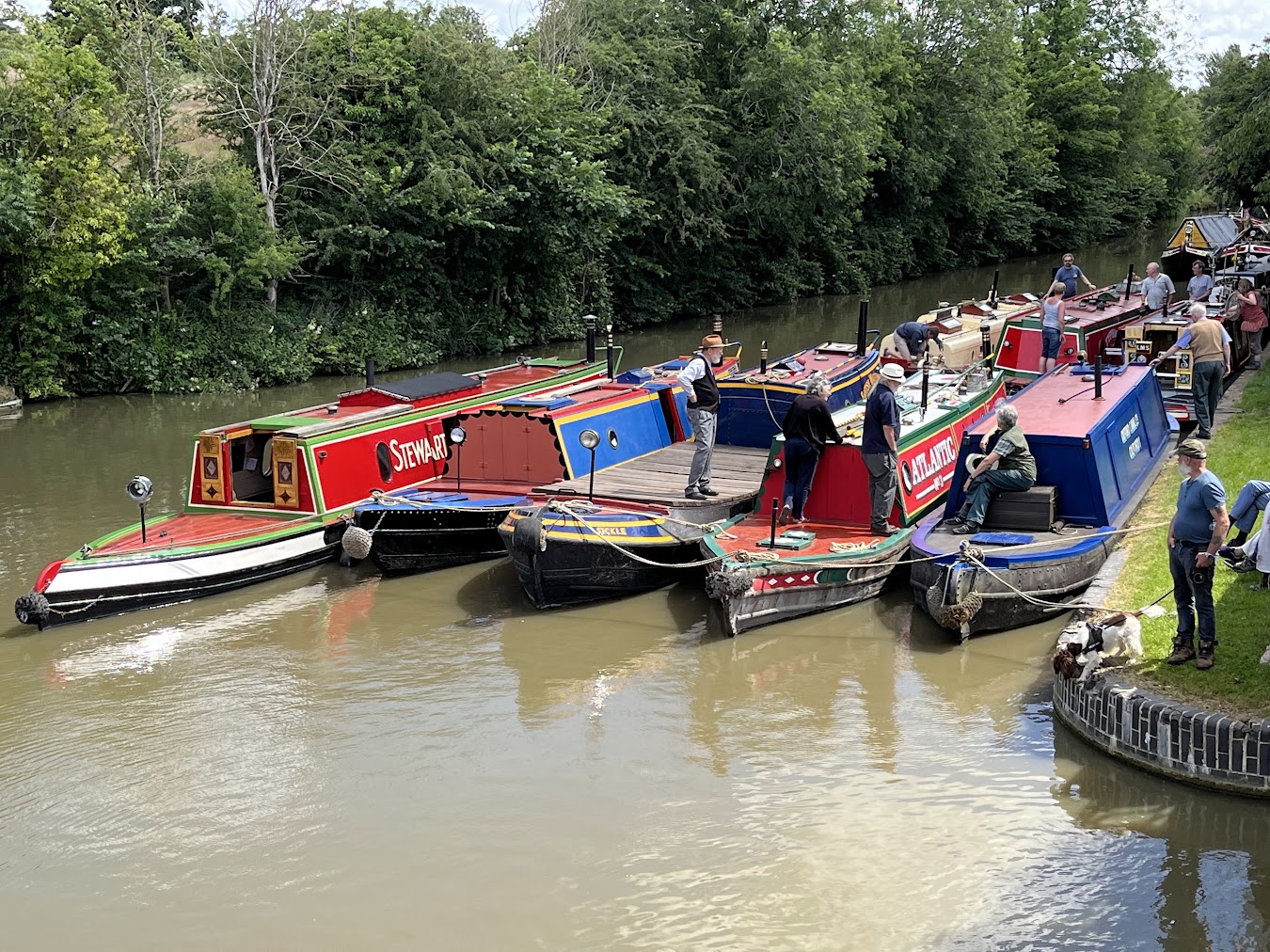
The site was filled with historic boats, colourful paintwork and gleaming brass. Some vessels had worked Britain’s canals for generations, carrying cargo before the growth of road and rail transport transformed the network.
Their survival represents an enormous commitment from owners, volunteers and specialist craftspeople. Maintaining a historic narrowboat requires far more than fresh paint: traditional materials, engineering knowledge and countless hours of practical work are needed to preserve these vessels for future generations.
Walking among them felt like stepping into a living exhibition of canal history.
Historic boats on parade
The boat parades were among the highlights of our visit.
Watching the historic fleet manoeuvre through the marina provided an opportunity to see the boats doing what they were built to do. Engines chugged, horns sounded and crews exchanged instructions as each vessel passed before the gathered crowds.
The size and handling of the former working boats were particularly impressive. Originally designed to carry substantial loads, they were operated along narrow waterways, through confined bridge holes and into crowded locks—often by families who lived and worked aboard.
Seeing so many gathered together brought that history vividly to life.
Stories from the waterways
The boats were fascinating, but so were the people caring for them.
Owners and crews generously shared stories about their vessels, including their working lives, restoration and continuing journeys across the canal network.
Every boat appeared to have its own history. Some had been rescued from serious decline, while others had passed between generations of dedicated custodians. Their stories reflected the wider fortunes of Britain’s canals: commercial decline, abandonment, restoration and eventual revival as places for leisure, heritage and wildlife.
That combination of boats, people and personal histories gave the event its distinctive atmosphere.
Engines, craftsmanship and canal tradition
Away from the parades, we explored displays, demonstrations and stalls around the marina.
Traditional canal painting, handmade crafts, boating equipment and waterway artwork all contributed to the sense of occasion. Live music and food stalls created a relaxed festival atmosphere, with plenty of opportunities to pause and watch marina life unfold.
The historic engine displays proved especially interesting.
These engines possess a character very different from their modern equivalents. Their distinctive sounds, exposed engineering and carefully maintained components reveal both the ingenuity of their original designers and the skill of those who continue to operate them.
They were powerful reminders that preserving canal heritage involves machinery and practical knowledge as much as boats and buildings.
More than a collection of old boats
The Braunston gathering celebrates far more than beautiful vessels.
Historic boats provide a tangible connection with the people whose labour sustained Britain’s canal network. They carried coal, timber, steel and countless other goods between towns, factories and ports, helping to support the country’s industrial development.
Today, they also serve as moving ambassadors for the waterways.
Their continued presence encourages people to understand how the canals developed, why they mattered and why their future remains worth protecting.
A day well spent
By the end of the day, we were pleased that we had changed our plans.
Arriving aboard Tilly Mint would have been memorable, but driving allowed us to enjoy the event without worrying about queues, delays or the return journey. Sometimes boating requires flexibility—and occasionally the wisest boating decision is not to take the boat at all.
The show delivered everything we had hoped for: remarkable historic vessels, traditional craftsmanship, working engines and a community united by its enthusiasm for the waterways.
Celebrating living canal heritage
Our visit reinforced why events such as Braunston matter.
Britain’s historic narrowboats are not simply museum pieces. They remain working examples of the skills, industries and communities that shaped the canal network. Their preservation ensures that this history can still be seen, heard and experienced on the water.
We may have arrived on four wheels rather than by boat, but the day remained firmly rooted in canal life.
Next time, perhaps Tilly Mint will make the journey with us—although we may check the lock queues first.