Publié le

Why Use Sound-Deadening Paint in a Narrowboat Engine Bay?

Life aboard a narrowboat is associated with peace, tranquillity and a close connection with the surrounding landscape.

That tranquillity can disappear rather quickly when the engine starts.

As we plan Priscilla, controlling machinery noise will be an important part of creating a comfortable boat. One possible component of that work is sound-deadening paint—or, more accurately, a vibration-damping coating.

What does sound-deadening paint do?

An engine creates both airborne noise and vibration.

Vibration can pass into surrounding steel panels, causing them to resonate and radiate additional noise. A specialist damping coating adds mass and reduces some of that panel movement.

It will not silence an engine or replace proper acoustic insulation. Its principal value is treating awkward metal surfaces where conventional materials may be difficult to install.

Why consider it for a narrowboat?

Space within a narrowboat’s engine bay can be limited. Pipes, cables, access panels and irregular surfaces may leave areas where attaching acoustic sheets is impractical.

A suitable coating may offer several advantages:

  • It can reach corners and uneven surfaces
  • It adds relatively little bulk
  • It remains permanently attached when correctly applied
  • It can complement conventional acoustic insulation
  • It may help reduce vibration from lightweight panels and covers

The greatest benefit is likely to come from applying it to panels prone to resonance—not simply painting every available surface.

Choosing the correct product

An ordinary decorative “soundproofing paint” is unlikely to be suitable for an engine bay.

Any coating used around propulsion machinery should be:

  • Intended for vibration damping rather than merely marketed as sound absorbing
  • Compatible with steel and the existing primer or paint system
  • Resistant to the temperatures expected in that location
  • Suitable for a marine or industrial environment
  • Resistant to oil, fuel, moisture and routine cleaning
  • Applied without compromising fire safety
  • Approved by the boatbuilder, coating manufacturer or relevant specialist

Manufacturer instructions concerning surface preparation, thickness, curing and temperature limits must be followed carefully.

The coating should never be applied to the engine, exhaust, moving components, electrical connections, identification plates or equipment requiring heat dissipation.

Part of a complete noise-control system

Sound-deadening paint should be regarded as one layer within a broader design.

A quieter installation may also include:

Marine acoustic insulation

Fire-resistant, liquid-tight acoustic panels can absorb airborne sound and add mass to engine-bay covers and partitions. Seams and exposed edges should be properly sealed.

Flexible engine mounts

Correctly specified and maintained mounts help isolate vibration before it reaches the hull. Worn mounts or poor engine alignment can make even extensive soundproofing ineffective.

Acoustic seals

Noise can escape through surprisingly small gaps. Well-fitted deck boards, access panels and hatches may need appropriate seals, provided ventilation and drainage are not obstructed.

Exhaust design

The exhaust can be a significant source of noise. Correctly specified silencers, waterlocks or other components may substantially affect the result.

Regular maintenance

Loose panels, damaged mounts, poor alignment and worn components can all increase noise and vibration. Soundproofing should never be used to disguise a mechanical fault.

Ventilation and access must come first

Reducing noise must not restrict the air required for cooling or combustion.

The installation must retain adequate ventilation, drainage and access for inspection, servicing and emergency response. Soundproofing should not conceal fuel connections, electrical equipment or other components that require regular examination.

Fire-resistant products specifically designed for marine engine compartments are preferable to domestic acoustic foam or improvised insulation.

What sound-deadening paint cannot do

The name can create unrealistic expectations.

A damping coating will not:

  • Make the engine silent
  • Absorb all airborne noise
  • Correct faulty engine mounts or poor alignment
  • Replace acoustic panels and effective seals
  • Improve the engine’s efficiency
  • Prevent mechanical wear by itself

Its effectiveness will depend upon the construction of the compartment, the panels treated and the quality of the wider installation.

Planning a quieter Priscilla

For Priscilla, noise control should be designed into the boat rather than added as an afterthought.

Sound-deadening coatings may be useful on selected steel panels, particularly where space or access makes conventional materials difficult to fit. However, the best result will come from combining vibration control, marine acoustic insulation, careful sealing, suitable machinery mounts and a properly designed ventilation system.

The objective is not complete silence. It is to reduce unnecessary noise and vibration so that cruising remains part of the pleasure of being on the water.
Technical reference

Publié le

UK Waterways Where VHF Radio Is Required or Recommended

Marine VHF radio is unnecessary on most of Britain’s quiet inland canals. On tidal rivers, estuaries and commercial waterways, however, it can become an important safety tool—and may sometimes be compulsory.

The precise rules depend upon the waterway, the vessel’s size and the proposed passage. Requirements should therefore always be confirmed with the relevant navigation or harbour authority before setting out.

Tidal Thames

The tidal Thames is the clearest example of a formal carriage requirement.

The Port of London Authority requires vessels measuring 13.7 metres—approximately 45 feet—or more to carry operational VHF equipment on most passages through its waters. There are limited exemptions, including for narrowboats navigating only between Brentford and Teddington.

Smaller vessels are strongly advised to carry VHF. Those without it may need to report to London Vessel Traffic Services by telephone before entering the tidal river.

At 58 feet, Priscilla would exceed the normal VHF threshold.

Tidal Trent, Yorkshire Ouse and Humber

The tidal Trent leads towards the Yorkshire Ouse and Humber Estuary, where narrowboats can encounter powerful tides, exposed water and substantial commercial traffic.

VHF is highly advisable on the tidal Trent and becomes increasingly important when travelling beyond Keadby towards Trent Falls and the Humber. Carriage requirements can vary according to the vessel and the waters entered, so the intended passage must be agreed with the relevant authorities.

Even where it is not compulsory for a particular narrowboat, travelling without VHF would remove an important means of receiving traffic information and communicating with locks, other vessels and port control.

River Severn and the Severn Estuary

VHF is recommended for more demanding passages on the tidal Severn and around the Severn Estuary, particularly when approaching Sharpness.

Sharpness Radio maintains VHF communication on Channel 13. Boats can also make some required contacts by telephone, so VHF should not be described as universally compulsory throughout the tidal Severn.

The combination of strong tides, limited stopping opportunities and commercial movements nevertheless makes it a valuable part of a properly prepared passage.

Bristol Channel and tidal River Avon

The Bristol Channel has one of the world’s largest tidal ranges and should be treated as serious coastal water.

Marine VHF is strongly recommended for narrowboats attempting passages involving the Bristol Channel, Avonmouth, Portishead or the tidal Avon. Harbour and lock facilities use VHF, although telephone alternatives may be available at some locations.

The exact equipment requirement should be confirmed as part of the passage plan.

Manchester Ship Canal

Pleasure craft must obtain permission and make advance arrangements before entering the Manchester Ship Canal.

The canal authority prefers communication by VHF because transmissions are recorded, but its published small-craft guidance also accepts mobile telephones. VHF is therefore highly desirable rather than universally mandatory for every pleasure craft passage.

Crews must still comply with the authority’s current transit conditions and remain contactable throughout the journey.

River Medway and Thames Estuary

The tidal Medway is a commercial navigation managed by Peel Ports, with Medway Vessel Traffic Services operating on VHF.

For an ordinary narrowboat, VHF is not automatically compulsory throughout the river. However, it is strongly advisable when navigating the lower Medway, approaching Sheerness or entering the Thames Estuary.

Local directions, notices to mariners and reporting requirements should be checked before travelling.

Clyde and Forth

The Clyde and Forth include commercial ports, controlled areas and busy shipping channels.

There is no simple rule requiring every leisure craft throughout both estuaries to carry VHF. Requirements and recommended channels depend upon the harbour area and proposed passage.

A narrowboat undertaking either journey should carry suitable communications equipment and consult the relevant harbour authority in advance.

Other tidal and commercial waterways

VHF may also be required or strongly recommended on parts of waterways including:

  • The tidal Great Ouse
  • The River Witham and approaches to the Wash
  • The River Mersey
  • The Ribble Link and River Douglas
  • The tidal Medway and Swale
  • Major harbour and port approaches

The rules are not determined merely by whether a river is tidal. Vessel length, commercial activity, local directions and the precise route can all affect the position.

Where VHF is usually unnecessary

A marine radio is not normally needed on ordinary canal journeys along waterways such as:

  • The Grand Union Canal
  • The Leeds and Liverpool Canal
  • The Oxford Canal
  • The Kennet and Avon Canal
  • The Shropshire Union Canal

A charged mobile telephone is generally more useful for contacting the navigation authority or emergency services on these waterways.

VHF should not be carried casually without the necessary licensing and knowledge. The radio equipment must be appropriately licensed, and the operator must normally hold a recognised certificate such as the Short Range Certificate.

Planning for Priscilla

Priscilla will spend much of her time on waterways where VHF remains silent.

However, she is being designed with more demanding journeys in mind. A fixed, DSC-capable radio supported by a waterproof handheld unit would give us reliable communication on tidal rivers, estuaries and commercial waterways.

It is equipment we may rarely need—but on the passages where it matters, it could be indispensable.

Some of those passages form part of a much bigger plan.

For now, the destination remains our secret.

Official and specialist guidance

Publié le

Why Would a Narrowboat Need a VHF Radio?

For most journeys on quiet inland canals, a mobile telephone provides all the communication a narrowboat crew is likely to need.

The position changes when a boat ventures onto tidal rivers, estuaries, commercial waterways or busy port approaches. In these environments, marine VHF radio can become an important part of navigation and safety—and, in certain circumstances, a formal requirement.

As Priscilla is being designed for more ambitious cruising, VHF deserves to be considered from the outset.

Communicating with navigation authorities

Some locks, bridges, harbourmasters and vessel-traffic services communicate with boats by VHF.

A radio allows the crew to:

  • Request passage through controlled structures
  • Receive instructions from lock or bridge operators
  • Report their position and intentions
  • Hear navigation warnings and traffic information
  • Follow directions during an incident

The appropriate working channel varies between waterways and locations, so it must be checked before beginning a passage.

Navigating tidal waters

Tidal rivers present risks rarely encountered on an ordinary canal.

Changing water levels, stronger currents, restricted visibility and commercial traffic can all affect the passage. VHF provides immediate communication with the organisations managing the waterway and with suitably equipped vessels nearby.

It also allows the crew to hear other radio traffic. Knowing that a large vessel is approaching a bend, bridge or narrow section can be as valuable as making a call ourselves.

Sharing the water with commercial vessels

A narrowboat is small, slow and comparatively difficult to manoeuvre when placed alongside a large commercial vessel.

The crew of a cargo vessel may have restricted visibility and require considerable distance to alter course or stop. Marine radio can help both vessels establish their intentions and avoid uncertainty.

VHF does not replace proper navigation, observation or compliance with local rules. It provides an additional source of information when the consequences of a misunderstanding may be serious.

Calling for help

In an emergency, VHF can reach the Coastguard, navigation authority and nearby vessels simultaneously.

Unlike a mobile telephone, it does not depend upon knowing the correct telephone number or having coverage from a particular mobile network. Other vessels monitoring the channel may hear the call and be close enough to assist.

VHF Channel 16 is used for distress, urgency and initial calling in maritime areas. It should not be used for general conversation, and local inland waterways may use different operational channels.

A distress call is appropriate only when there is grave and imminent danger. Training is essential so that the operator understands when and how to make Mayday, Pan-Pan and routine calls.

When is VHF compulsory?

There is no general legal requirement for every narrowboat to carry VHF radio.

Requirements depend upon the vessel, its length and the waterway being navigated. The tidal Thames is an important example: the Port of London Authority requires narrowboats measuring 13.7 metres—approximately 45 feet—or more to carry VHF on most passages through its waters. A limited exemption applies between Brentford and Teddington.

At a planned length of 58 feet, Priscilla would exceed that threshold.

Elsewhere, VHF may be recommended rather than mandatory. On the River Severn Navigation, for example, Canal & River Trust guidance advises boats carrying VHF to monitor Channel 74, but this does not amount to a universal requirement for every narrowboat on the river.

Local navigation instructions must therefore be checked for every intended route.

Fixed or handheld equipment

A permanently installed VHF radio generally offers greater range than a handheld set because it can use a higher-mounted external aerial and the boat’s electrical supply.

A waterproof handheld radio remains valuable as a backup and can be carried by a crew member working away from the steering position.

For Priscilla, the likely solution is a fixed, Digital Selective Calling-capable radio supported by at least one handheld unit.

Another part of Priscilla’s preparation

VHF would probably see little use during an ordinary cruise along a quiet rural canal.

However, Priscilla is not being planned solely around ordinary cruising.

Her communications equipment must reflect the more demanding waterways she may encounter, while giving us the training and confidence to use it properly.

We are not revealing every part of the journey yet—but we know that reliable communication will matter along the way.

Official guidance

Publié le

A Memorable Weekend Aboard Tilly Mint: Conquering Caen Hill

Some boating adventures begin with the gentle release of ropes and the reassuring rhythm of a narrowboat engine.

This one began with a breakdown on the M25.

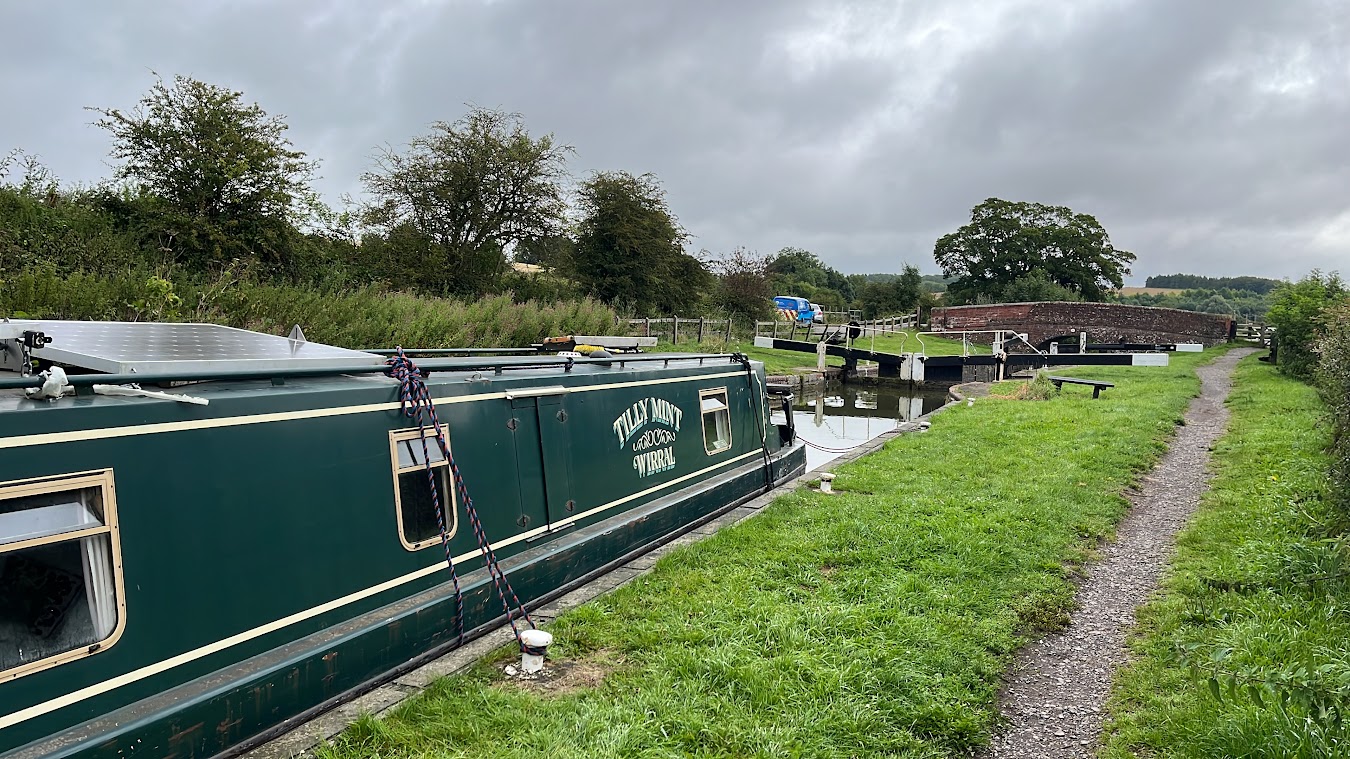
We were joining our friends Neil and Naomi aboard Tilly Mint for a long-anticipated weekend on the Kennet and Avon Canal. The centrepiece would be Caen Hill—one of the most spectacular and demanding lock flights on Britain’s waterways.

First, however, we had to reach the boat.

Friday: The journey that refused to begin

We left home at 2pm, looking forward to an evening aboard Tilly Mint.

An hour later, our car broke down on the M25.

Three hours passed before the recovery service arrived and transported us to Basingstoke. We reached the rental-car office at around 7pm, only to face another two-hour wait for a replacement vehicle.

By the time we finally arrived at Tilly Mint, it was 10.30pm.

It was considerably later than planned, but Neil, Naomi and the boat were waiting. After the afternoon we had endured, simply stepping aboard felt like an achievement.

Saturday: Taking on Caen Hill

We began early on Saturday, setting off at 7am for the weekend’s principal challenge.

The full Caen Hill flight comprises 29 locks over approximately two miles, raising or lowering boats by 237 feet. Its most recognisable section is the central run of 16 locks, each accompanied by a large side pound.

Seen from a distance, the locks form an extraordinary piece of canal engineering.

Seen from the deck of a narrowboat, they also represent an enormous quantity of ropes, paddles and lock gates.

Working through the flight required concentration, coordination and considerable physical effort. There was little time to admire the view while moving between chambers, controlling the boat and preparing the next lock.

Nevertheless, the steady progress was immensely satisfying. Each opening gate took Tilly Mint another step through one of the greatest challenges on the Kennet and Avon Canal.

Reaching the end

We completed the day at around 5.40pm—more than ten hours after setting out.

We were tired, exhilarated and ready for a drink.

Fortunately, we found a wonderfully quirky pub where we could celebrate before continuing to an Italian restaurant for dinner and, inevitably, further refreshments.

After the motorway breakdown, recovery truck, rental-car delay and a full day working locks, it felt as though we had packed an entire holiday into little more than 24 hours.

Sunday: Lunch and the journey home

Sunday offered a much gentler conclusion.

We enjoyed a hearty lunch with Neil and Naomi before saying goodbye and beginning the journey home.

There were no major lock flights to tackle and, thankfully, no further roadside dramas.

A weekend to remember

The weekend had not begun as planned, but the difficult journey made finally reaching Tilly Mint feel even more rewarding.

Navigating Caen Hill was demanding, memorable and immensely satisfying—particularly when shared with good friends.

It was a short adventure containing a breakdown, a replacement car, 29 locks, excellent company and a well-earned celebration.

We would happily do most of it again.

Perhaps not the M25.

Publié le

Understanding VHF Radio for Narrowboats

VHF radio is not essential for most narrowboats travelling exclusively on quiet, non-tidal inland waterways. However, it becomes increasingly valuable—and may be required by the navigation authority—when venturing onto tidal rivers, estuaries and busier commercial waterways.

As we plan Priscilla and consider where she may eventually take us, we need to understand both the practical benefits and the legal requirements.

Does a narrowboat need VHF radio?

There is no general requirement for every UK narrowboat to carry VHF radio.

On many canals, a mobile telephone is the more practical means of communication. Different rules can apply on tidal and commercial waterways, however, and some navigation authorities require or strongly recommend VHF for particular passages.

The requirements for the intended route should therefore always be checked before setting out.

If marine VHF equipment is installed or used, it must normally be appropriately licensed.

The Ship Radio Licence

A fixed VHF radio installed aboard a narrowboat is covered by a Ship Radio Licence issued by Ofcom.

The licence relates to the vessel and records its eligible radio equipment. It may also provide the vessel with an internationally recognised call sign and, where applicable, a Maritime Mobile Service Identity number for Digital Selective Calling.

An online Ship Radio Licence is free. The licence holder must keep its vessel and equipment details accurate and comply with Ofcom’s conditions.

A handheld radio used on different UK vessels may instead qualify for a Ship Portable Radio Licence. This follows the radio rather than one particular boat, but has limitations, particularly when travelling abroad.

The operator’s certificate

Licensing the equipment is only half of the requirement.

A marine VHF radio must normally be operated by—or under the direct supervision of—someone holding an appropriate Maritime Radio Operator’s Certificate of Competence.

For most leisure narrowboats using VHF or VHF with Digital Selective Calling, this will be the Short Range Certificate, commonly known as the SRC.

The SRC covers subjects including:

  • Radio controls and correct channel use
  • Routine calling procedures
  • Distress, urgency and safety calls
  • Digital Selective Calling
  • Radio etiquette and message structure
  • Emergency procedures

Courses are available through Royal Yachting Association recognised training centres and can be completed in the classroom or through online study, followed by an examination.

Fixed or handheld VHF?

A fixed radio generally provides greater transmission range because it uses the boat’s power supply and a permanently mounted aerial. It can also be integrated with GPS and Digital Selective Calling equipment.

A handheld radio is portable and useful when operating away from the steering position. Its range and battery life are usually more limited, although a waterproof handheld set can provide valuable backup.

For a narrowboat expected to tackle more demanding waterways, a fixed DSC-capable radio supported by a handheld unit may offer the most flexible arrangement.

Why training matters

VHF is not simply another telephone.

Marine radio uses shared channels and established procedures designed to make communication brief, clear and effective. Incorrect use can interfere with safety traffic or prevent an urgent message from being understood.

Training provides the confidence to make routine calls and, more importantly, to respond correctly during an emergency.

What we will need for Priscilla

If Priscilla carries a fixed marine VHF radio, our planning checklist will include:

  • A free Ofcom Ship Radio Licence for the boat
  • Accurate registration of the installed radio equipment
  • A Short Range Certificate for at least one regular operator
  • The radio licence and operator documentation kept with or near the equipment
  • Checks on the requirements of every tidal or commercial waterway we intend to use
  • Additional checks before taking the radio outside UK waters

More than a legal requirement

VHF radio may be unnecessary for an ordinary journey along a quiet canal, but Priscilla is being designed with more ambitious cruising in mind.

Understanding the licensing, training and equipment now will help ensure that her communication systems are properly planned from the outset.

It is another small part of preparing a narrowboat for a much bigger adventure.

Official guidance

Publié le

Why We’re Choosing a 58-Foot Narrowboat

Designing our future narrowboat begins with one fundamental decision: its length.

Every additional foot creates more living space, but a longer boat can restrict access to parts of the canal network and make some locks more challenging. After considering how we intend to travel and live aboard, we have chosen a 58-foot narrowboat.

For us, it offers the right balance between cruising flexibility and creating a comfortable long-term home.

Finding the right length

A length of approximately 57 feet is commonly regarded as the most versatile choice for exploring the connected inland waterway network.

We have decided to extend that slightly to 58 feet.

That additional foot may sound insignificant, but aboard a narrowboat every inch matters. It can provide valuable extra storage, improve the proportions of a room or make the difference between a compromised layout and one that works comfortably.

A 58-foot boat should remain suitable for most of the waterways we hope to explore. However, lock dimensions, water levels and local restrictions vary, so individual routes will always need to be checked carefully.

We accept that a few waterways may be inaccessible or require particularly careful handling. For us, that is a reasonable compromise in return for greater comfort during extended cruising and, eventually, full-time life aboard.

Designed for living, not occasional holidays

Our boat will not simply be somewhere to spend the occasional weekend.

We want it to become a comfortable home capable of supporting extended journeys throughout Britain and potentially farther afield. Its layout must therefore work for everyday life rather than merely looking impressive at a boat show.

The additional length will give us greater flexibility when planning the interior. It should allow us to incorporate better storage, avoid unnecessarily cramped rooms and create a boat that feels comfortable without wasting space.

A narrowboat will always require careful compromises, but thoughtful design can prevent it from feeling compromised.

An enclosed bow

One of our clearest decisions is to have an enclosed bow rather than a conventional open well deck.

Front seating can be attractive, but our experience suggests that we would use it relatively rarely. Weather, wind and the availability of better seating elsewhere aboard can leave a traditional bow area occupying valuable space without contributing much to daily life.

Enclosing this area allows us to extend the internal accommodation farther forward and create a more generous bedroom.

That matters considerably more to us.

A larger bedroom should provide better access around the bed, more practical storage and a calmer, less confined space. These are modest improvements individually, but they will make a considerable difference when living aboard for weeks or months at a time.

We would rather devote the space to something we use every day than preserve an outdoor seating area simply because it is conventional.

A square stern

At the opposite end of the boat, we intend to specify a square stern.

The stern will be one of the principal outdoor social spaces aboard. It needs to work not only when cruising but also when moored, entertaining friends or simply sitting outside and watching the world pass.

A squarer design makes more effective use of the boat’s available footprint. It can offer better seating, easier movement and additional storage compared with a heavily curved stern.

It should also provide a more practical space for the person steering and anyone joining them during the journey. Narrowboating is far more enjoyable when the helm does not become an isolated position occupied by one person while everyone else disappears inside.

The precise arrangement will need to be developed carefully with the boatbuilder. Safety, access to the controls and protection of the propulsion equipment must remain central to the design.

The objective is not simply to make the stern larger, but to ensure that every part of it serves a purpose.

Making every foot work harder

The enclosed bow and square stern reflect the same principle: space aboard must earn its place.

Rather than following a conventional narrowboat layout automatically, we want to consider how we will genuinely use each area.

Our priorities are clear:

  • A comfortable bedroom suitable for long-term living
  • Generous and intelligently designed storage
  • A practical interior without wasted circulation space
  • An outdoor seating area that we will genuinely use
  • A welcoming stern where people can share the cruising experience
  • A boat that remains manageable across most of the UK canal network

These priorities will guide the detailed layout as the project develops.

Balancing freedom and comfort

Choosing a boat always involves compromise.

A shorter narrowboat would offer slightly greater cruising flexibility. A longer boat would provide more internal space but progressively restrict the routes available to us.

At 58 feet, we believe we have found our balance.

It should give us enough room to create a comfortable and highly practical home while preserving access to the great majority of the journeys we want to undertake.

The enclosed bow will allow us to prioritise the bedroom. The square stern will create a more useful outdoor and social space. Together, these choices begin to define a boat shaped around our lives rather than around convention.

There are countless decisions still to make, but the foundations of the design are becoming clear.

Our future narrowboat will be 58 feet long, enclosed at the bow and square at the stern—a boat designed for travelling widely, living comfortably and making every available inch count.

Publié le

A Tranquil Weekend on Tilly Mint—Cruising into Bath

Sometimes the shortest journeys provide exactly the escape we need.

For a peaceful weekend aboard Tilly Mint, we cruised along the Kennet and Avon Canal from Bathampton to Bath Top Lock. From there, the historic city centre—and an afternoon of relaxation at Thermae Bath Spa—was only a short walk away.

It was the perfect combination of slow travel, beautiful surroundings and time to unwind.

An evening cruise into Bath

We arrived at Bathampton on Friday evening and set off towards Bath as the sun began to sink across the canal.

Our journey was only a few miles, but there was no need to hurry. The pleasure came from settling aboard Tilly Mint, watching the scenery pass and feeling the working week gradually disappear behind us.

We moored near Bath Top Lock, approximately a mile from the city centre. It provided an ideal base from which to explore, combining a peaceful waterside setting with easy access to everything Bath had to offer.

Once Tilly Mint was safely secured, we walked into the city for dinner.

Bath’s Georgian architecture looked particularly beautiful in the evening light. We wandered through its historic streets before finding a restaurant and enjoying a relaxed meal together.

It was an excellent beginning to our weekend.

Exploring historic Bath

Saturday morning began with a leisurely walk around the city.

Rain was forecast, but the mild weather gave us time to explore before it arrived. Bath was already bustling with residents and visitors enjoying its shops, cafés and celebrated landmarks.

The city’s history is visible everywhere.

Its Roman Baths reflect its origins as a place of healing and relaxation, while Bath Abbey and the surrounding Georgian streets reveal later chapters in its remarkable development.

We explored at an unhurried pace, stopping at local shops and cafés before making our way towards the main event of the day.

Returning to Thermae Bath Spa

This was our third visit to Thermae Bath Spa, and it remained one of the highlights of spending time in the city.

The spa uses Bath’s naturally warm, mineral-rich waters, continuing a tradition that has attracted visitors for almost two thousand years.

Adam treated himself to a rejuvenating massage while Chris relaxed in the rooftop pool. Floating in warm water while looking across Bath’s historic rooftops provided a wonderful contrast to life aboard the boat.

The weather may have threatened rain, but that hardly mattered from the comfort of the pool.

After a few deeply relaxing hours, we emerged refreshed and ready to return to Tilly Mint.

Cruising back to Bathampton

Later that afternoon, we retraced our route along the Kennet and Avon Canal towards Bathampton.

Leaving the energy of the city behind, the gentle pace of the boat restored the tranquillity with which our weekend had begun.

This is one of the pleasures of visiting somewhere by narrowboat. A city break and a peaceful countryside escape do not need to be separate holidays—the canal connects the two.

By evening, we were back near Bathampton and ready for dinner at a cosy canalside pub.

Over classic pub food, we reflected upon a day of historic streets, warm spa waters and quiet cruising. Outside, the gentle movement of the canal provided the perfect backdrop.

One final morning aboard

Sunday arrived far too quickly.

After a relaxed breakfast aboard Tilly Mint, it was time to pack our belongings and head home.

We had travelled only a modest distance, but the weekend felt like a genuine escape. There had been no demanding itinerary and no pressure to cover miles—just time to enjoy the canal, explore Bath and relax together.

The pleasure of slow travel

Our weekend demonstrated that a memorable boating adventure does not need to involve a long journey.

Bathampton and Bath are separated by only a short stretch of the Kennet and Avon Canal, yet the route offered everything we needed: beautiful scenery, historic surroundings, excellent food and complete relaxation.

Cruising into the city aboard Tilly Mint made the experience feel particularly special.

It was a reminder that some of the greatest pleasures of canal travel can be found only a few peaceful miles away.

Publié le

Visiting the Braunston Marina Historic Boat Show

We had originally planned to arrive at Braunston aboard Tilly Mint.

Cruising into one of Britain’s best-known canal gatherings by narrowboat seemed the perfect way to experience it. However, reports of heavy traffic, crowded locks and slow progress persuaded us to exchange the waterways for the road.

It was not quite the entrance we had imagined—but it gave us more time to enjoy one of the highlights of the canal calendar.

A change of plan

Braunston occupies a special place within Britain’s inland waterway network.

Situated close to the junction of the Grand Union and Oxford canals, the village has been an important centre for boating and canal trade for centuries. Each summer, its marina welcomes an extraordinary gathering of historic narrowboats and former working boats.

Our original plan had been to cruise there aboard Tilly Mint. Arriving among a flotilla of other boats would undoubtedly have added to the occasion.

As the event approached, however, we began hearing reports of congestion, long queues at locks and exceptionally busy waterways. With only a weekend available, travelling by boat risked turning an enjoyable outing into a race against time.

We reluctantly left Tilly Mint behind and drove instead.

Arriving at Braunston Marina

Any disappointment quickly disappeared when we reached Braunston Marina.

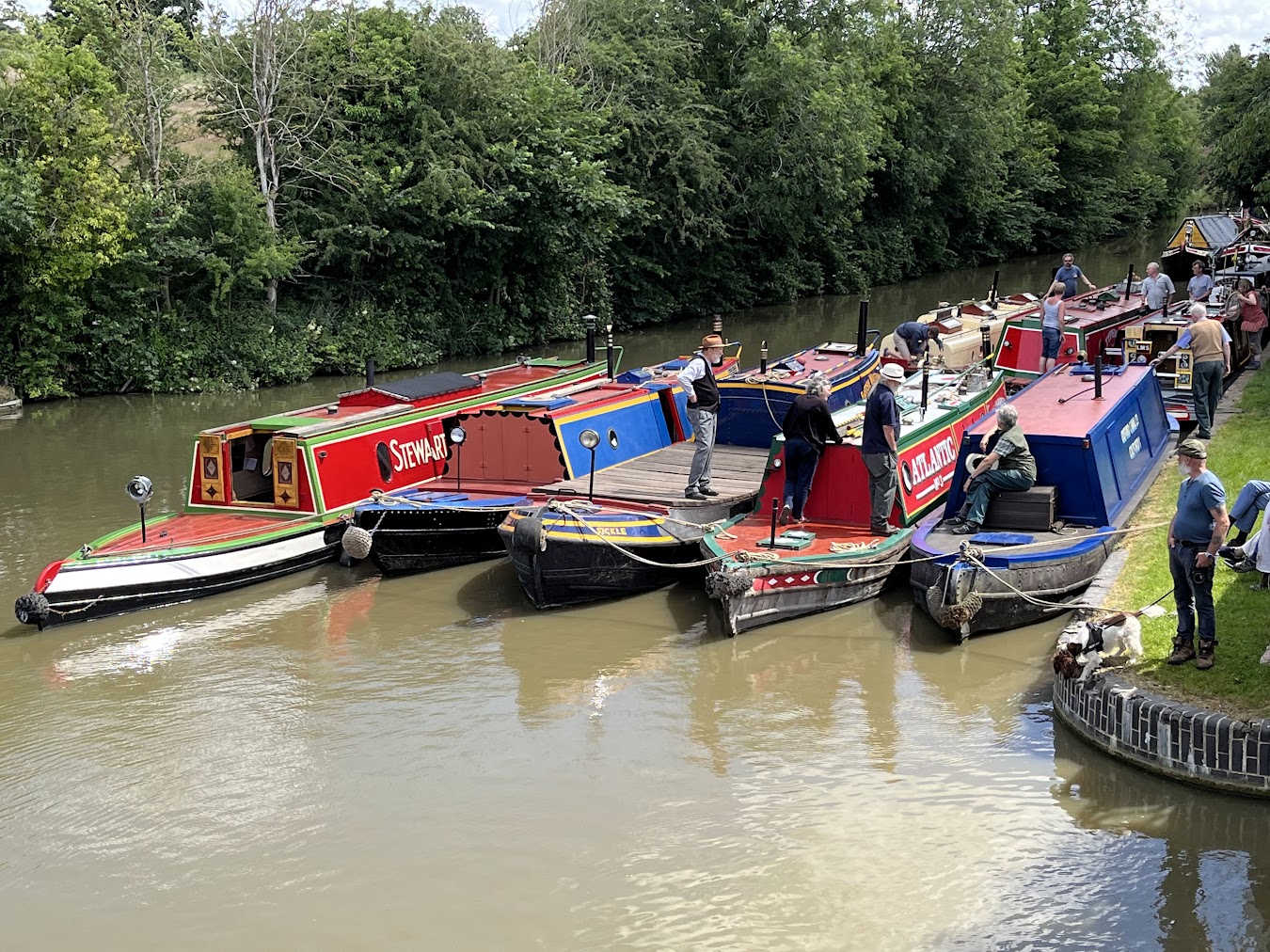
The site was filled with historic boats, colourful paintwork and gleaming brass. Some vessels had worked Britain’s canals for generations, carrying cargo before the growth of road and rail transport transformed the network.

Their survival represents an enormous commitment from owners, volunteers and specialist craftspeople. Maintaining a historic narrowboat requires far more than fresh paint: traditional materials, engineering knowledge and countless hours of practical work are needed to preserve these vessels for future generations.

Walking among them felt like stepping into a living exhibition of canal history.

Historic boats on parade

The boat parades were among the highlights of our visit.

Watching the historic fleet manoeuvre through the marina provided an opportunity to see the boats doing what they were built to do. Engines chugged, horns sounded and crews exchanged instructions as each vessel passed before the gathered crowds.

The size and handling of the former working boats were particularly impressive. Originally designed to carry substantial loads, they were operated along narrow waterways, through confined bridge holes and into crowded locks—often by families who lived and worked aboard.

Seeing so many gathered together brought that history vividly to life.

Stories from the waterways

The boats were fascinating, but so were the people caring for them.

Owners and crews generously shared stories about their vessels, including their working lives, restoration and continuing journeys across the canal network.

Every boat appeared to have its own history. Some had been rescued from serious decline, while others had passed between generations of dedicated custodians. Their stories reflected the wider fortunes of Britain’s canals: commercial decline, abandonment, restoration and eventual revival as places for leisure, heritage and wildlife.

That combination of boats, people and personal histories gave the event its distinctive atmosphere.

Engines, craftsmanship and canal tradition

Away from the parades, we explored displays, demonstrations and stalls around the marina.

Traditional canal painting, handmade crafts, boating equipment and waterway artwork all contributed to the sense of occasion. Live music and food stalls created a relaxed festival atmosphere, with plenty of opportunities to pause and watch marina life unfold.

The historic engine displays proved especially interesting.

These engines possess a character very different from their modern equivalents. Their distinctive sounds, exposed engineering and carefully maintained components reveal both the ingenuity of their original designers and the skill of those who continue to operate them.

They were powerful reminders that preserving canal heritage involves machinery and practical knowledge as much as boats and buildings.

More than a collection of old boats

The Braunston gathering celebrates far more than beautiful vessels.

Historic boats provide a tangible connection with the people whose labour sustained Britain’s canal network. They carried coal, timber, steel and countless other goods between towns, factories and ports, helping to support the country’s industrial development.

Today, they also serve as moving ambassadors for the waterways.

Their continued presence encourages people to understand how the canals developed, why they mattered and why their future remains worth protecting.

A day well spent

By the end of the day, we were pleased that we had changed our plans.

Arriving aboard Tilly Mint would have been memorable, but driving allowed us to enjoy the event without worrying about queues, delays or the return journey. Sometimes boating requires flexibility—and occasionally the wisest boating decision is not to take the boat at all.

The show delivered everything we had hoped for: remarkable historic vessels, traditional craftsmanship, working engines and a community united by its enthusiasm for the waterways.

Celebrating living canal heritage

Our visit reinforced why events such as Braunston matter.

Britain’s historic narrowboats are not simply museum pieces. They remain working examples of the skills, industries and communities that shaped the canal network. Their preservation ensures that this history can still be seen, heard and experienced on the water.

We may have arrived on four wheels rather than by boat, but the day remained firmly rooted in canal life.

Next time, perhaps Tilly Mint will make the journey with us—although we may check the lock queues first.

Publié le

Day 9: The Isle of Skye—Talisker, Fairy Pools and Highland Sunshine

Our journey on the Caledonian Canal had ended, but our Scottish adventure still had one final chapter.

After leaving the boat at Laggan, we travelled west to the Isle of Skye for a day of dramatic landscapes, whisky-making heritage and unexpectedly glorious sunshine.

It was the perfect conclusion to nine memorable days in the Highlands.

Leaving the Caledonian Canal

After one final night aboard, it was time to say goodbye to the boat that had been our home for the past week.

We packed our belongings, completed the handover and left Laggan behind. Although our boating adventure was over, we were not yet ready to begin the long journey south.

Instead, we set off for the Isle of Skye.

The drive was an experience in itself. Winding roads carried us through mountains and alongside lochs, with spectacular views appearing around almost every corner.

After seeing so much of the Highlands from the water, travelling by road revealed another side of this remarkable landscape.

Across to the Isle of Skye

Skye is the largest island in the Inner Hebrides and one of Scotland’s most celebrated destinations.

The island is renowned for its dramatic mountain ranges, rugged coastline and distinctive cultural heritage. Its landscape has been shaped by ancient volcanic activity, leaving behind extraordinary rock formations, steep cliffs and the imposing peaks of the Cuillin.

As we crossed onto the island, the scenery became increasingly dramatic.

This was clearly going to be a very different adventure from our week on the Caledonian Canal.

Visiting Talisker Distillery

Our first major destination was Talisker Distillery at Carbost, on the shores of Loch Harport.

Founded in 1830, Talisker is the oldest working distillery on the Isle of Skye. Its location, between the sea and the Cuillin mountains, provides an appropriately dramatic home for a whisky renowned for its smoky, maritime character.

Chris, as the whisky enthusiast among us, was particularly excited.

The tour explained how malted barley, water and yeast are transformed through mashing, fermentation and distillation before the spirit begins its long maturation in oak casks.

It was fascinating to see how traditional methods, careful control and generations of experience combine to produce a whisky so strongly associated with its island home.

A whisky enthusiast in his natural habitat

For Chris, the shop at the end of the tour presented both an opportunity and a considerable threat to the available space in the car.

Surrounded by different Talisker expressions and distillery exclusives, he approached the shelves with admirable enthusiasm and rather less concern for the household budget.

Bottles were examined, compared and carefully selected for the journey home.

He was, in short, entirely in his element.

The visit brought together craftsmanship, local history and the distinctive flavours of Scotland. Even for those of us less devoted to whisky, the distillery’s setting and story made it a memorable experience.

Exploring the Fairy Pools

From Talisker, we continued towards the Fairy Pools at the foot of the Black Cuillin.

A series of waterfalls and crystal-clear pools formed by the River Brittle, the Fairy Pools have become one of Skye’s best-known natural attractions.

The walk took us through an open landscape dominated by the surrounding mountains. Water tumbled over rocks and through deep pools, appearing remarkably clear against the darker stone.

Despite their enchanting name, the pools are a product of geology and mountain water rather than any confirmed fairy activity.

Skye, however, is precisely the sort of place where such stories feel entirely believable.

Sunshine in the Scottish Highlands

The greatest surprise of the day was the weather.

After experiencing the Highlands in rain and mist earlier in the holiday, Skye welcomed us with sunshine and temperatures reaching approximately 22 degrees.

Warm Scottish sunshine in May felt like an unexpected luxury.

The clear weather transformed the landscape, bringing out the colours of the hills, water and coastline. The Cuillin stood sharply against the sky, while the island’s lochs and sea inlets reflected the bright afternoon light.

We had packed for Scotland and found ourselves dressed for something approaching summer.

An evening on the beach

Later in the day, we found a sandy beach and spent time walking beside the sea.

The warm sunshine, open coastline and sound of the water created a wonderfully peaceful ending to our Skye adventure.

During the previous week, water had shaped almost every part of our journey—from the engineered route of the Caledonian Canal to the immense depths of Loch Ness.

Now, we were standing beside the sea, looking west from one of Scotland’s most beautiful islands.

It felt like a fitting final destination.

Looking back on nine extraordinary days

As our day on Skye drew to a close, we reflected upon everything we had experienced.

We had cruised through the Great Glen, crossed Loch Lochy and Loch Ness, navigated the five locks at Fort Augustus and reached Inverness by water.

Beyond the canal, we had explored Fort William, Glenfinnan, Urquhart Castle and now the Isle of Skye. We had encountered rain, mist and unexpected sunshine, while learning more about Scotland’s waterways, railways, castles and whisky-making traditions.

Most importantly, we had shared the adventure with Neil and Naomi.

The scenery and historic landmarks had been extraordinary, but the teamwork, conversation and laughter along the way had made the holiday truly memorable.

Until next time, Scotland

Our Caledonian Canal voyage had introduced us to a remarkable part of Scotland.

Travelling slowly through the Highlands allowed us to appreciate the relationship between its landscapes, communities and history. The canal itself was an extraordinary achievement, but it also served as a route into countless other experiences.

Skye provided the perfect finale: rugged mountains, clear pools, a celebrated distillery and a sunlit walk beside the sea.

Scotland had challenged us, surprised us and captured our hearts.

We knew this would not be our last adventure here.

Publié le

Day 8: From Drumnadrochit to Laggan—The Journey Home

After an unforgettable evening beside Loch Ness, we began the final stage of our Caledonian Canal adventure.

Our route carried us south from Drumnadrochit, across the remaining length of Loch Ness and through the five locks at Fort Augustus before continuing towards our home base at Laggan.

It was a day filled with familiar landscapes, shared memories and the bittersweet realisation that an extraordinary week on the water was approaching its end.

Leaving Drumnadrochit

We departed in the morning, leaving behind the friendly boaters with whom we had shared dinner and drinks the previous evening.

Loch Ness stretched before us once again, surrounded by the immense Highland landscape. The water appeared calm and inviting, offering us a peaceful start to our final full day of cruising.

Although we were retracing part of our outward route, the journey felt very different.

We were no longer wondering what lay ahead or worrying about unfamiliar locks and open-water crossings. During the previous week, we had grown comfortable with the boat, the canal and working together as a crew.

That familiarity allowed us to relax and appreciate the scenery more fully.

One final crossing of Loch Ness

Cruising south across Loch Ness gave us another opportunity to experience its remarkable scale.

The dark water extended between steep wooded slopes, with distant mountains creating an impressive backdrop. From the centre of the loch, our hire cruiser once again felt very small against the surrounding Highland landscape.

We passed Urquhart Castle, where we had explored the ruins the previous day. Viewed from the water, its dramatic position on the shoreline was every bit as impressive as we remembered.

Naturally, we continued watching for Nessie.

After two passages across the loch without a sighting, we were beginning to suspect that Scotland’s most famous resident might be deliberately avoiding us. Perhaps she was shy—or simply unimpressed by hire boats.

Either way, the legend had added a little extra mystery and fun to our journey.

Returning to Fort Augustus

Eventually, Fort Augustus appeared at the southern end of the loch.

Only a few days earlier, arriving here had marked the beginning of our Loch Ness adventure. Now it represented another milestone on our journey home.

The village and its distinctive flight of five locks had become familiar, but navigating them remained a significant undertaking. Once again, we needed patience, concentration and close teamwork to guide the boat through each chamber.

This time, however, we approached the task with considerably more confidence.

Back through the five locks

Moving through the Fort Augustus lock flight required us to repeat the careful routine we had learnt on our outward journey.

Ropes were positioned, instructions exchanged and the boat guided steadily from one chamber to the next. As the water levels changed, we kept the cruiser safely controlled and prepared for each movement through the flight.

The work was still physical, but it no longer felt quite as daunting.

Chris, Neil, Naomi and I had developed an effective rhythm. We understood our respective roles and communicated more easily, drawing upon everything we had learnt during the holiday.

Our first passage through these locks had felt like a test. The return journey demonstrated how far we had progressed as a crew.

Familiar waters and new perspectives

Beyond Fort Augustus, we continued south-west along the canal towards Laggan.

The scenery was familiar, but travelling in the opposite direction revealed different views. Places that had represented the beginning of an adventure now prompted memories of everything that had happened since.

We thought about crossing Loch Lochy beneath the Highland mountains, exploring Fort William and becoming thoroughly soaked at Glenfinnan.

We remembered pulling the boat through the Fort Augustus locks, reaching Loch Ness for the first time and finally arriving in Inverness.

There had been castles, museums, historic villages and welcoming pubs. There had also been changing weather, tired arms, shared meals and evenings spent laughing with friends.

The canal had provided the route, but those experiences had created the adventure.

The peaceful rhythm of the canal

Our journey towards Laggan was deliberately unhurried.

After the scale and openness of Loch Ness, returning to the narrower canal brought a renewed sense of calm. Trees and greenery enclosed the water, while the gentle pace allowed us to notice details that might previously have passed unnoticed.

By now, operating the boat had become almost instinctive.

We had learnt how it responded, how to approach the locks and how to work together when something required attention. Tasks that had seemed unfamiliar at the start of the holiday had become part of our daily routine.

That growing confidence made it difficult to accept that we would soon have to hand the boat back.

Returning to Laggan

As Laggan drew closer, the end of our journey became impossible to ignore.

This was where our adventure had begun: the place where we had first boarded our temporary floating home, unpacked our belongings and tried to understand how everything worked.

Returning felt both satisfying and strangely emotional.

We had completed our journey through the Great Glen, travelling from Laggan to Inverness and back through some of Scotland’s most spectacular landscapes.

There was an enormous sense of achievement—but also disappointment that the experience was almost over.

After securing the boat, we began the less exciting task of gathering our belongings and preparing for departure. The cruiser that had initially seemed unfamiliar had become home during our week aboard.

Reflections on the Great Glen

Our Caledonian Canal holiday had given us far more than a route through Scotland.

It allowed us to experience the Highlands slowly, from the water and in the company of close friends. We had travelled beneath mountains, crossed immense lochs and passed through engineering structures that had connected Scotland’s east and west coasts for more than two centuries.

The holiday also reminded us why travelling by boat can be so rewarding.

Progress was measured not by speed or distance but by landscapes explored, locks completed and experiences shared. There was time to notice the changing weather, watch the shoreline and appreciate each stage of the journey.

It was very different from our previous adventures aboard Tilly Mint, yet it strengthened our love of life on the waterways.

An adventure shared

Most importantly, this had been an experience shared with Neil and Naomi.

Operating the boat, tackling the locks and making decisions together had tested our teamwork—but it had also created countless moments of laughter and companionship.

The spectacular scenery will always remain part of our memories, but so will the quieter moments: meals aboard, conversations over drinks and the satisfaction of completing another challenging stretch of water together.

Those moments transformed a boating holiday into something truly special.

The journey home

As evening settled over Laggan, we looked back upon an unforgettable week.

We had crossed Loch Lochy and Loch Ness, explored Fort William and Inverness, visited Glenfinnan and Urquhart Castle, and travelled through the remarkable landscape of the Great Glen.

The Caledonian Canal had challenged, surprised and inspired us.

Tomorrow, we would leave the boat and begin the long journey south. For tonight, however, we were content to remain aboard for one final evening—reflecting upon everything we had experienced and appreciating the last quiet moments of our Highland adventure.

The journey may have brought us back to where we started, but we returned with new memories, greater confidence and an even stronger desire to discover where the waterways might take us next.