Posted on

A Tranquil Weekend on Tilly Mint—Cruising into Bath

Sometimes the shortest journeys provide exactly the escape we need.

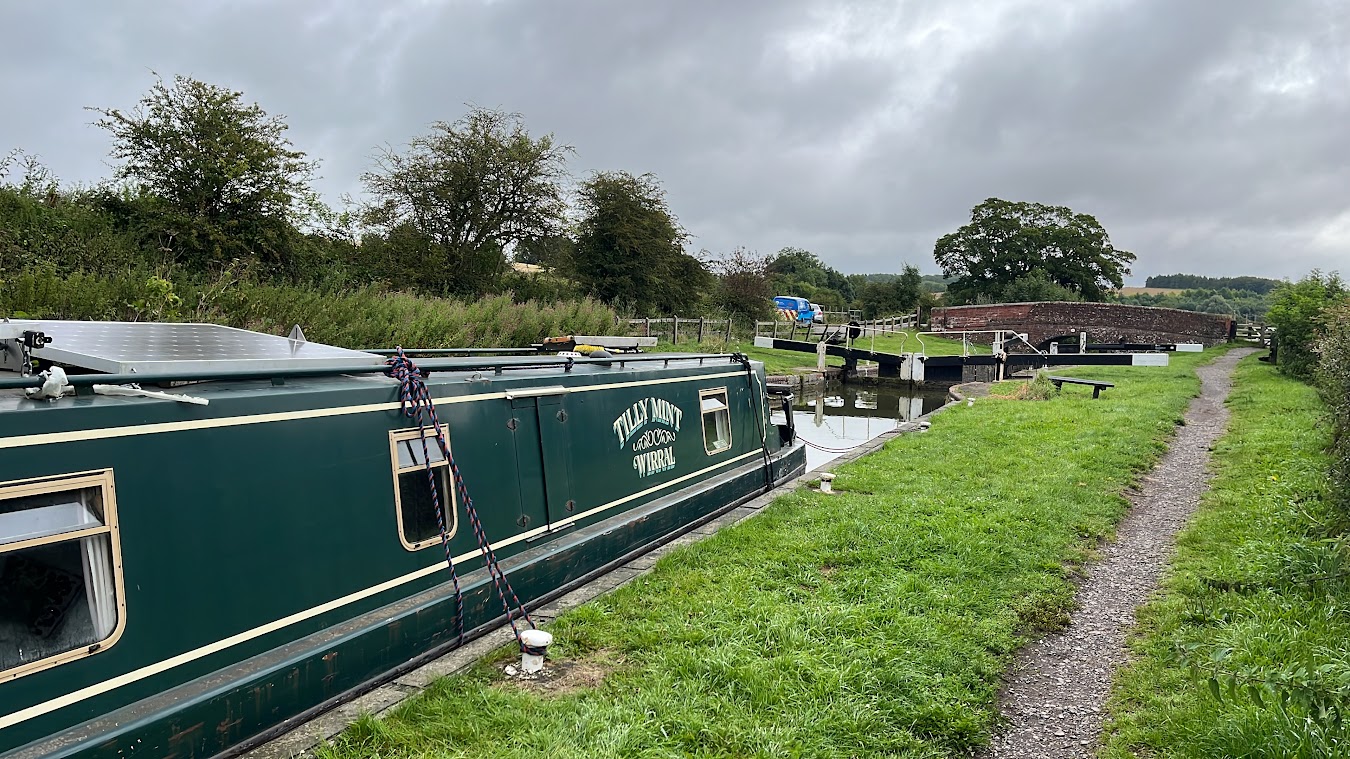
For a peaceful weekend aboard Tilly Mint, we cruised along the Kennet and Avon Canal from Bathampton to Bath Top Lock. From there, the historic city centre—and an afternoon of relaxation at Thermae Bath Spa—was only a short walk away.

It was the perfect combination of slow travel, beautiful surroundings and time to unwind.

An evening cruise into Bath

We arrived at Bathampton on Friday evening and set off towards Bath as the sun began to sink across the canal.

Our journey was only a few miles, but there was no need to hurry. The pleasure came from settling aboard Tilly Mint, watching the scenery pass and feeling the working week gradually disappear behind us.

We moored near Bath Top Lock, approximately a mile from the city centre. It provided an ideal base from which to explore, combining a peaceful waterside setting with easy access to everything Bath had to offer.

Once Tilly Mint was safely secured, we walked into the city for dinner.

Bath’s Georgian architecture looked particularly beautiful in the evening light. We wandered through its historic streets before finding a restaurant and enjoying a relaxed meal together.

It was an excellent beginning to our weekend.

Exploring historic Bath

Saturday morning began with a leisurely walk around the city.

Rain was forecast, but the mild weather gave us time to explore before it arrived. Bath was already bustling with residents and visitors enjoying its shops, cafés and celebrated landmarks.

The city’s history is visible everywhere.

Its Roman Baths reflect its origins as a place of healing and relaxation, while Bath Abbey and the surrounding Georgian streets reveal later chapters in its remarkable development.

We explored at an unhurried pace, stopping at local shops and cafés before making our way towards the main event of the day.

Returning to Thermae Bath Spa

This was our third visit to Thermae Bath Spa, and it remained one of the highlights of spending time in the city.

The spa uses Bath’s naturally warm, mineral-rich waters, continuing a tradition that has attracted visitors for almost two thousand years.

Adam treated himself to a rejuvenating massage while Chris relaxed in the rooftop pool. Floating in warm water while looking across Bath’s historic rooftops provided a wonderful contrast to life aboard the boat.

The weather may have threatened rain, but that hardly mattered from the comfort of the pool.

After a few deeply relaxing hours, we emerged refreshed and ready to return to Tilly Mint.

Cruising back to Bathampton

Later that afternoon, we retraced our route along the Kennet and Avon Canal towards Bathampton.

Leaving the energy of the city behind, the gentle pace of the boat restored the tranquillity with which our weekend had begun.

This is one of the pleasures of visiting somewhere by narrowboat. A city break and a peaceful countryside escape do not need to be separate holidays—the canal connects the two.

By evening, we were back near Bathampton and ready for dinner at a cosy canalside pub.

Over classic pub food, we reflected upon a day of historic streets, warm spa waters and quiet cruising. Outside, the gentle movement of the canal provided the perfect backdrop.

One final morning aboard

Sunday arrived far too quickly.

After a relaxed breakfast aboard Tilly Mint, it was time to pack our belongings and head home.

We had travelled only a modest distance, but the weekend felt like a genuine escape. There had been no demanding itinerary and no pressure to cover miles—just time to enjoy the canal, explore Bath and relax together.

The pleasure of slow travel

Our weekend demonstrated that a memorable boating adventure does not need to involve a long journey.

Bathampton and Bath are separated by only a short stretch of the Kennet and Avon Canal, yet the route offered everything we needed: beautiful scenery, historic surroundings, excellent food and complete relaxation.

Cruising into the city aboard Tilly Mint made the experience feel particularly special.

It was a reminder that some of the greatest pleasures of canal travel can be found only a few peaceful miles away.
Posted on

Visiting the Braunston Marina Historic Boat Show

We had originally planned to arrive at Braunston aboard Tilly Mint.

Cruising into one of Britain’s best-known canal gatherings by narrowboat seemed the perfect way to experience it. However, reports of heavy traffic, crowded locks and slow progress persuaded us to exchange the waterways for the road.

It was not quite the entrance we had imagined—but it gave us more time to enjoy one of the highlights of the canal calendar.

A change of plan

Braunston occupies a special place within Britain’s inland waterway network.

Situated close to the junction of the Grand Union and Oxford canals, the village has been an important centre for boating and canal trade for centuries. Each summer, its marina welcomes an extraordinary gathering of historic narrowboats and former working boats.

Our original plan had been to cruise there aboard Tilly Mint. Arriving among a flotilla of other boats would undoubtedly have added to the occasion.

As the event approached, however, we began hearing reports of congestion, long queues at locks and exceptionally busy waterways. With only a weekend available, travelling by boat risked turning an enjoyable outing into a race against time.

We reluctantly left Tilly Mint behind and drove instead.

Arriving at Braunston Marina

Any disappointment quickly disappeared when we reached Braunston Marina.

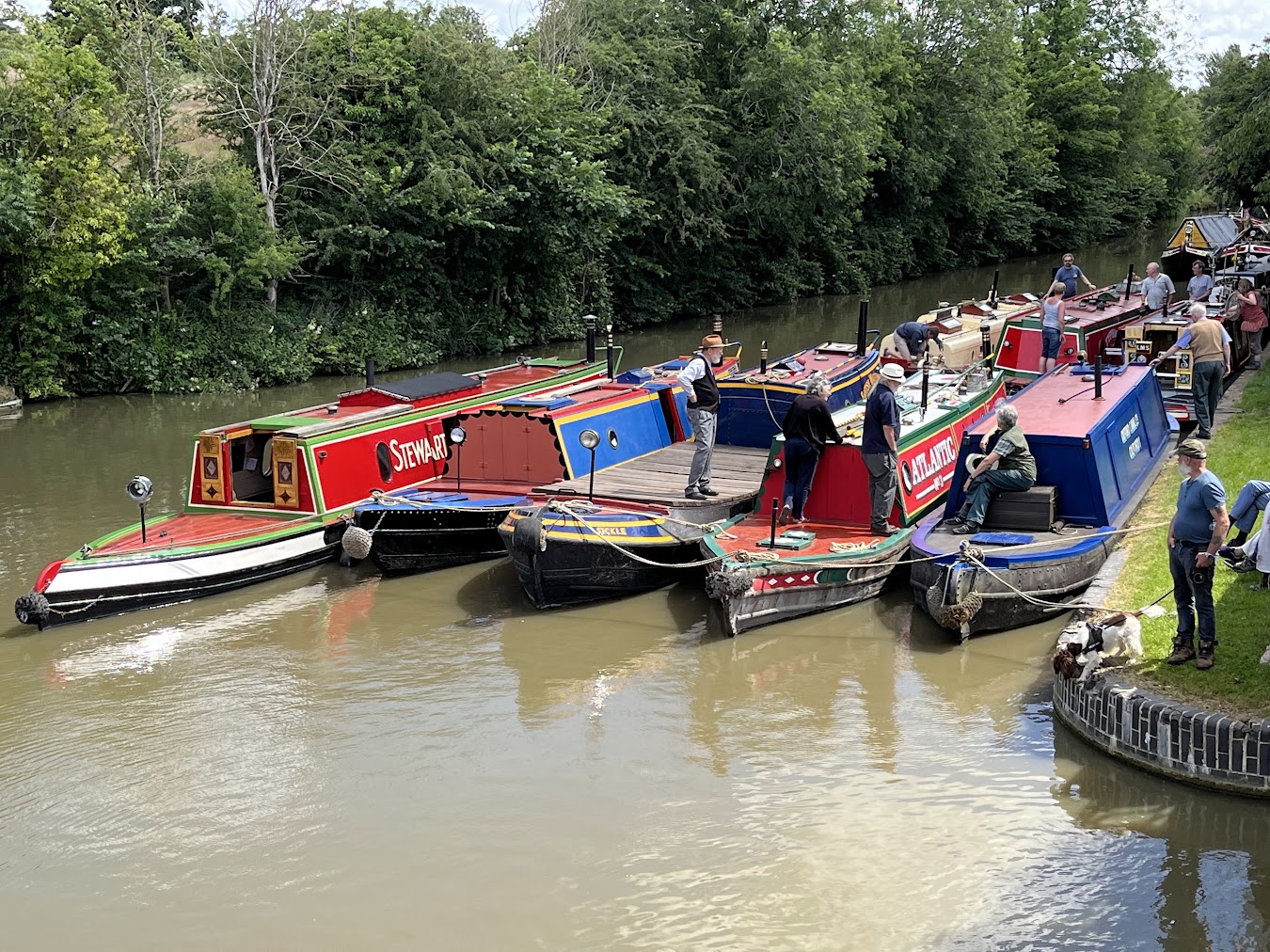
The site was filled with historic boats, colourful paintwork and gleaming brass. Some vessels had worked Britain’s canals for generations, carrying cargo before the growth of road and rail transport transformed the network.

Their survival represents an enormous commitment from owners, volunteers and specialist craftspeople. Maintaining a historic narrowboat requires far more than fresh paint: traditional materials, engineering knowledge and countless hours of practical work are needed to preserve these vessels for future generations.

Walking among them felt like stepping into a living exhibition of canal history.

Historic boats on parade

The boat parades were among the highlights of our visit.

Watching the historic fleet manoeuvre through the marina provided an opportunity to see the boats doing what they were built to do. Engines chugged, horns sounded and crews exchanged instructions as each vessel passed before the gathered crowds.

The size and handling of the former working boats were particularly impressive. Originally designed to carry substantial loads, they were operated along narrow waterways, through confined bridge holes and into crowded locks—often by families who lived and worked aboard.

Seeing so many gathered together brought that history vividly to life.

Stories from the waterways

The boats were fascinating, but so were the people caring for them.

Owners and crews generously shared stories about their vessels, including their working lives, restoration and continuing journeys across the canal network.

Every boat appeared to have its own history. Some had been rescued from serious decline, while others had passed between generations of dedicated custodians. Their stories reflected the wider fortunes of Britain’s canals: commercial decline, abandonment, restoration and eventual revival as places for leisure, heritage and wildlife.

That combination of boats, people and personal histories gave the event its distinctive atmosphere.

Engines, craftsmanship and canal tradition

Away from the parades, we explored displays, demonstrations and stalls around the marina.

Traditional canal painting, handmade crafts, boating equipment and waterway artwork all contributed to the sense of occasion. Live music and food stalls created a relaxed festival atmosphere, with plenty of opportunities to pause and watch marina life unfold.

The historic engine displays proved especially interesting.

These engines possess a character very different from their modern equivalents. Their distinctive sounds, exposed engineering and carefully maintained components reveal both the ingenuity of their original designers and the skill of those who continue to operate them.

They were powerful reminders that preserving canal heritage involves machinery and practical knowledge as much as boats and buildings.

More than a collection of old boats

The Braunston gathering celebrates far more than beautiful vessels.

Historic boats provide a tangible connection with the people whose labour sustained Britain’s canal network. They carried coal, timber, steel and countless other goods between towns, factories and ports, helping to support the country’s industrial development.

Today, they also serve as moving ambassadors for the waterways.

Their continued presence encourages people to understand how the canals developed, why they mattered and why their future remains worth protecting.

A day well spent

By the end of the day, we were pleased that we had changed our plans.

Arriving aboard Tilly Mint would have been memorable, but driving allowed us to enjoy the event without worrying about queues, delays or the return journey. Sometimes boating requires flexibility—and occasionally the wisest boating decision is not to take the boat at all.

The show delivered everything we had hoped for: remarkable historic vessels, traditional craftsmanship, working engines and a community united by its enthusiasm for the waterways.

Celebrating living canal heritage

Our visit reinforced why events such as Braunston matter.

Britain’s historic narrowboats are not simply museum pieces. They remain working examples of the skills, industries and communities that shaped the canal network. Their preservation ensures that this history can still be seen, heard and experienced on the water.

We may have arrived on four wheels rather than by boat, but the day remained firmly rooted in canal life.

Next time, perhaps Tilly Mint will make the journey with us—although we may check the lock queues first.

Posted on

Day 9: The Isle of Skye—Talisker, Fairy Pools and Highland Sunshine

Our journey on the Caledonian Canal had ended, but our Scottish adventure still had one final chapter.

After leaving the boat at Laggan, we travelled west to the Isle of Skye for a day of dramatic landscapes, whisky-making heritage and unexpectedly glorious sunshine.

It was the perfect conclusion to nine memorable days in the Highlands.

Leaving the Caledonian Canal

After one final night aboard, it was time to say goodbye to the boat that had been our home for the past week.

We packed our belongings, completed the handover and left Laggan behind. Although our boating adventure was over, we were not yet ready to begin the long journey south.

Instead, we set off for the Isle of Skye.

The drive was an experience in itself. Winding roads carried us through mountains and alongside lochs, with spectacular views appearing around almost every corner.

After seeing so much of the Highlands from the water, travelling by road revealed another side of this remarkable landscape.

Across to the Isle of Skye

Skye is the largest island in the Inner Hebrides and one of Scotland’s most celebrated destinations.

The island is renowned for its dramatic mountain ranges, rugged coastline and distinctive cultural heritage. Its landscape has been shaped by ancient volcanic activity, leaving behind extraordinary rock formations, steep cliffs and the imposing peaks of the Cuillin.

As we crossed onto the island, the scenery became increasingly dramatic.

This was clearly going to be a very different adventure from our week on the Caledonian Canal.

Visiting Talisker Distillery

Our first major destination was Talisker Distillery at Carbost, on the shores of Loch Harport.

Founded in 1830, Talisker is the oldest working distillery on the Isle of Skye. Its location, between the sea and the Cuillin mountains, provides an appropriately dramatic home for a whisky renowned for its smoky, maritime character.

Chris, as the whisky enthusiast among us, was particularly excited.

The tour explained how malted barley, water and yeast are transformed through mashing, fermentation and distillation before the spirit begins its long maturation in oak casks.

It was fascinating to see how traditional methods, careful control and generations of experience combine to produce a whisky so strongly associated with its island home.

A whisky enthusiast in his natural habitat

For Chris, the shop at the end of the tour presented both an opportunity and a considerable threat to the available space in the car.

Surrounded by different Talisker expressions and distillery exclusives, he approached the shelves with admirable enthusiasm and rather less concern for the household budget.

Bottles were examined, compared and carefully selected for the journey home.

He was, in short, entirely in his element.

The visit brought together craftsmanship, local history and the distinctive flavours of Scotland. Even for those of us less devoted to whisky, the distillery’s setting and story made it a memorable experience.

Exploring the Fairy Pools

From Talisker, we continued towards the Fairy Pools at the foot of the Black Cuillin.

A series of waterfalls and crystal-clear pools formed by the River Brittle, the Fairy Pools have become one of Skye’s best-known natural attractions.

The walk took us through an open landscape dominated by the surrounding mountains. Water tumbled over rocks and through deep pools, appearing remarkably clear against the darker stone.

Despite their enchanting name, the pools are a product of geology and mountain water rather than any confirmed fairy activity.

Skye, however, is precisely the sort of place where such stories feel entirely believable.

Sunshine in the Scottish Highlands

The greatest surprise of the day was the weather.

After experiencing the Highlands in rain and mist earlier in the holiday, Skye welcomed us with sunshine and temperatures reaching approximately 22 degrees.

Warm Scottish sunshine in May felt like an unexpected luxury.

The clear weather transformed the landscape, bringing out the colours of the hills, water and coastline. The Cuillin stood sharply against the sky, while the island’s lochs and sea inlets reflected the bright afternoon light.

We had packed for Scotland and found ourselves dressed for something approaching summer.

An evening on the beach

Later in the day, we found a sandy beach and spent time walking beside the sea.

The warm sunshine, open coastline and sound of the water created a wonderfully peaceful ending to our Skye adventure.

During the previous week, water had shaped almost every part of our journey—from the engineered route of the Caledonian Canal to the immense depths of Loch Ness.

Now, we were standing beside the sea, looking west from one of Scotland’s most beautiful islands.

It felt like a fitting final destination.

Looking back on nine extraordinary days

As our day on Skye drew to a close, we reflected upon everything we had experienced.

We had cruised through the Great Glen, crossed Loch Lochy and Loch Ness, navigated the five locks at Fort Augustus and reached Inverness by water.

Beyond the canal, we had explored Fort William, Glenfinnan, Urquhart Castle and now the Isle of Skye. We had encountered rain, mist and unexpected sunshine, while learning more about Scotland’s waterways, railways, castles and whisky-making traditions.

Most importantly, we had shared the adventure with Neil and Naomi.

The scenery and historic landmarks had been extraordinary, but the teamwork, conversation and laughter along the way had made the holiday truly memorable.

Until next time, Scotland

Our Caledonian Canal voyage had introduced us to a remarkable part of Scotland.

Travelling slowly through the Highlands allowed us to appreciate the relationship between its landscapes, communities and history. The canal itself was an extraordinary achievement, but it also served as a route into countless other experiences.

Skye provided the perfect finale: rugged mountains, clear pools, a celebrated distillery and a sunlit walk beside the sea.

Scotland had challenged us, surprised us and captured our hearts.

We knew this would not be our last adventure here.

Posted on

Day 8: From Drumnadrochit to Laggan—The Journey Home

After an unforgettable evening beside Loch Ness, we began the final stage of our Caledonian Canal adventure.

Our route carried us south from Drumnadrochit, across the remaining length of Loch Ness and through the five locks at Fort Augustus before continuing towards our home base at Laggan.

It was a day filled with familiar landscapes, shared memories and the bittersweet realisation that an extraordinary week on the water was approaching its end.

Leaving Drumnadrochit

We departed in the morning, leaving behind the friendly boaters with whom we had shared dinner and drinks the previous evening.

Loch Ness stretched before us once again, surrounded by the immense Highland landscape. The water appeared calm and inviting, offering us a peaceful start to our final full day of cruising.

Although we were retracing part of our outward route, the journey felt very different.

We were no longer wondering what lay ahead or worrying about unfamiliar locks and open-water crossings. During the previous week, we had grown comfortable with the boat, the canal and working together as a crew.

That familiarity allowed us to relax and appreciate the scenery more fully.

One final crossing of Loch Ness

Cruising south across Loch Ness gave us another opportunity to experience its remarkable scale.

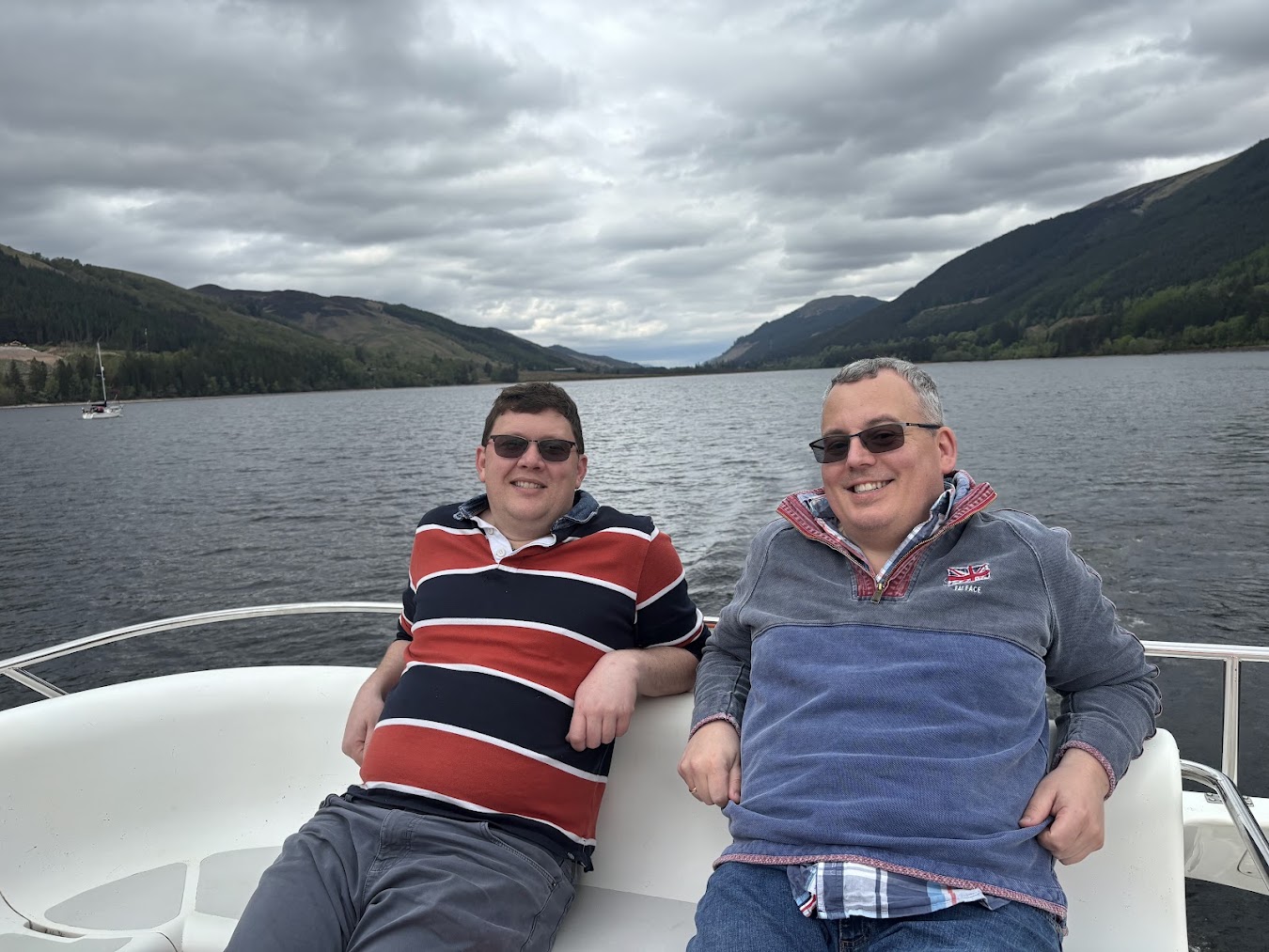
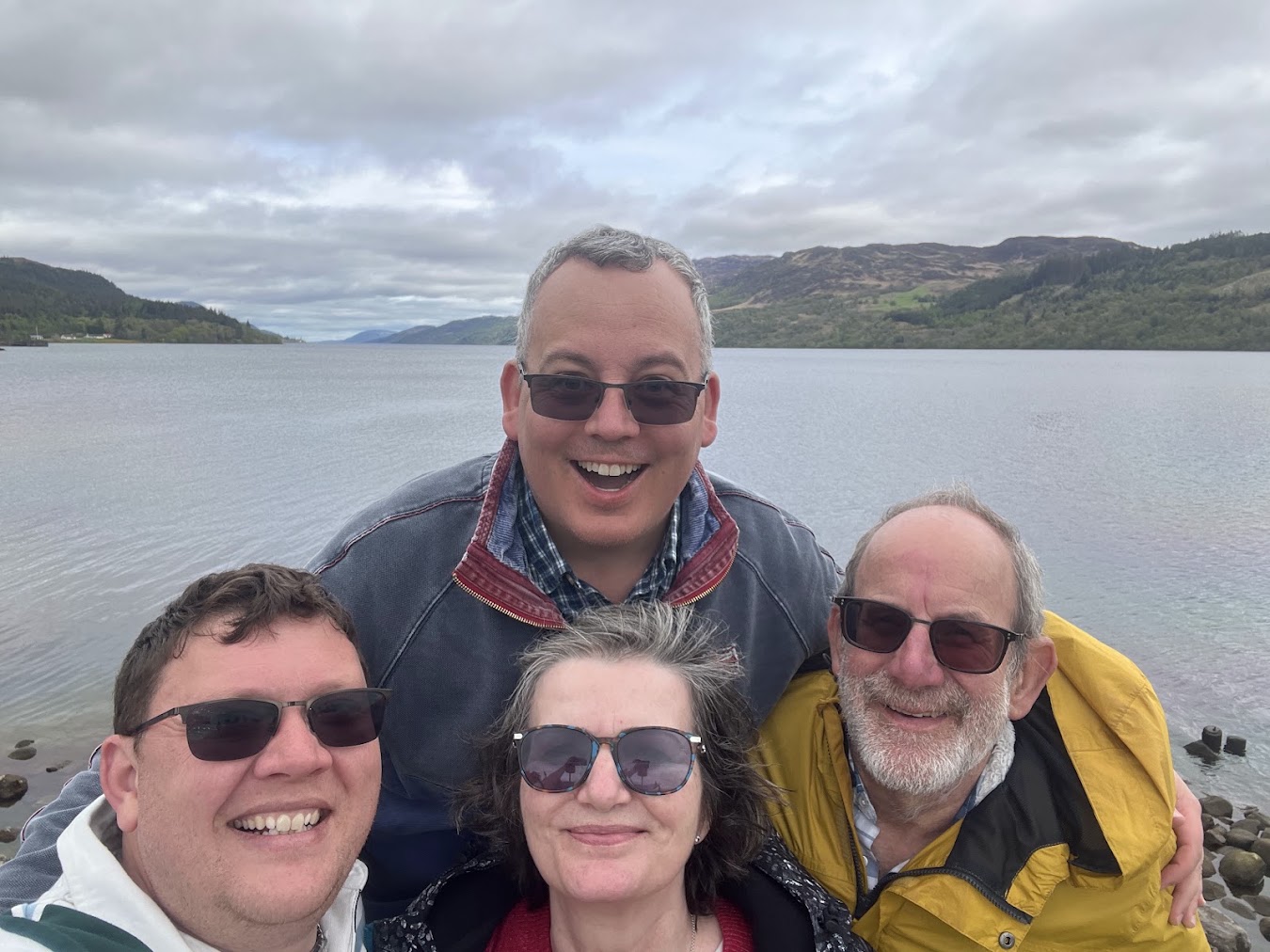
The dark water extended between steep wooded slopes, with distant mountains creating an impressive backdrop. From the centre of the loch, our hire cruiser once again felt very small against the surrounding Highland landscape.

We passed Urquhart Castle, where we had explored the ruins the previous day. Viewed from the water, its dramatic position on the shoreline was every bit as impressive as we remembered.

Naturally, we continued watching for Nessie.

After two passages across the loch without a sighting, we were beginning to suspect that Scotland’s most famous resident might be deliberately avoiding us. Perhaps she was shy—or simply unimpressed by hire boats.

Either way, the legend had added a little extra mystery and fun to our journey.

Returning to Fort Augustus

Eventually, Fort Augustus appeared at the southern end of the loch.

Only a few days earlier, arriving here had marked the beginning of our Loch Ness adventure. Now it represented another milestone on our journey home.

The village and its distinctive flight of five locks had become familiar, but navigating them remained a significant undertaking. Once again, we needed patience, concentration and close teamwork to guide the boat through each chamber.

This time, however, we approached the task with considerably more confidence.

Back through the five locks

Moving through the Fort Augustus lock flight required us to repeat the careful routine we had learnt on our outward journey.

Ropes were positioned, instructions exchanged and the boat guided steadily from one chamber to the next. As the water levels changed, we kept the cruiser safely controlled and prepared for each movement through the flight.

The work was still physical, but it no longer felt quite as daunting.

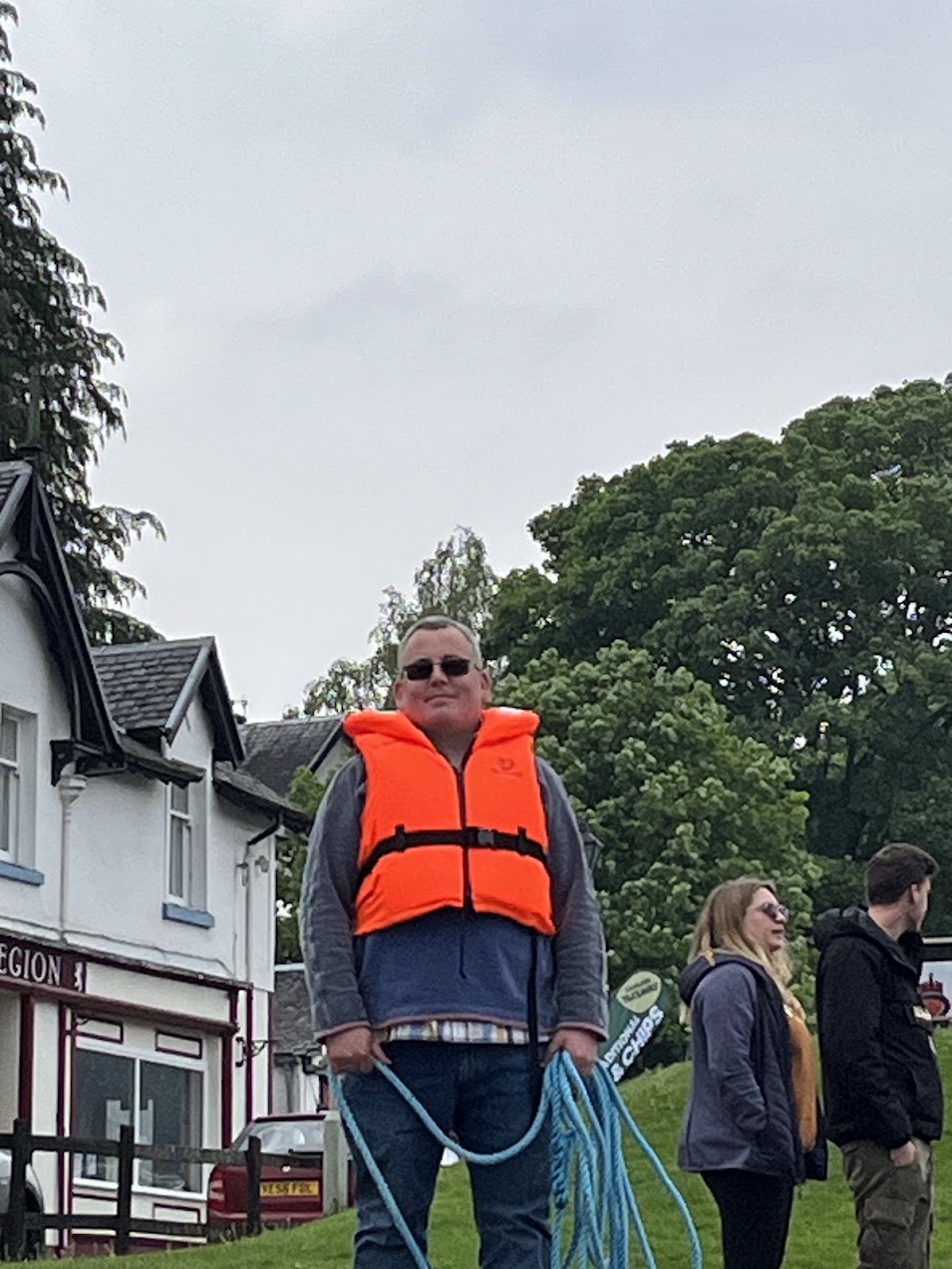
Chris, Neil, Naomi and I had developed an effective rhythm. We understood our respective roles and communicated more easily, drawing upon everything we had learnt during the holiday.

Our first passage through these locks had felt like a test. The return journey demonstrated how far we had progressed as a crew.

Familiar waters and new perspectives

Beyond Fort Augustus, we continued south-west along the canal towards Laggan.

The scenery was familiar, but travelling in the opposite direction revealed different views. Places that had represented the beginning of an adventure now prompted memories of everything that had happened since.

We thought about crossing Loch Lochy beneath the Highland mountains, exploring Fort William and becoming thoroughly soaked at Glenfinnan.

We remembered pulling the boat through the Fort Augustus locks, reaching Loch Ness for the first time and finally arriving in Inverness.

There had been castles, museums, historic villages and welcoming pubs. There had also been changing weather, tired arms, shared meals and evenings spent laughing with friends.

The canal had provided the route, but those experiences had created the adventure.

The peaceful rhythm of the canal

Our journey towards Laggan was deliberately unhurried.

After the scale and openness of Loch Ness, returning to the narrower canal brought a renewed sense of calm. Trees and greenery enclosed the water, while the gentle pace allowed us to notice details that might previously have passed unnoticed.

By now, operating the boat had become almost instinctive.

We had learnt how it responded, how to approach the locks and how to work together when something required attention. Tasks that had seemed unfamiliar at the start of the holiday had become part of our daily routine.

That growing confidence made it difficult to accept that we would soon have to hand the boat back.

Returning to Laggan

As Laggan drew closer, the end of our journey became impossible to ignore.

This was where our adventure had begun: the place where we had first boarded our temporary floating home, unpacked our belongings and tried to understand how everything worked.

Returning felt both satisfying and strangely emotional.

We had completed our journey through the Great Glen, travelling from Laggan to Inverness and back through some of Scotland’s most spectacular landscapes.

There was an enormous sense of achievement—but also disappointment that the experience was almost over.

After securing the boat, we began the less exciting task of gathering our belongings and preparing for departure. The cruiser that had initially seemed unfamiliar had become home during our week aboard.

Reflections on the Great Glen

Our Caledonian Canal holiday had given us far more than a route through Scotland.

It allowed us to experience the Highlands slowly, from the water and in the company of close friends. We had travelled beneath mountains, crossed immense lochs and passed through engineering structures that had connected Scotland’s east and west coasts for more than two centuries.

The holiday also reminded us why travelling by boat can be so rewarding.

Progress was measured not by speed or distance but by landscapes explored, locks completed and experiences shared. There was time to notice the changing weather, watch the shoreline and appreciate each stage of the journey.

It was very different from our previous adventures aboard Tilly Mint, yet it strengthened our love of life on the waterways.

An adventure shared

Most importantly, this had been an experience shared with Neil and Naomi.

Operating the boat, tackling the locks and making decisions together had tested our teamwork—but it had also created countless moments of laughter and companionship.

The spectacular scenery will always remain part of our memories, but so will the quieter moments: meals aboard, conversations over drinks and the satisfaction of completing another challenging stretch of water together.

Those moments transformed a boating holiday into something truly special.

The journey home

As evening settled over Laggan, we looked back upon an unforgettable week.

We had crossed Loch Lochy and Loch Ness, explored Fort William and Inverness, visited Glenfinnan and Urquhart Castle, and travelled through the remarkable landscape of the Great Glen.

The Caledonian Canal had challenged, surprised and inspired us.

Tomorrow, we would leave the boat and begin the long journey south. For tonight, however, we were content to remain aboard for one final evening—reflecting upon everything we had experienced and appreciating the last quiet moments of our Highland adventure.

The journey may have brought us back to where we started, but we returned with new memories, greater confidence and an even stronger desire to discover where the waterways might take us next.

Posted on

Day 7: From Inverness to Drumnadrochit—Urquhart Castle and a Night beside Loch Ness

Having reached Inverness the previous day, it was time to begin our return journey through the Great Glen.

Today, we cruised back across Loch Dochfour and onto Loch Ness, stopping to explore the magnificent ruins of Urquhart Castle before spending the night near Drumnadrochit.

It became a memorable day of Highland history, spectacular scenery and good company beside one of the world’s most famous lochs.

Leaving Inverness

We departed Inverness in the morning with mixed emotions.

Reaching the Highland capital had felt like a significant achievement, but turning back towards Laggan also reminded us that our Caledonian Canal adventure was approaching its conclusion.

The city gradually disappeared behind us as we followed the canal towards Loch Dochfour. Urban surroundings gave way once again to trees, open countryside and peaceful water.

Before long, we were back on Loch Ness.

Returning to Loch Ness

Experiencing Loch Ness for a second time allowed us to appreciate it from an entirely different perspective.

The loch remained immense and atmospheric, stretching between steep wooded slopes beneath the changing Highland sky. Although we were retracing part of our route, the landscape looked different when viewed from the opposite direction.

Our destination was one of Scotland’s most celebrated historic sites: Urquhart Castle.

Its ruins occupy a dramatic position on a rocky promontory overlooking Loch Ness. Approaching from the water revealed precisely why this location had been strategically important for centuries.

Arriving at Urquhart Castle

Few castles can boast a setting as impressive as Urquhart.

The ruins rise directly beside Loch Ness, surrounded by mountains, open water and an extraordinary sense of history. Boats travelling along the loch enjoy a particularly striking view of the castle’s remaining walls and towers.

We went ashore to explore the site and learn more about its turbulent past.

Urquhart Castle developed over several centuries and became an important stronghold during Scotland’s medieval conflicts. Control passed repeatedly between rival forces, and the castle featured prominently during the Wars of Scottish Independence.

It was eventually abandoned following the destruction of its gatehouse in 1692, intended to prevent Jacobite forces from using it as a military base.

Exploring the ruins

Walking through the castle grounds brought its history vividly to life.

We explored the surviving walls, chambers and defensive structures, imagining how imposing the stronghold must once have appeared. Despite its ruined condition, the scale and strategic importance of the site remain clear.

Grant Tower provided especially impressive views across Loch Ness. From its elevated position, we could see along the dark water in both directions, with the Highland landscape rising dramatically around us.

The setting felt peaceful, but the castle had witnessed centuries of conflict, raids and political upheaval.

That contrast made the visit particularly powerful.

Onwards to Drumnadrochit

After leaving Urquhart Castle, we continued towards Drumnadrochit.

The weather was kind, with occasional sunlight breaking through the clouds and bringing warmth and colour to the landscape. Loch Ness appeared less brooding than it had during our outward journey, although we continued to watch for any suspicious movement beneath the surface.

Nessie once again declined to make an appearance.

Drumnadrochit is closely associated with the Loch Ness Monster and attracts visitors from around the world hoping to discover more about the enduring mystery. For us, however, it provided a welcoming place to stop after another rewarding day on the water.

An evening with fellow boaters

We moored near Drumnadrochit and found ourselves among a friendly group of fellow boaters spending the night beside Loch Ness.

One of the pleasures of a boating holiday is the easy camaraderie that develops between people sharing the same waterway. Conversations begin with boats, routes and weather before quickly expanding into stories about journeys, mishaps and memorable places.

That evening, we gathered beside the water for food and drinks.

As daylight faded, the sky softened into shades of orange and pink, reflected across the calm surface of the loch. Surrounded by Highland scenery and enjoying the company of other travellers, it was difficult to imagine a better setting.

The laughter, conversation and shared experiences made the evening one of the highlights of our holiday.

History, scenery and friendship

Today captured many of the qualities that had made our journey through the Great Glen so special.

We travelled across the legendary waters of Loch Ness, explored one of Scotland’s most atmospheric castles and ended the day sharing food and stories with fellow boaters.

Urquhart Castle connected us with the region’s turbulent history, while the evening near Drumnadrochit reminded us that the most memorable moments of a holiday are often created by the people encountered along the way.

Tomorrow, we would continue south towards Fort Augustus and bring our Caledonian Canal adventure closer to its conclusion.

For tonight, we were content to enjoy the tranquillity of Loch Ness, the warmth of good company and the memories of another remarkable Highland day.

Posted on

Day 6: From Fort Augustus to Inverness—Across the Legendary Loch Ness

After successfully navigating the five locks at Fort Augustus, we were ready for one of the most anticipated stages of our Caledonian Canal adventure.

Today’s journey would take us across Loch Ness, through Loch Dochfour and along the final canal section into Inverness. It was the last major stage of our voyage—and a spectacular way to complete our journey through the Great Glen.

Leaving Fort Augustus

We departed Fort Augustus in the morning and headed onto the vast waters of Loch Ness.

Behind us were the lock flight and the welcoming village where we had spent the previous evening. Ahead stretched one of the world’s most famous and mysterious bodies of water.

The transition from the sheltered canal to the open loch was dramatic. Our boat suddenly felt very small against the immense expanse of dark water and the steep Highland slopes rising on either side.

Cruising across Loch Ness

Loch Ness extends for approximately 23 miles through the Great Glen and reaches depths of more than 220 metres.

Its dark, peat-stained waters contain more freshwater than all the lakes in England and Wales combined. That extraordinary scale became increasingly apparent as we travelled north-east towards Inverness.

The surrounding landscape was breathtaking. Wooded slopes descended towards the shoreline, while distant hills disappeared into the mist. The weather and light continually changed the character of the loch, revealing new views as we cruised.

After several days on narrower canal sections, the openness of Loch Ness felt exhilarating.

Searching for Nessie

No journey across Loch Ness would be complete without keeping watch for its most celebrated resident.

Stories of mysterious creatures in these waters extend back centuries, although the modern legend of the Loch Ness Monster developed principally during the twentieth century. Numerous sightings, photographs and investigations have followed, but Nessie has remained stubbornly elusive.

We watched the water carefully for unexplained ripples, suspicious shadows or the sudden appearance of a long neck.

Unfortunately, nothing emerged to welcome us.

Perhaps Nessie was enjoying a day off—or had seen our boat handling and decided to keep a safe distance.

Whatever the truth behind the legend, it added an irresistible sense of intrigue to the journey. The depth, darkness and sheer scale of the loch make it easy to imagine that something unexpected might be concealed beneath its surface.

Through Loch Dochfour

At the northern end of Loch Ness, we entered the smaller and more sheltered Loch Dochfour.

The atmosphere changed almost immediately. After the vast openness of Loch Ness, Loch Dochfour felt intimate and peaceful, enclosed by wooded banks and lush Highland scenery.

The calmer water offered an opportunity to slow down and reflect upon the distance we had travelled.

During the previous few days, we had crossed Loch Lochy, explored Fort William and Glenfinnan, worked our way through the Fort Augustus locks and navigated the legendary waters of Loch Ness.

Our journey through the Great Glen was approaching its conclusion.

The final canal stretch

Beyond Loch Dochfour, we re-entered the constructed section of the Caledonian Canal for the final approach to Inverness.

The canal carried us through a gentler landscape of trees, meadows and quiet water. Compared with the scale and drama of Loch Ness, this final section felt wonderfully serene.

There was time to absorb the surroundings and enjoy the distinctive rhythm of canal travel once more.

Reaching Inverness was exciting, but also bittersweet. Each mile brought us closer to our destination and the end of an adventure that had already provided so many memorable experiences.

Arriving in Inverness

By the afternoon, signs of Inverness gradually began to appear.

After days surrounded by lochs, mountains and remote Highland scenery, the return to a city felt striking. Buildings replaced wooded hillsides, and the tranquillity of the waterway gave way to the energy of the Highland capital.

Inverness occupies an important position at the northern end of the Great Glen, where the River Ness flows from Loch Ness towards the Moray Firth. Its strategic location has shaped the city’s history for centuries.

Reaching it by boat gave us an enormous sense of achievement.

We had travelled through the heart of the Highlands, following a remarkable route of natural lochs and engineered waterways from Laggan to Inverness.

Exploring the Highland capital

Once the boat was safely moored, we stepped ashore to explore.

Inverness is often described as the Gateway to the Highlands, combining the character of a historic Scottish city with a lively modern centre.

We wandered through its streets and followed the River Ness, enjoying the contrast between the city and the remote landscapes through which we had recently travelled.

Inverness Castle occupies a commanding position above the river and has long been one of the city’s most recognisable landmarks. The surrounding area offered attractive views across the city and the countryside beyond.

We also had an opportunity to learn more about the region’s past. Inverness and the surrounding Highlands have been shaped by Pictish settlement, medieval conflict, clan history and the Jacobite uprisings.

The city felt like an appropriate destination for a journey that had combined spectacular scenery with Scotland’s rich history.

Celebrating our arrival

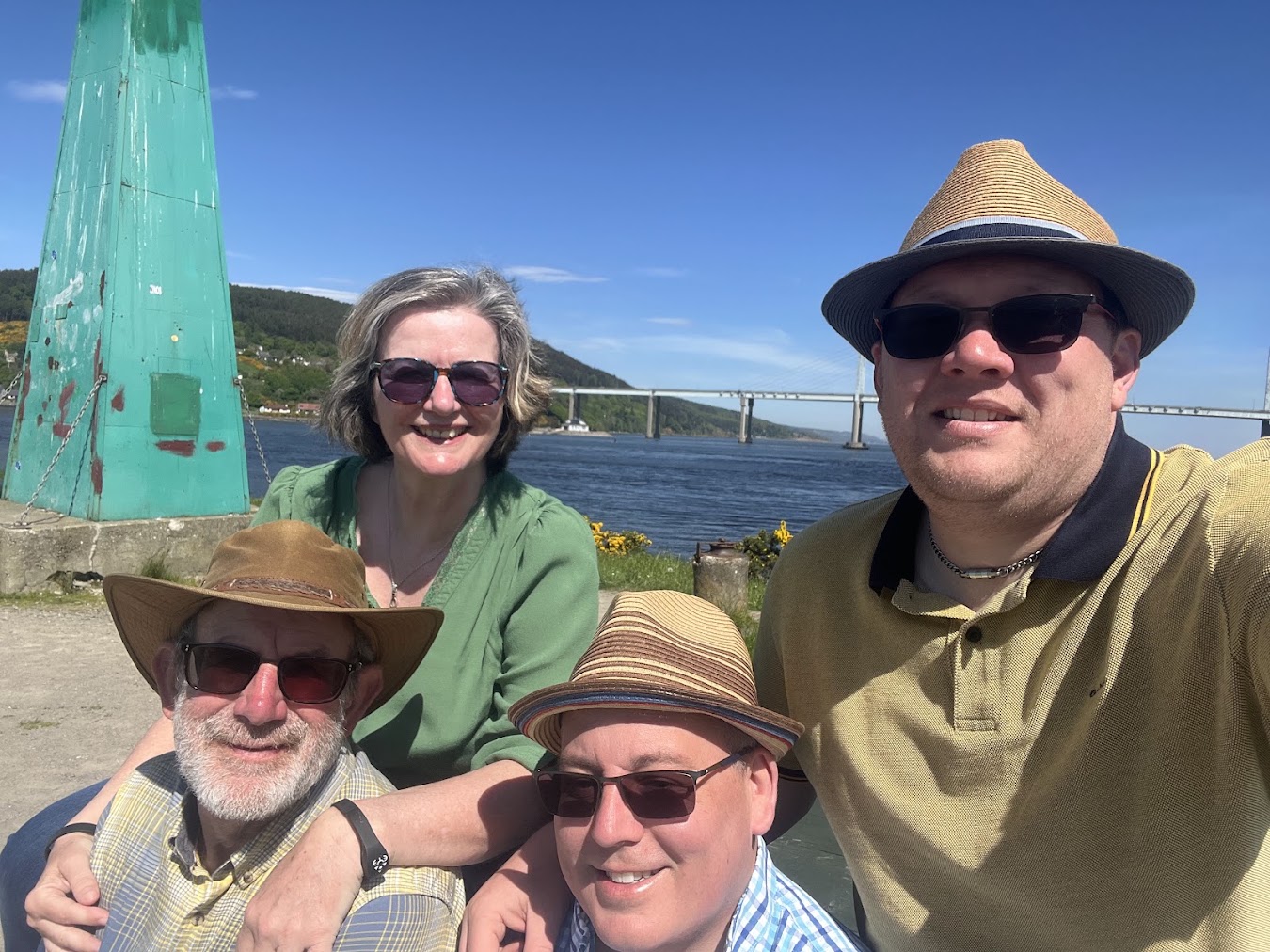
That evening, we found a cosy local pub where Chris, Neil, Naomi and I could celebrate completing our voyage to Inverness.

Over dinner and drinks, we reflected upon everything the journey had involved: unfamiliar boats, immense lochs, changing weather, energetic lock flights and numerous memorable excursions ashore.

Each day had revealed another aspect of the Highlands.

Reaching Inverness marked the completion of our outward journey, but the experiences shared along the way mattered far more than the destination itself.

Through the heart of the Highlands

Today brought together everything that made the Caledonian Canal such an extraordinary adventure.

We crossed the legendary waters of Loch Ness, passed through the peaceful surroundings of Loch Dochfour and followed the final canal stretch into the Highland capital.

The journey provided a unique perspective on the Great Glen—one that could only truly be appreciated from the water.

Tomorrow, we would spend more time discovering Inverness. For tonight, however, we were content to celebrate our arrival and remember an unforgettable voyage through the heart of the Scottish Highlands.

Posted on

Day 5: From Laggan to Fort Augustus—Five Locks and the Gateway to Loch Ness

After yesterday’s rainy excursion to Glenfinnan, we returned to the water for another memorable stage of our Caledonian Canal adventure.

Today’s journey took us from Laggan to Fort Augustus, where we faced one of the canal’s most distinctive challenges: guiding our boat through the impressive flight of five locks leading towards Loch Ness.

It was a day of beautiful Highland scenery, physical effort and genuine teamwork.

Leaving Laggan

We departed Laggan in the morning, with mist still clinging to the surrounding hills.

The water was calm and the landscape wonderfully peaceful as we continued along the Great Glen. After several days exploring the Highlands, we were becoming accustomed to the slower rhythm of life aboard—but today promised something rather more energetic.

Ahead of us lay Fort Augustus and its famous staircase of five locks.

Approaching Fort Augustus

Fort Augustus sits at the southern end of Loch Ness, where the Caledonian Canal passes directly through the centre of the village.

Its flight of five locks is one of the canal’s most recognisable features. Arranged in a continuous staircase, the locks allow boats to overcome the difference in water level between the canal and Loch Ness.

They also create quite a spectacle. The locks run through the heart of the village, surrounded by historic buildings, pubs, shops and curious spectators watching boats make their slow progress.

As we approached, our anticipation grew. This would be very different from passing through a single lock on a quiet stretch of canal.

Entering the lock flight

Navigating the Fort Augustus flight required patience, concentration and close co-operation.

Rather than using the engine to move between the chambers, we guided the boat through using ropes. Members of our crew remained on the lockside, carefully pulling the boat forward as each chamber became ready.

With the water levels changing around us, the ropes needed constant attention. They had to remain controlled without becoming too tight, while the boat needed to be kept safely away from the lock walls and gates.

Every movement had to be deliberate.

Pulling the boat through

Moving through five consecutive locks made the process physically demanding.

As one chamber completed its cycle, we guided the boat forward into the next, secured the ropes and began the process again. There was little opportunity to relax before preparing for the following lock.

Chris, Neil, Naomi and I each had a role to play. Clear communication became essential as we coordinated the ropes, watched the boat’s position and responded to the changing water levels.

It was tiring work, but there was also something deeply satisfying about it.

Moving the boat by hand created a direct connection with the canal. We could feel its considerable weight through the ropes and appreciate the controlled power of the water raising or lowering it within each chamber.

Following generations of boaters

The Fort Augustus locks form part of the remarkable waterway designed under the direction of Thomas Telford during the early nineteenth century.

The Caledonian Canal was created to provide a navigable route through the Great Glen, linking Scotland’s east and west coasts while avoiding the hazardous journey around the north of the country.

Passing through the locks made that history feel tangible.

For more than two centuries, boats and crews have travelled through this same flight. The vessels, ropes and operating systems may have changed, but the essential process remains recognisable: controlling water, overcoming height and moving carefully from one chamber to the next.

By the time we reached the final lock, our arms were tired—but the sense of achievement was considerable.

Loch Ness revealed

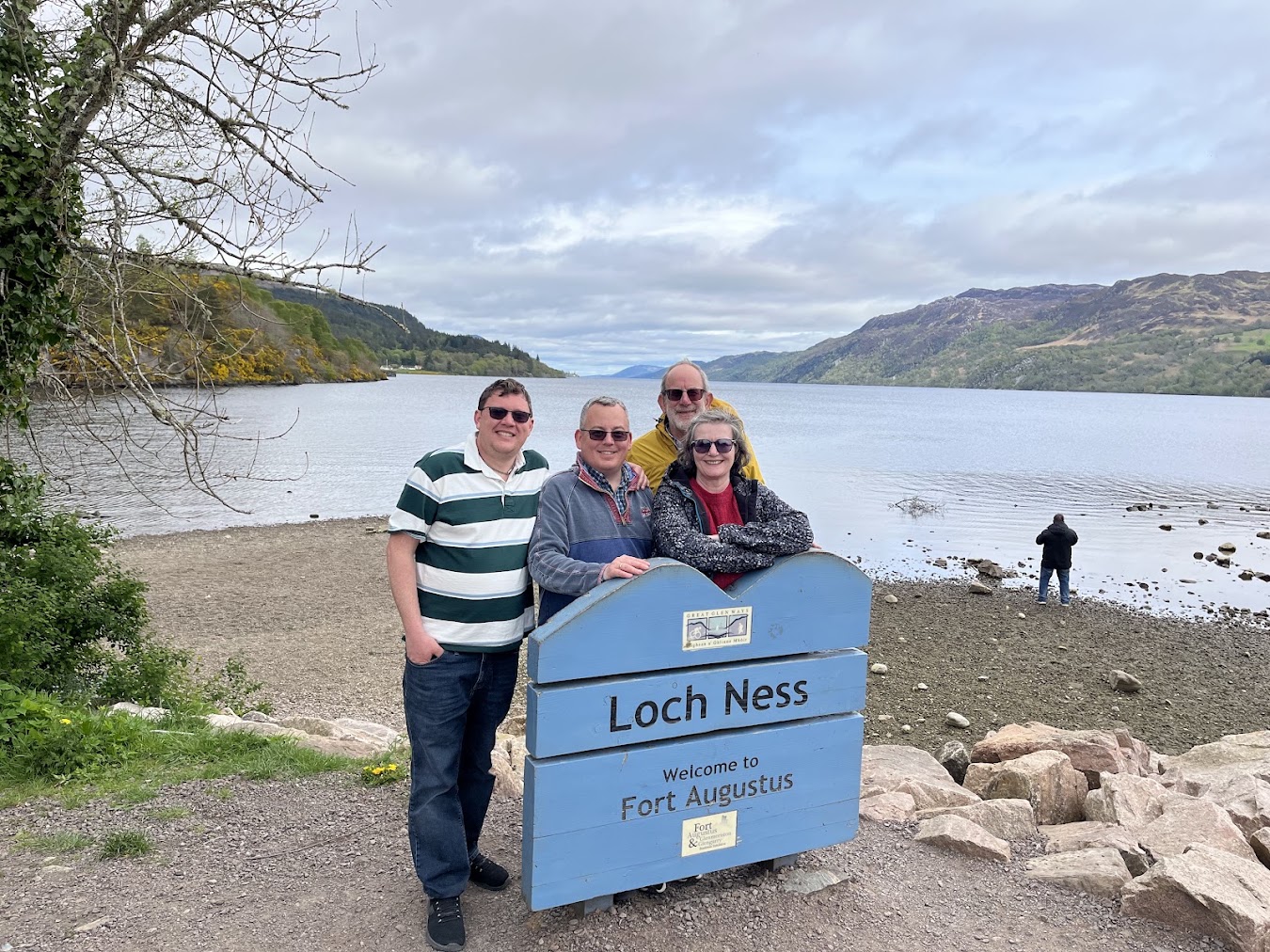
Emerging from the lock flight brought us to one of the most anticipated moments of our holiday.

Ahead of us lay Loch Ness.

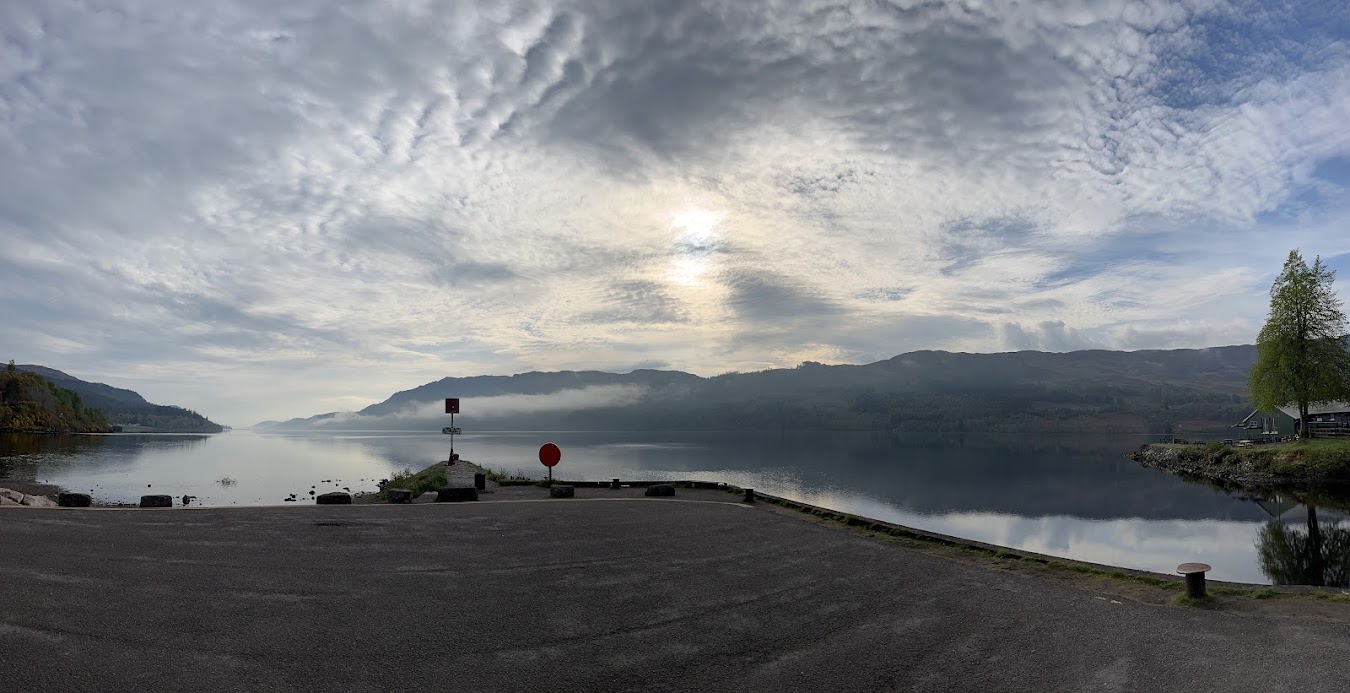
The scale of the loch was immediately striking. Its dark waters stretched into the distance between steep Highland slopes, creating an atmosphere that felt both dramatic and mysterious.

Loch Ness is the largest body of freshwater in Great Britain by volume and the most famous part of the Caledonian Canal. Its extraordinary depth and dark, peat-stained water have helped sustain stories of a mysterious creature inhabiting the loch.

Standing at its southern entrance, it was easy to understand how such legends had developed.

The water seemed vast, brooding and full of possibilities.

Mooring at Fort Augustus

After completing the lock flight, we moored at Fort Augustus for the evening.

The village occupies an exceptional position between the canal and Loch Ness. Boats pass directly through its centre, making the waterway an inseparable part of village life.

After the physical effort of the locks, we were ready to step ashore, explore and find somewhere welcoming for dinner.

A local pub provided exactly what we needed: a well-earned meal, an opportunity to rest and time to reflect upon the day with Neil and Naomi.

Around us, other boaters and visitors shared stories of their journeys. That friendly atmosphere added to the sense that we had reached an important staging point on our adventure.

A day of teamwork and achievement

Today was about much more than travelling from Laggan to Fort Augustus.

Guiding our boat through five consecutive locks tested our communication, patience and ability to work together. It was tiring, occasionally tense and immensely rewarding.

By the end, we had not only reached the gateway to Loch Ness but also experienced one of the defining features of the Caledonian Canal.

Tomorrow, we would leave the relative shelter of the canal and begin exploring the legendary waters of Loch Ness.

For tonight, however, we were content to remain in Fort Augustus, enjoy our achievement and rest some very tired arms.

Posted on

Day 4: A Rainy Afternoon at Glenfinnan Viaduct

After returning to the Le Boat base at Laggan, we found ourselves with a few free hours and no immediate plans.

The rain made an afternoon aboard considerably less appealing, but having the car nearby gave us another option. We decided to leave the canal temporarily and drive to one of the Highlands’ most recognisable landmarks: Glenfinnan Viaduct.

It proved that even the wettest afternoon could become a memorable part of our Scottish adventure.

A journey through the rain

The drive from Laggan to Glenfinnan carried us through more spectacular Highland scenery.

Low clouds clung to the hills, rain swept across the landscape and distant mountains disappeared into the mist. It was not the bright Scottish panorama often seen on postcards, but the weather gave everything a wonderfully dramatic atmosphere.

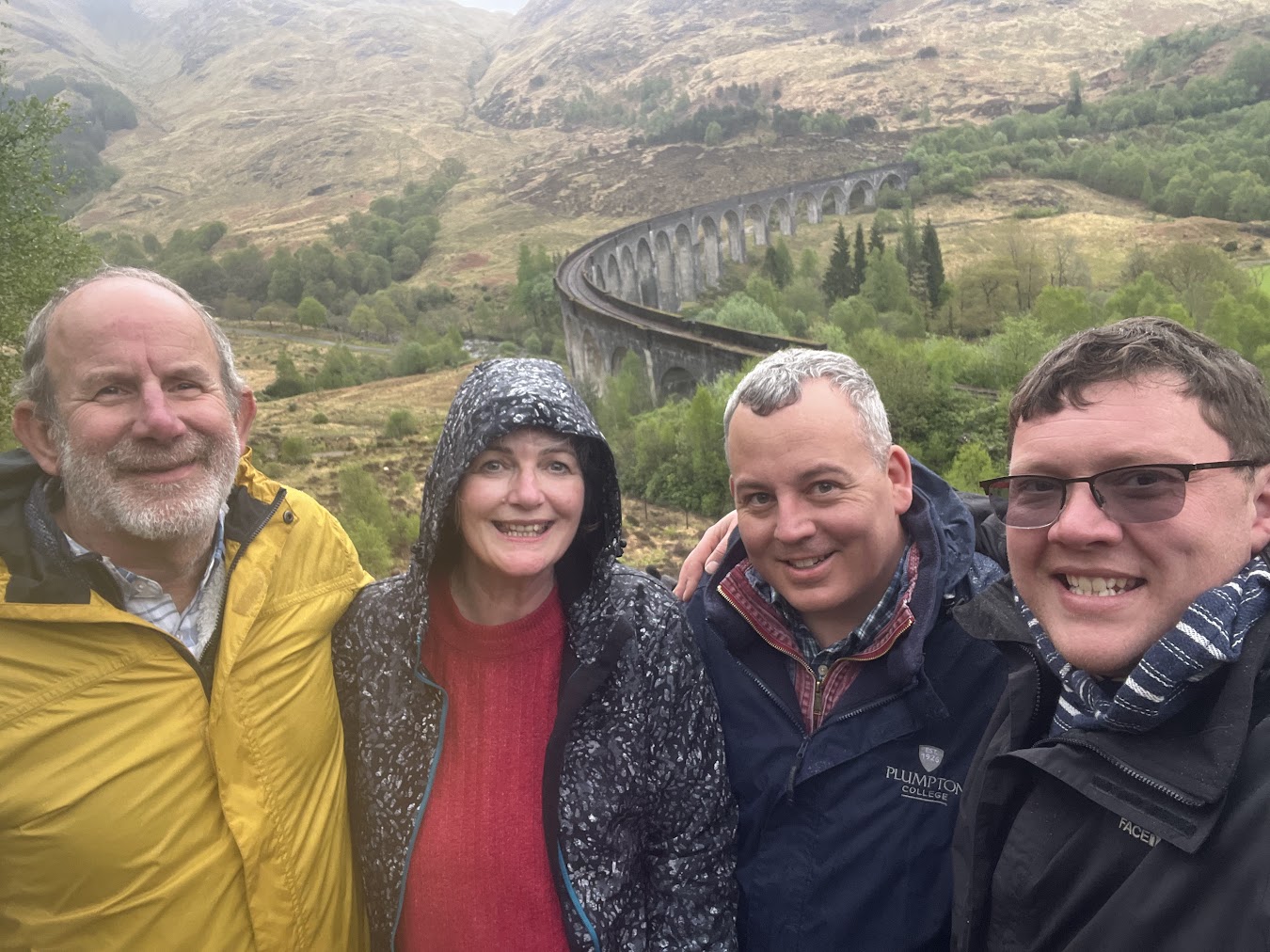
As we approached Glenfinnan, the famous viaduct emerged against the rugged landscape. Its sweeping curve and enormous concrete arches looked even more impressive beneath the dark sky.

Glenfinnan Viaduct

Completed in 1901, Glenfinnan Viaduct forms part of the West Highland railway line between Fort William and Mallaig.

The structure crosses the valley on 21 arches and was built from mass concrete—an innovative construction method at the time. More than a century later, trains continue to cross it regularly.

The viaduct is now internationally famous for its appearances in the Harry Potter films, where it carries the Hogwarts Express towards the fictional school.

However, its importance extends far beyond the cinema. The railway helped connect remote Highland communities with the rest of Scotland, supporting travel, trade and the development of the region.

Seen in person, the viaduct felt less like a film location and more like an extraordinary piece of engineering shaped to fit the surrounding landscape.

Exploring Glenfinnan

Despite the persistent rain, we spent time exploring the area around the viaduct.

The mist hanging over the hills created a mysterious atmosphere, while the viaduct’s arches appeared and disappeared against the shifting clouds. Although the weather prevented the clear views we might have hoped for, it gave Glenfinnan a character entirely of its own.

We became thoroughly wet, but abandoning the visit would have meant missing one of the most memorable sights of the holiday.

Sometimes Scotland simply requires the correct clothing and a willingness to accept that remaining dry is no longer a realistic objective.

The Glenfinnan Monument

We also visited the nearby Glenfinnan Monument, standing at the head of Loch Shiel.

The monument commemorates the Jacobite Rising of 1745. It was here that Prince Charles Edward Stuart—better known as Bonnie Prince Charlie—raised his standard and gathered supporters at the beginning of his attempt to restore the Stuart monarchy.

The campaign initially achieved several dramatic victories before ending in defeat at the Battle of Culloden in April 1746.

Surrounded by mountains and overlooking Loch Shiel, the monument occupies a striking location. Even through the rain and mist, the landscape helped convey the scale and drama of the history associated with the site.

Returning to Laggan

After absorbing as much history, scenery and rainwater as we reasonably could, we returned to the car and began the journey back to Laggan.

Our visit had been an unplanned detour from the Caledonian Canal, but it added another dimension to the holiday. The waterways, railways and roads of the Highlands all tell parts of the same story: overcoming a vast and challenging landscape to connect communities.

Back aboard the boat, the rain continued to fall. We were grateful for shelter, dry clothes and the opportunity to reflect upon an afternoon well spent.

A memorable rainy-day detour

Glenfinnan showed us that poor weather did not have to mean a wasted day.

Instead of remaining aboard watching the rain, we had visited one of Scotland’s greatest railway structures, explored an important site in Jacobite history and experienced the Highlands at their most atmospheric.

The viaduct may have been familiar from films and photographs, but standing beneath it in the rain made it feel entirely different—larger, more impressive and rooted firmly in the landscape around it.

Tomorrow, we would return to our Caledonian Canal adventure. For now, we were content to settle aboard, listen to the rain and remember an unexpectedly rewarding afternoon at Glenfinnan.

Posted on

Day 3: From Laggan to Fort William via Loch Lochy

After two days travelling north and settling aboard our hire boat, our Caledonian Canal adventure finally began in earnest.

Today’s journey took us from Laggan through Loch Lochy towards Fort William. It was our first opportunity to experience the scale and beauty of the Great Glen from the water—and it did not disappoint.

Leaving Laggan

We set off from Laggan in the morning, excited to begin our first full day of cruising.

The peaceful canal section soon carried us towards Loch Lochy, one of the principal natural lochs incorporated into the Caledonian Canal. After the more familiar confines of England’s narrow canals, emerging onto such an immense stretch of open water felt extraordinary.

Our hire cruiser suddenly seemed very small against the surrounding Highland landscape.

Cruising across Loch Lochy

Loch Lochy provided some of the most beautiful cruising we had experienced.

Forested hillsides descended towards the water, with distant mountain peaks rising beyond them. The calm surface reflected the changing landscape and created an atmosphere that felt wonderfully remote.

Travelling by boat allowed us to appreciate the scenery at exactly the right pace. There was time to notice the changing light, search the shoreline for wildlife and enjoy the sheer scale of our surroundings.

This was very different from cruising aboard Tilly Mint. There were no continuous lines of moored boats or tightly enclosed channels. Instead, we had broad water, expansive views and the dramatic landscape of the Great Glen surrounding us.

Legends beneath the water

Like many Highland lochs, Loch Lochy has its own legends.

Stories tell of a mysterious water creature known as the River Horse, or Each-Uisge, which was said to inhabit the loch. Although considerably less famous than the monster associated with Loch Ness, it adds another layer of mystery to these deep Highland waters.

The loch has also witnessed centuries of clan history, conflict and travel through the Great Glen.

Cruising across it felt like passing through both a natural landscape and a corridor of Scottish history.

Approaching Fort William

After crossing Loch Lochy, we continued towards the outskirts of Fort William.

Ben Nevis dominated the surrounding landscape. Britain’s highest mountain provided a magnificent backdrop as we reached our mooring and secured the boat.

The location gave us the best of both worlds: a peaceful place to stay beside the canal and easy access to Fort William by local bus.

With the boat safely moored, we set off to explore the town.

Exploring Fort William

Fort William stands at the foot of Ben Nevis and has long occupied an important strategic position within the Great Glen.

The settlement developed around a military fort established during the seventeenth century and later named after King William III. It subsequently became closely associated with attempts to control the Highland clans and suppress the Jacobite cause.

Little remains of the original fort today, but the town has developed into an important Highland centre and a popular base for walking, climbing and exploring the surrounding landscape.

After experiencing the region from the water, it was interesting to spend time exploring it on foot.

Discovering Highland history

A visit to the West Highland Museum helped bring the area’s past to life.

Its collections explore the history and culture of the West Highlands, including the Jacobite uprisings, traditional Highland life and the development of the town.

The museum provided valuable context for the landscape through which we were travelling. The Caledonian Canal may be an impressive feat of nineteenth-century engineering, but it passes through a region shaped by a much longer and often turbulent history.

Learning more about that history made our journey through the Great Glen feel even more meaningful.

A taste of Scotland

After exploring the town, we found a welcoming local pub for lunch.

The warmth and bustle inside offered an enjoyable contrast to the open water and quiet Highland scenery of the morning. Traditional Scottish food and locally brewed ale provided exactly the sort of hearty meal we needed after our first day’s cruising.

It was also an opportunity for Chris, Neil, Naomi and me to reflect upon the journey so far.

Only two days earlier, we had been driving north from East Sussex. We were now sitting beneath Ben Nevis, having crossed Loch Lochy aboard our own temporary floating home.

Returning to the canal

Later that afternoon, we caught the bus back to our mooring.

The light had begun to soften across the surrounding hills, giving the landscape a different character from the scenery we had experienced that morning.

Back aboard, we settled down for a quiet evening beside the canal. After the anticipation of the previous two days, it was satisfying to have completed our first proper cruise and begun discovering the Highlands from both water and land.

Our first day on the Great Glen

Today captured everything we had hoped this holiday might offer.

We crossed an immense Highland loch, travelled through magnificent scenery, explored the history of Fort William and enjoyed good food with close friends.

Most importantly, we experienced the distinctive rhythm of the Caledonian Canal for the first time: moments of adventure and discovery balanced by the peace of travelling slowly through an extraordinary landscape.

Our journey through the Great Glen was now properly under way—and there was still much more waiting ahead.

Posted on

Day 2: From Gretna Green to Laggan—Our Caledonian Canal Adventure Begins

After spending our first night in Scotland at historic Gretna Green, it was time to continue north towards the real beginning of our adventure.

Our destination was Laggan, where our hire boat awaited us on the Caledonian Canal. After months of anticipation—and a long journey from East Sussex—we were finally going to step aboard and begin exploring the Scottish Highlands from the water.

Farewell to Gretna Green

We began the day with a hearty Scottish breakfast, providing essential fuel for the drive ahead.

Gretna Green had been an enjoyable introduction to Scotland. Its history of runaway weddings, anvil ceremonies and romantic rebellion made it much more than a convenient overnight stop.

However, the Highlands were calling.

After loading the car, Chris and I set off with Neil and Naomi for the journey north. The previous day had been about covering the distance from home; today, the changing landscape became an important part of the adventure.

Driving into the Highlands

As we travelled north, Scotland gradually revealed its more dramatic character.

The scenery became increasingly spectacular: wooded valleys, open hills and lochs reflecting the shifting sky. Mountains rose around us as the road carried us deeper into the Highlands.

Almost every bend seemed to reveal another view worthy of a photograph.

After the long motorways of the previous day, this part of the journey felt completely different. The landscape demanded our attention and built our anticipation for the days ahead.

We were approaching the Great Glen—an immense natural fault line cutting across the Highlands from Fort William to Inverness and forming the route followed by the Caledonian Canal.

Arriving at Laggan

Eventually, we reached Laggan and caught our first proper sight of the waterway that would become our home for the coming days.

The Caledonian Canal stretches for approximately 60 miles across the Scottish Highlands, connecting Corpach, near Fort William, with Inverness. Rather than being entirely artificial, much of its route passes through the natural waters of Loch Lochy, Loch Oich, Loch Ness and Loch Dochfour.

Only around one-third of the route consists of constructed canal sections. Together, they create a navigable passage between Scotland’s east and west coasts through some of the country’s most extraordinary scenery.

After travelling for two days by road, seeing the canal before us made the holiday suddenly feel real.

Meeting our boat

Our hire cruiser was ready and waiting.

Unlike the narrowboats we knew from England, this boat was designed for the broader waters and expansive lochs of the Caledonian Canal. It would be our transport, accommodation and floating viewpoint as we travelled through the Great Glen.

Before setting off, we received a thorough handover and safety briefing. There was plenty to absorb: the controls, equipment, mooring arrangements and practicalities of handling an unfamiliar boat.

Even with previous boating experience, every vessel behaves differently. The scale and exposed nature of the Scottish lochs also meant that weather and water conditions would play a much greater role than on many sheltered canals farther south.

Once the briefing was complete, we began unpacking and transforming the boat into our temporary home.

Settling into life aboard

There is a distinctive moment at the beginning of every boating holiday when bags disappear into cupboards, provisions find their places and an unfamiliar boat starts to feel like your own.

We explored the cabins, organised the galley and worked out where everything needed to go. With four people aboard for several days, good use of space would be important.

Outside, the peaceful surroundings provided an irresistible preview of what awaited us.

The Caledonian Canal felt spacious and remote, framed by wooded hills and Highland scenery. It was very different from the narrower, more enclosed waterways on which we had previously travelled aboard Tilly Mint.

The possibilities ahead felt enormous.

An evening beside the canal

Our first evening at Laggan was deliberately unhurried.

After two days of travelling, there was no need to rush away from the base. Instead, we spent time becoming familiar with the boat and enjoying the tranquillity of our surroundings.

As daylight softened across the water, the canal took on a golden glow. The only sounds were the gentle movement of water against the hull and the occasional signs of life from the surrounding landscape.

Sitting aboard with Chris, Neil and Naomi, it was wonderful to realise that we had finally arrived.

The long drive from East Sussex was behind us. Our provisions were aboard, the briefing was complete and our floating home was ready.

Ready for the Great Glen

Tomorrow, we would begin navigating the Caledonian Canal in earnest.

Ahead lay locks, swing bridges, Highland villages and some of Scotland’s most famous lochs. We would experience the scale of the Great Glen from the water and discover how different this journey would be from our previous canal adventures.

For now, however, we were content simply to be aboard.

Our Scottish canal adventure had officially begun.