After yesterday’s rainy excursion to Glenfinnan, we returned to the water for another memorable stage of our Caledonian Canal adventure.
Today’s journey took us from Laggan to Fort Augustus, where we faced one of the canal’s most distinctive challenges: guiding our boat through the impressive flight of five locks leading towards Loch Ness.
It was a day of beautiful Highland scenery, physical effort and genuine teamwork.
Leaving Laggan
We departed Laggan in the morning, with mist still clinging to the surrounding hills.
The water was calm and the landscape wonderfully peaceful as we continued along the Great Glen. After several days exploring the Highlands, we were becoming accustomed to the slower rhythm of life aboard—but today promised something rather more energetic.
Ahead of us lay Fort Augustus and its famous staircase of five locks.
Approaching Fort Augustus
Fort Augustus sits at the southern end of Loch Ness, where the Caledonian Canal passes directly through the centre of the village.
Its flight of five locks is one of the canal’s most recognisable features. Arranged in a continuous staircase, the locks allow boats to overcome the difference in water level between the canal and Loch Ness.
They also create quite a spectacle. The locks run through the heart of the village, surrounded by historic buildings, pubs, shops and curious spectators watching boats make their slow progress.
As we approached, our anticipation grew. This would be very different from passing through a single lock on a quiet stretch of canal.
Entering the lock flight
Navigating the Fort Augustus flight required patience, concentration and close co-operation.
Rather than using the engine to move between the chambers, we guided the boat through using ropes. Members of our crew remained on the lockside, carefully pulling the boat forward as each chamber became ready.
With the water levels changing around us, the ropes needed constant attention. They had to remain controlled without becoming too tight, while the boat needed to be kept safely away from the lock walls and gates.
Every movement had to be deliberate.
Pulling the boat through
Moving through five consecutive locks made the process physically demanding.
As one chamber completed its cycle, we guided the boat forward into the next, secured the ropes and began the process again. There was little opportunity to relax before preparing for the following lock.
Chris, Neil, Naomi and I each had a role to play. Clear communication became essential as we coordinated the ropes, watched the boat’s position and responded to the changing water levels.
It was tiring work, but there was also something deeply satisfying about it.
Moving the boat by hand created a direct connection with the canal. We could feel its considerable weight through the ropes and appreciate the controlled power of the water raising or lowering it within each chamber.
Following generations of boaters
The Fort Augustus locks form part of the remarkable waterway designed under the direction of Thomas Telford during the early nineteenth century.
The Caledonian Canal was created to provide a navigable route through the Great Glen, linking Scotland’s east and west coasts while avoiding the hazardous journey around the north of the country.
Passing through the locks made that history feel tangible.
For more than two centuries, boats and crews have travelled through this same flight. The vessels, ropes and operating systems may have changed, but the essential process remains recognisable: controlling water, overcoming height and moving carefully from one chamber to the next.
By the time we reached the final lock, our arms were tired—but the sense of achievement was considerable.
Loch Ness revealed
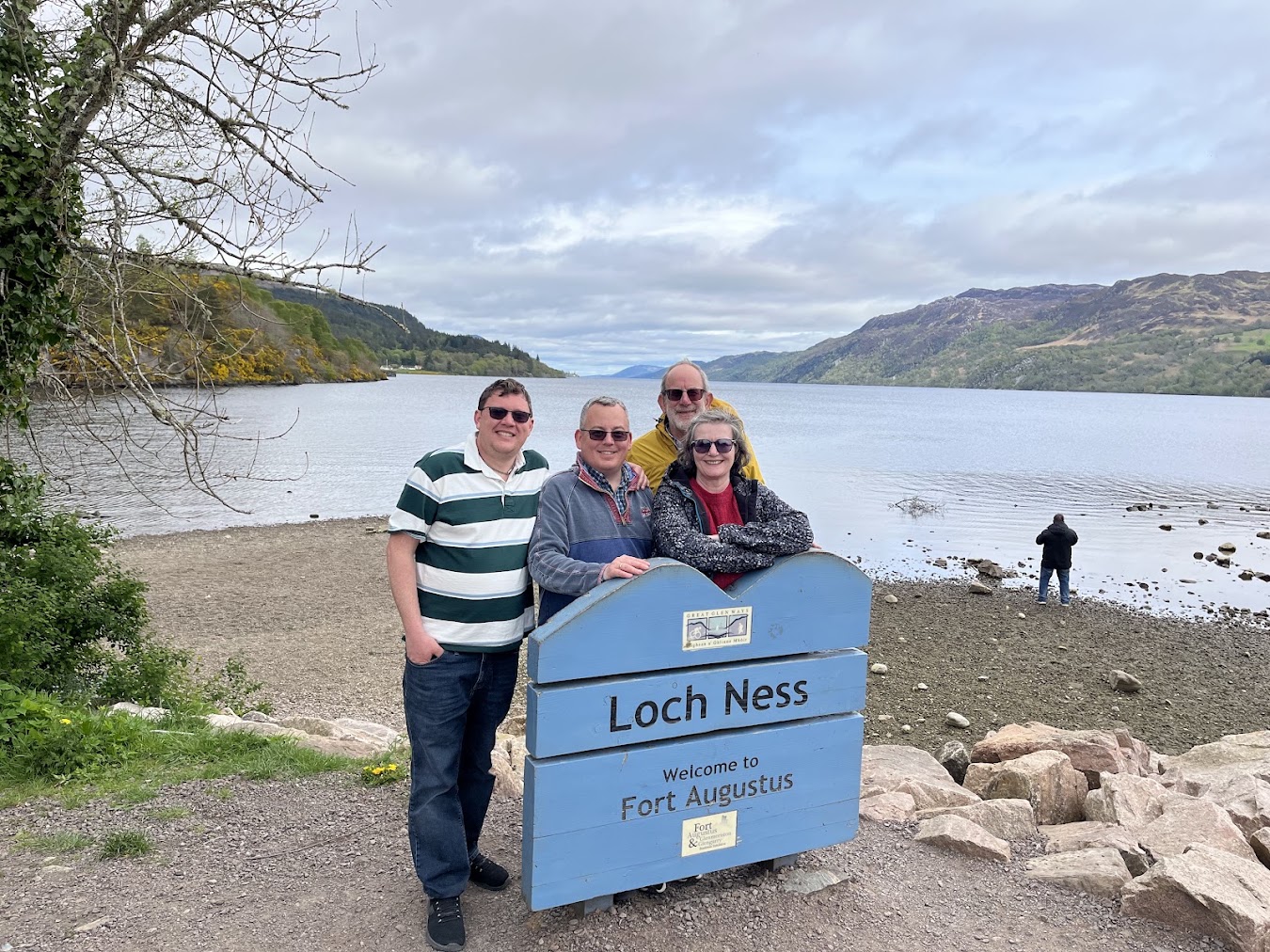
Emerging from the lock flight brought us to one of the most anticipated moments of our holiday.
Ahead of us lay Loch Ness.
The scale of the loch was immediately striking. Its dark waters stretched into the distance between steep Highland slopes, creating an atmosphere that felt both dramatic and mysterious.
Loch Ness is the largest body of freshwater in Great Britain by volume and the most famous part of the Caledonian Canal. Its extraordinary depth and dark, peat-stained water have helped sustain stories of a mysterious creature inhabiting the loch.
Standing at its southern entrance, it was easy to understand how such legends had developed.
The water seemed vast, brooding and full of possibilities.
Mooring at Fort Augustus
After completing the lock flight, we moored at Fort Augustus for the evening.
The village occupies an exceptional position between the canal and Loch Ness. Boats pass directly through its centre, making the waterway an inseparable part of village life.
After the physical effort of the locks, we were ready to step ashore, explore and find somewhere welcoming for dinner.
A local pub provided exactly what we needed: a well-earned meal, an opportunity to rest and time to reflect upon the day with Neil and Naomi.
Around us, other boaters and visitors shared stories of their journeys. That friendly atmosphere added to the sense that we had reached an important staging point on our adventure.
A day of teamwork and achievement
Today was about much more than travelling from Laggan to Fort Augustus.
Guiding our boat through five consecutive locks tested our communication, patience and ability to work together. It was tiring, occasionally tense and immensely rewarding.
By the end, we had not only reached the gateway to Loch Ness but also experienced one of the defining features of the Caledonian Canal.
Tomorrow, we would leave the relative shelter of the canal and begin exploring the legendary waters of Loch Ness.
For tonight, however, we were content to remain in Fort Augustus, enjoy our achievement and rest some very tired arms.