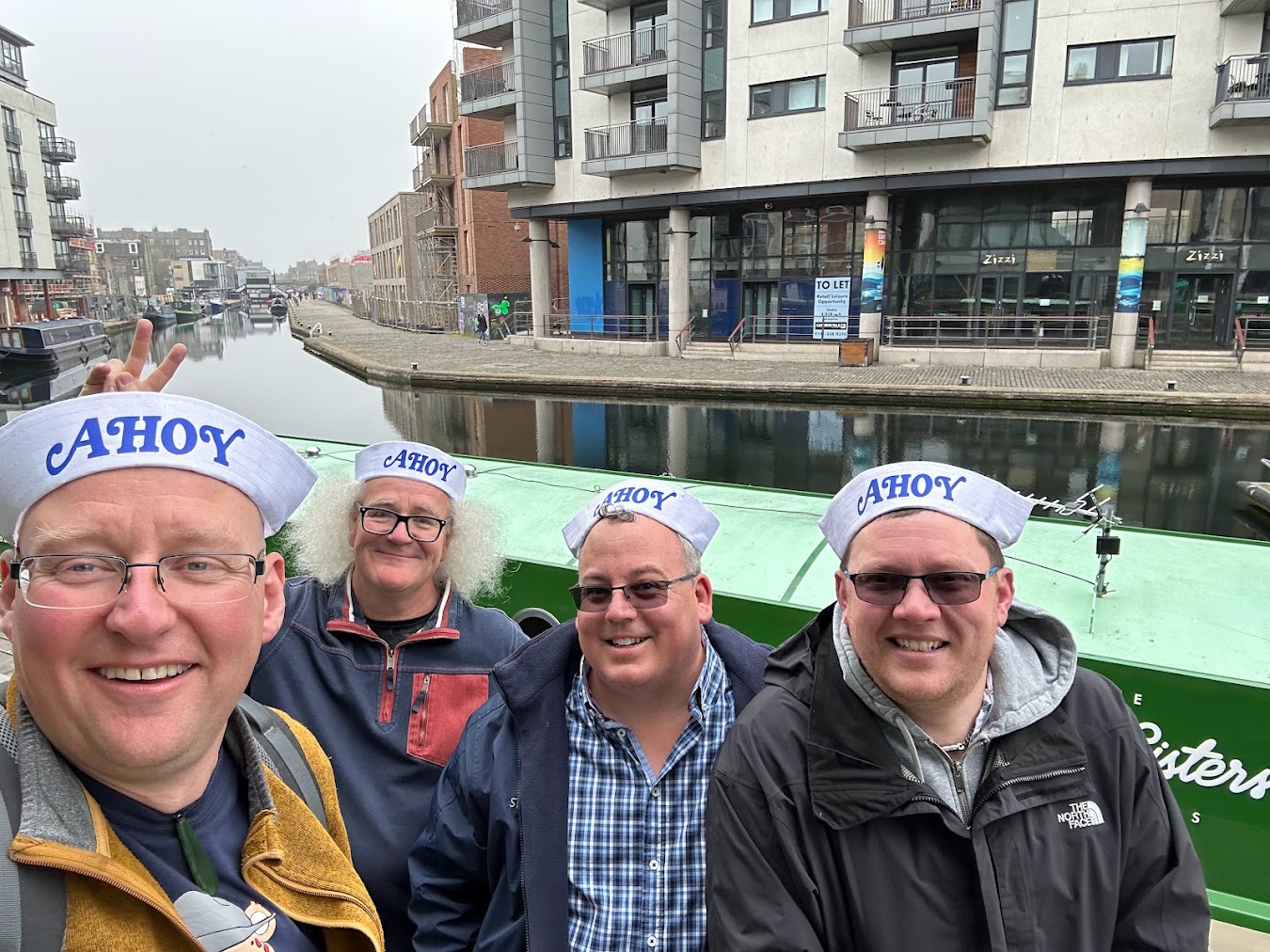
After arriving on the outskirts of Edinburgh aboard Green Sandpiper, we continued our Scottish canal adventure on foot.
Our destination was Edinburgh Quay, the eastern terminus of the Union Canal. Here, the tranquillity of the waterway meets the energy of Scotland’s capital, creating a striking combination of canal heritage and modern city life.
Walking towards Edinburgh Quay
Edinburgh Quay lies at Fountainbridge, within easy walking distance of the city centre.
As we approached, the busy streets gradually gave way to the calmer surroundings of the canal. The towpath offered a welcome escape from the traffic, despite being only a short distance from central Edinburgh.
The contrast was part of its appeal. Modern buildings rose beside the water while narrowboats rested below, creating an unexpected waterside setting in the heart of the city.
The end of the Union Canal
Edinburgh Quay marks the eastern end of the Union Canal, which stretches westwards towards the Falkirk Wheel.
The canal opened in 1822 and was originally used to transport goods and passengers between Edinburgh and central Scotland. After years of decline, it was restored and reopened in 2001 as part of the Millennium Link project.
Standing beside the basin gave us a chance to appreciate the full extent of our journey. We had travelled from Falkirk towards Edinburgh along the same historic waterway that now ended quietly among offices, homes, restaurants and city streets.
A modern waterside destination
The former industrial area around Fountainbridge has changed considerably.
Contemporary buildings now surround the basin, their glass, steel and brickwork reflected in the water below. Cafés, bars and restaurants bring activity to the waterfront, while the towpath remains popular with walkers, runners and cyclists.
Despite the development, the canal retains its distinctive atmosphere. Ducks moved between the moored boats, the water remained calm and the pace felt noticeably slower than the surrounding city.
It was a place where Edinburgh’s industrial heritage and modern identity sat comfortably beside one another.
Exploring the towpath
We spent time walking beside the canal and enjoying the views around the basin.
The level, well-maintained towpath made exploring easy. Benches and open areas offered places to pause, while the boats and waterside architecture provided plenty to photograph.
Following the towpath west would eventually lead all the way back towards Falkirk. From Edinburgh Quay, however, we were content to enjoy a shorter and considerably less ambitious walk.
After several days aboard Green Sandpiper, seeing the canal from the towpath offered a different perspective. Features that pass quickly from the boat could now be examined properly, while the waterway’s relationship with the surrounding city became much clearer.
Canal calm in the capital
Edinburgh is famous for its castle, historic streets and dramatic skyline, but the Union Canal reveals another side of the city.
Edinburgh Quay offered the calm of the waterways without taking us far from the capital’s main attractions. It felt peaceful without being isolated and modern without losing sight of its industrial past.
For us, it was also a fitting destination after travelling east aboard Green Sandpiper. The canal had carried our adventure from the Falkirk Wheel towards the centre of Edinburgh; exploring its terminus on foot brought that part of our journey to a satisfying conclusion.