Posted on

Visiting the Braunston Marina Historic Boat Show

We had originally planned to arrive at Braunston aboard Tilly Mint.

Cruising into one of Britain’s best-known canal gatherings by narrowboat seemed the perfect way to experience it. However, reports of heavy traffic, crowded locks and slow progress persuaded us to exchange the waterways for the road.

It was not quite the entrance we had imagined—but it gave us more time to enjoy one of the highlights of the canal calendar.

A change of plan

Braunston occupies a special place within Britain’s inland waterway network.

Situated close to the junction of the Grand Union and Oxford canals, the village has been an important centre for boating and canal trade for centuries. Each summer, its marina welcomes an extraordinary gathering of historic narrowboats and former working boats.

Our original plan had been to cruise there aboard Tilly Mint. Arriving among a flotilla of other boats would undoubtedly have added to the occasion.

As the event approached, however, we began hearing reports of congestion, long queues at locks and exceptionally busy waterways. With only a weekend available, travelling by boat risked turning an enjoyable outing into a race against time.

We reluctantly left Tilly Mint behind and drove instead.

Arriving at Braunston Marina

Any disappointment quickly disappeared when we reached Braunston Marina.

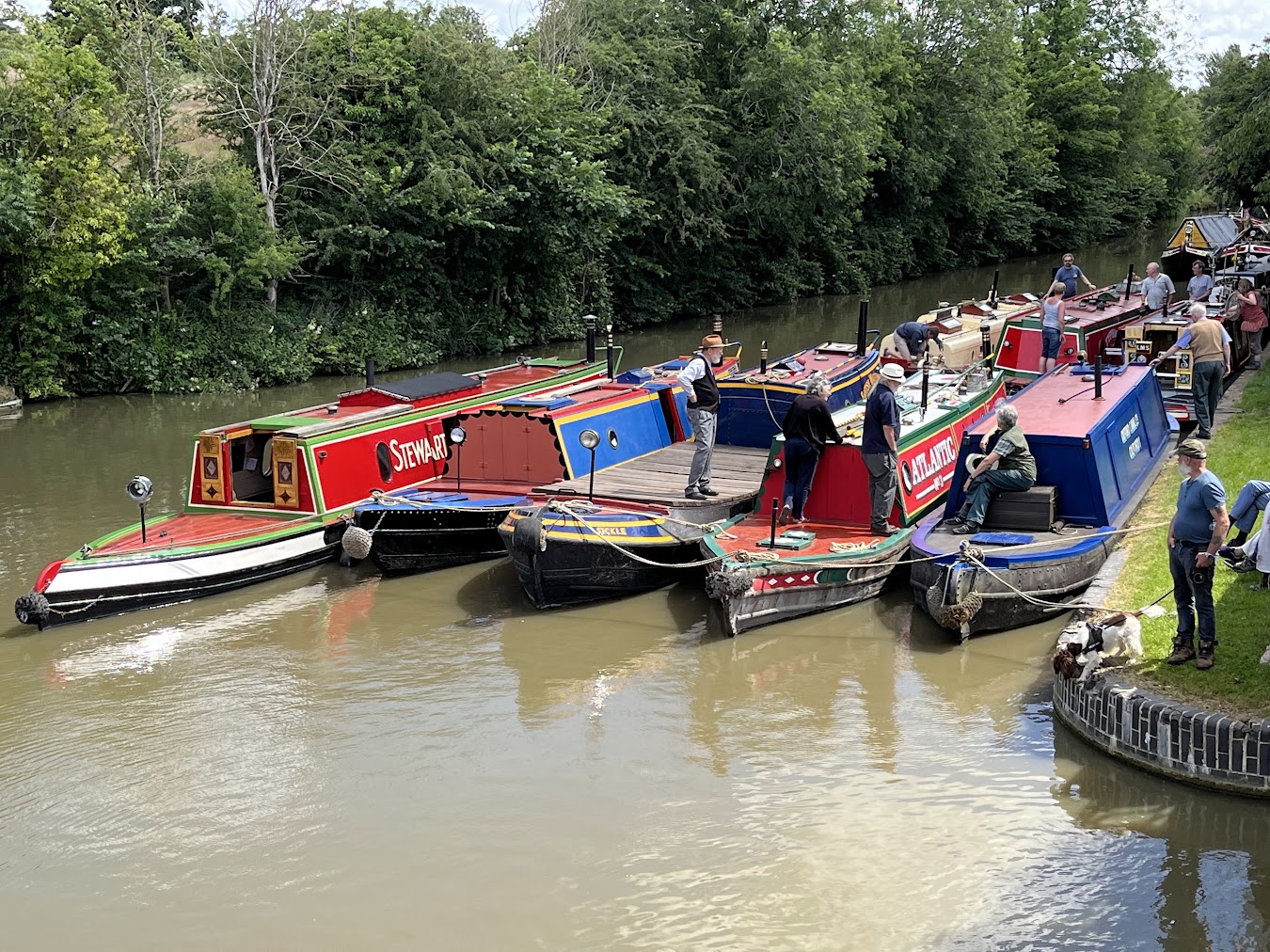
The site was filled with historic boats, colourful paintwork and gleaming brass. Some vessels had worked Britain’s canals for generations, carrying cargo before the growth of road and rail transport transformed the network.

Their survival represents an enormous commitment from owners, volunteers and specialist craftspeople. Maintaining a historic narrowboat requires far more than fresh paint: traditional materials, engineering knowledge and countless hours of practical work are needed to preserve these vessels for future generations.

Walking among them felt like stepping into a living exhibition of canal history.

Historic boats on parade

The boat parades were among the highlights of our visit.

Watching the historic fleet manoeuvre through the marina provided an opportunity to see the boats doing what they were built to do. Engines chugged, horns sounded and crews exchanged instructions as each vessel passed before the gathered crowds.

The size and handling of the former working boats were particularly impressive. Originally designed to carry substantial loads, they were operated along narrow waterways, through confined bridge holes and into crowded locks—often by families who lived and worked aboard.

Seeing so many gathered together brought that history vividly to life.

Stories from the waterways

The boats were fascinating, but so were the people caring for them.

Owners and crews generously shared stories about their vessels, including their working lives, restoration and continuing journeys across the canal network.

Every boat appeared to have its own history. Some had been rescued from serious decline, while others had passed between generations of dedicated custodians. Their stories reflected the wider fortunes of Britain’s canals: commercial decline, abandonment, restoration and eventual revival as places for leisure, heritage and wildlife.

That combination of boats, people and personal histories gave the event its distinctive atmosphere.

Engines, craftsmanship and canal tradition

Away from the parades, we explored displays, demonstrations and stalls around the marina.

Traditional canal painting, handmade crafts, boating equipment and waterway artwork all contributed to the sense of occasion. Live music and food stalls created a relaxed festival atmosphere, with plenty of opportunities to pause and watch marina life unfold.

The historic engine displays proved especially interesting.

These engines possess a character very different from their modern equivalents. Their distinctive sounds, exposed engineering and carefully maintained components reveal both the ingenuity of their original designers and the skill of those who continue to operate them.

They were powerful reminders that preserving canal heritage involves machinery and practical knowledge as much as boats and buildings.

More than a collection of old boats

The Braunston gathering celebrates far more than beautiful vessels.

Historic boats provide a tangible connection with the people whose labour sustained Britain’s canal network. They carried coal, timber, steel and countless other goods between towns, factories and ports, helping to support the country’s industrial development.

Today, they also serve as moving ambassadors for the waterways.

Their continued presence encourages people to understand how the canals developed, why they mattered and why their future remains worth protecting.

A day well spent

By the end of the day, we were pleased that we had changed our plans.

Arriving aboard Tilly Mint would have been memorable, but driving allowed us to enjoy the event without worrying about queues, delays or the return journey. Sometimes boating requires flexibility—and occasionally the wisest boating decision is not to take the boat at all.

The show delivered everything we had hoped for: remarkable historic vessels, traditional craftsmanship, working engines and a community united by its enthusiasm for the waterways.

Celebrating living canal heritage

Our visit reinforced why events such as Braunston matter.

Britain’s historic narrowboats are not simply museum pieces. They remain working examples of the skills, industries and communities that shaped the canal network. Their preservation ensures that this history can still be seen, heard and experienced on the water.

We may have arrived on four wheels rather than by boat, but the day remained firmly rooted in canal life.

Next time, perhaps Tilly Mint will make the journey with us—although we may check the lock queues first.
Posted on

A Relaxing Journey from Banbury to Thrupp

There is something wonderfully restorative about travelling slowly through the English countryside by narrowboat.

With no timetables to follow and nowhere we needed to reach quickly, our journey aboard Tilly Mint from Banbury to Thrupp offered the perfect opportunity to escape everyday life and settle into the gentle rhythm of the Oxford Canal.

It was a weekend of historic locks, peaceful moorings, beautiful countryside and the simple pleasure of spending time together on the water.

Leaving Banbury

Our journey began in Banbury, a historic market town whose prosperity was once closely connected to the wool trade and the arrival of the Oxford Canal.

Close to our starting point stood Tooley’s Boatyard, one of the oldest working dry docks on Britain’s inland waterways. With more than two centuries of boatbuilding and repair behind it, it was a fitting place from which to begin another adventure aboard Tilly Mint.

After negotiating Banbury Lock, the buildings of the town gradually receded and the canal led us into open countryside.

The change of pace was almost immediate. Traffic noise gave way to birdsong, the engine settled into its steady rhythm and the water stretched quietly ahead beneath a warm July sky.

Settling into canal time

One of the great pleasures of narrowboating is how quickly ordinary ideas about time begin to disappear.

Progress is measured not in motorway junctions or train stations but in locks, bridges and the occasional waterside pub. There is always something to do, yet very little reason to hurry.

Chris took his turn at the tiller while Adam prepared lunch aboard. Later, we found a suitable place to moor, brought out the chairs and ate beside the towpath with uninterrupted views across the surrounding countryside.

It was a simple lunch, but that was part of its charm. Food somehow tastes better outdoors after several hours on the water—particularly when accompanied by passing boats, birds in the hedgerows and the satisfaction of having nowhere else to be.

An evening near Twyford Wharf

As the afternoon drew on, we reached the quiet stretch around Twyford Wharf and found a peaceful place to spend the night.

Once an important canal wharf, the location is now a tranquil stopping point surrounded by rural Oxfordshire. After the engine was switched off, the silence returned almost instantly.

We spent the evening talking, watching the light fade across the water and enjoying the wonderfully uncomplicated nature of life aboard Tilly Mint. There were ropes to check and tomorrow’s route to consider, but otherwise the evening belonged entirely to us.

The towpath became quieter, the canal settled and the boat gently moved against its mooring as darkness fell.

Through the Oxfordshire countryside

The following morning, we continued south towards Aynho.

This section of the Oxford Canal follows a wonderfully meandering course through open countryside. Rather than cutting directly through the landscape, it curves around fields and follows the natural contours of the land, revealing a fresh view around almost every bend.

Adam kept his camera close, capturing the wildlife, historic brick bridges and passing narrowboats. Herons watched from the bank while ducks appeared entirely unconcerned by our presence—until deciding, at the last possible moment, to cross directly in front of the boat.

The route brought us to Aynho Weir Lock, an unusual diamond-shaped lock where the canal connects with the River Cherwell. Its broad central chamber provides additional capacity to accommodate the changing water levels created by the river.

It was another reminder that even the most peaceful canal journey depends upon centuries of engineering, maintenance and careful water management.

The final approach to Thrupp

From Aynho, we continued south through the Oxfordshire countryside towards Thrupp.

By this point, we had settled completely into life aboard. Steering, locks, ropes and cups of tea formed the pattern of the day, while the landscape moved past at walking pace.

There was no desire to arrive any sooner than necessary. The journey itself had become the purpose of the weekend.

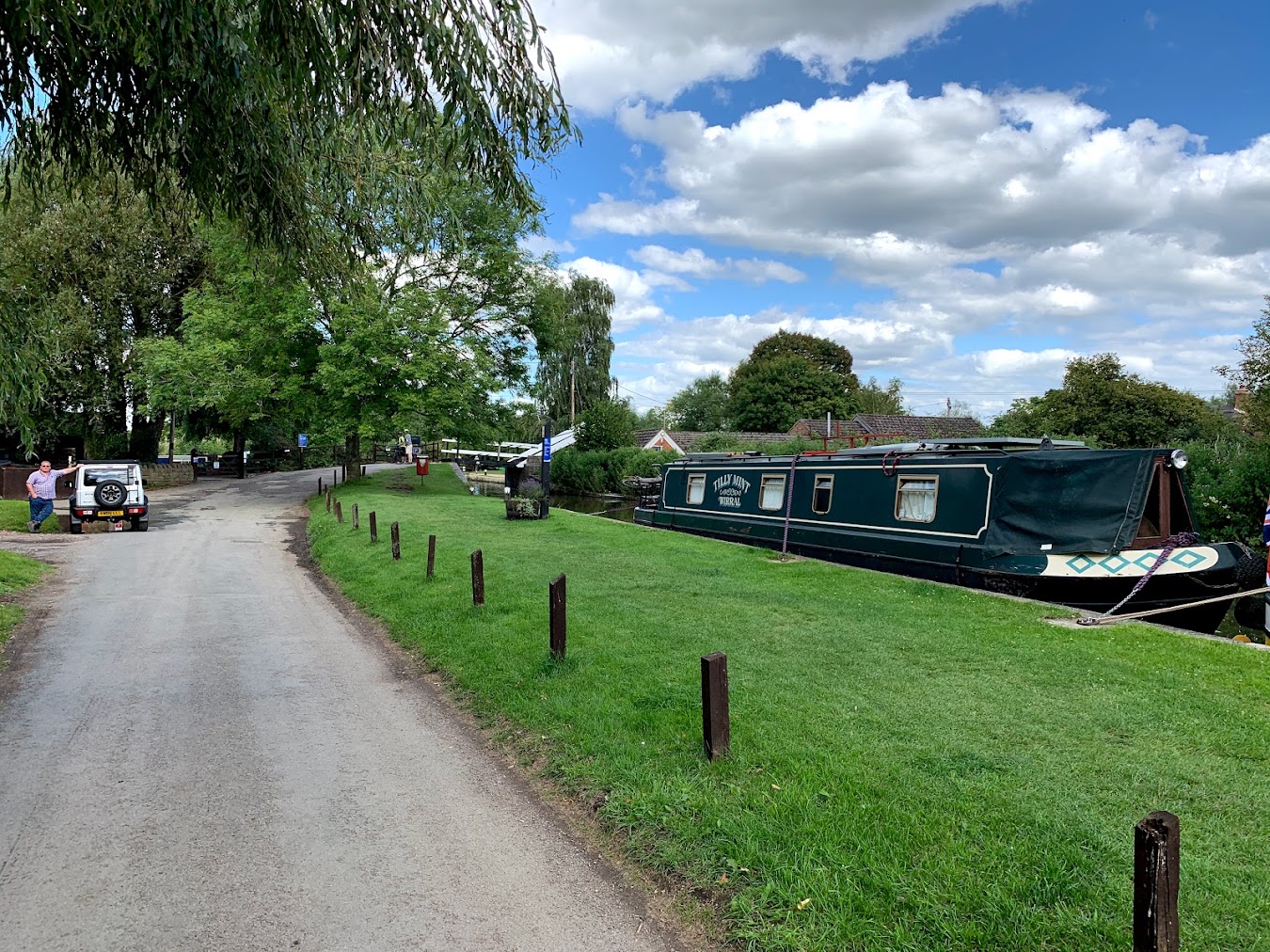
Eventually, the attractive moorings of Thrupp came into view. Narrowboats lined the water’s edge, walkers passed along the towpath and the village possessed the relaxed atmosphere that makes it one of the Oxford Canal’s most popular stopping places.

We brought Tilly Mint alongside, secured the ropes and stepped ashore to explore.

A warm welcome at The Boat Inn

After several days on the canal, a hearty meal at The Boat Inn felt thoroughly deserved.

Situated beside the water in the heart of Thrupp, the pub provided a cosy conclusion to our journey. Over food and drinks, we looked back over the miles travelled, the locks negotiated and the quiet moments that had made the trip so enjoyable.

Nothing dramatic had happened. There had been no navigational crisis, mechanical disaster or unexpected encounter with dense fog. Instead, the journey had given us something equally memorable: time to slow down, enjoy each other’s company and appreciate the landscape through which we were travelling.

Sometimes the best adventures are the peaceful ones.

Rediscovering the pleasure of slow travel

Our journey from Banbury to Thrupp was about far more than moving a narrowboat between two places.

It was an opportunity to experience the Oxford Canal as it was meant to be enjoyed: slowly and without unnecessary urgency. We had time to notice the wildlife, admire the bridges, pause beside the towpath and watch the countryside unfold around us.

Trips like this remind us why the waterways hold such a special place in our lives. They offer freedom without speed, adventure without pressure and a connection to both landscape and history that is difficult to find elsewhere.

By the time we reached Thrupp, we felt rested, reconnected and already reluctant to leave Tilly Mint behind.

The Oxford Canal had once again demonstrated that travelling slowly does not make a journey less interesting. It simply gives you more time to enjoy it.

Posted on

A Weekend in Thrupp and Classic Cars at Blenheim Palace

Some weekends offer peaceful days on the water. Others promise spectacular locations, historic surroundings and rows of beautifully preserved classic cars.

This weekend managed to combine both.

With Tilly Mint moored beside the Oxford Canal at Thrupp, we enjoyed the tranquillity of one of Oxfordshire’s best-known canalside villages before heading to Blenheim Palace for its Classic Car Show. It was a wonderful combination of relaxed boating life and magnificent British motoring heritage.

A peaceful morning in Thrupp

Thrupp is the sort of place that seems perfectly suited to the gentle pace of canal life.

The Oxford Canal passes quietly through the village, bordered by moored narrowboats, leafy towpaths and welcoming waterside pubs. With Tilly Mint safely moored, there was no need to rush anywhere. We could simply enjoy being beside the water and watch the canal gradually come to life.

Boats passed at an unhurried pace while walkers and cyclists made their way along the towpath. It was a pleasantly slow beginning to the day and a welcome contrast to the considerably more polished machinery awaiting us later.

Before leaving, there was time to explore the village and enjoy the atmosphere around the canal. Thrupp may be small, but its character, attractive moorings and proximity to Oxford make it a particularly memorable stopping place.

From narrowboats to classic cars

After a relaxing morning, we exchanged the waterways for the grandeur of Blenheim Palace.

The journey from Thrupp was short, but the surroundings could hardly have been more different. Instead of towpaths, lock gates and narrowboats, we were greeted by sweeping parkland, monumental architecture and an extraordinary collection of classic vehicles.

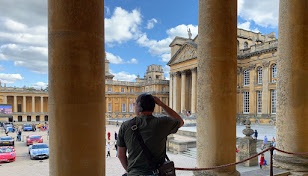
Even before reaching the show, the approach to Blenheim Palace felt suitably impressive. The magnificent house and Capability Brown landscape provided a backdrop capable of making even the most glamorous classic car work hard for attention.

It was an ideal setting for a celebration of motoring history.

Classic motoring in a magnificent setting

The show brought together an enormous variety of vehicles, from elegant British classics to distinctive American cars and much-loved models that immediately transported their admirers back to another era.

Rows of beautifully presented cars filled the grounds, their chrome gleaming and paintwork polished to near perfection. Some represented the height of motoring luxury, while others were cherished everyday cars that had survived long enough to become part of Britain’s social history.

Adam was in his element, stopping to examine particular models and discussing their finer details. Each row revealed something new: familiar badges, unusual designs and vehicles that had clearly benefited from many hours of devoted restoration.

That was part of the pleasure of the event. These were not simply machines placed on display. Every vehicle had a history, and many had an owner who was delighted to explain its restoration, peculiarities and place in their life.

Chris, meanwhile, could appreciate the elegance of the cars while also enjoying the spectacular surroundings. With Blenheim Palace rising beyond the displays, almost every view offered an irresistible photograph.

A celebration of preservation

Although narrowboats and classic cars may initially appear to belong to different worlds, the day revealed how much they have in common.

Both inspire devoted communities of enthusiasts. Both require considerable maintenance and practical knowledge. Most importantly, both allow people to experience history as something living rather than something confined to a museum.

A historic narrowboat travelling along the Oxford Canal and a lovingly restored car crossing the Blenheim estate each preserve a small but important part of Britain’s story.

The show celebrated not only beautiful vehicles but also the dedication of the people who keep them running. Their enthusiasm was infectious, even if it left us wondering whether maintaining one narrowboat might ultimately prove sufficient.

Returning to Tilly Mint

After an afternoon surrounded by polished chrome, powerful engines and grand architecture, returning to Tilly Mint felt wonderfully peaceful.

The activity of the show gave way once again to the quiet rhythm of the Oxford Canal. As evening settled over Thrupp, the water became still and the moored boats formed dark reflections beneath the fading sky.

That contrast made the day particularly memorable. We had begun beside the canal, spent the afternoon among some remarkable examples of motoring history and returned to the comfort of the boat as daylight disappeared.

There was time to reflect on our favourite cars, the scale of Blenheim Palace and whether any vehicle at the show could truly compete with the character of Tilly Mint.

We may have been slightly biased.

The best of both worlds

Our weekend in Thrupp offered a perfect mixture of relaxation, heritage and adventure.

Life aboard Tilly Mint gave us the freedom to slow down and enjoy the Oxford Canal, while the Classic Car Show provided colour, excitement and an impressive glimpse into Britain’s motoring past.

It was another reminder that a narrowboat journey is about far more than travelling along the water. Mooring in the right place can open the door to historic houses, special events and experiences well beyond the towpath.

One day we were admiring narrowboats on the Oxford Canal; the next, classic cars beneath the towers of Blenheim Palace. It was an unlikely combination—but an exceptionally enjoyable one.