Posted on

Day 3: From Laggan to Fort William via Loch Lochy

After two days travelling north and settling aboard our hire boat, our Caledonian Canal adventure finally began in earnest.

Today’s journey took us from Laggan through Loch Lochy towards Fort William. It was our first opportunity to experience the scale and beauty of the Great Glen from the water—and it did not disappoint.

Leaving Laggan

We set off from Laggan in the morning, excited to begin our first full day of cruising.

The peaceful canal section soon carried us towards Loch Lochy, one of the principal natural lochs incorporated into the Caledonian Canal. After the more familiar confines of England’s narrow canals, emerging onto such an immense stretch of open water felt extraordinary.

Our hire cruiser suddenly seemed very small against the surrounding Highland landscape.

Cruising across Loch Lochy

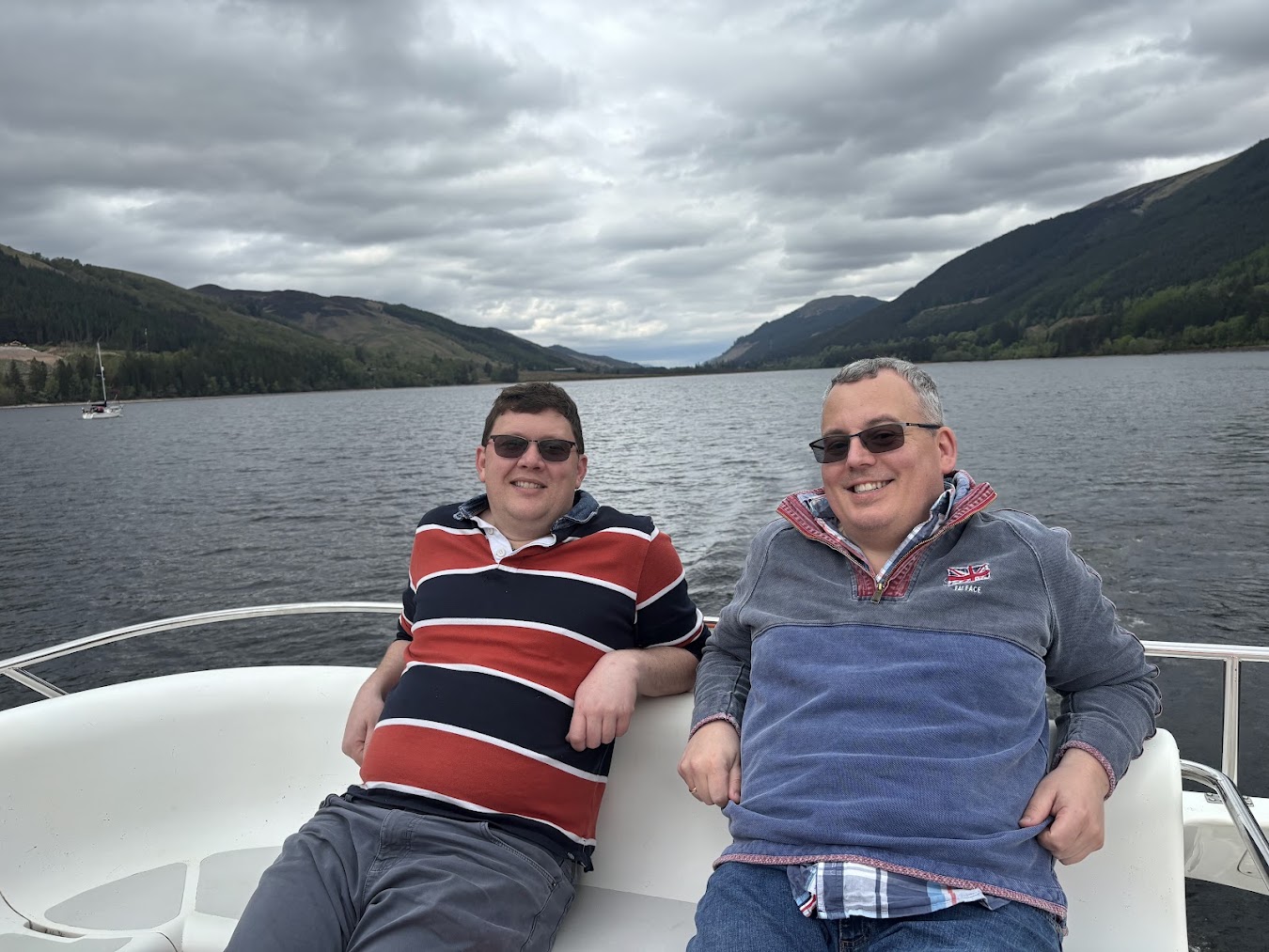
Loch Lochy provided some of the most beautiful cruising we had experienced.

Forested hillsides descended towards the water, with distant mountain peaks rising beyond them. The calm surface reflected the changing landscape and created an atmosphere that felt wonderfully remote.

Travelling by boat allowed us to appreciate the scenery at exactly the right pace. There was time to notice the changing light, search the shoreline for wildlife and enjoy the sheer scale of our surroundings.

This was very different from cruising aboard Tilly Mint. There were no continuous lines of moored boats or tightly enclosed channels. Instead, we had broad water, expansive views and the dramatic landscape of the Great Glen surrounding us.

Legends beneath the water

Like many Highland lochs, Loch Lochy has its own legends.

Stories tell of a mysterious water creature known as the River Horse, or Each-Uisge, which was said to inhabit the loch. Although considerably less famous than the monster associated with Loch Ness, it adds another layer of mystery to these deep Highland waters.

The loch has also witnessed centuries of clan history, conflict and travel through the Great Glen.

Cruising across it felt like passing through both a natural landscape and a corridor of Scottish history.

Approaching Fort William

After crossing Loch Lochy, we continued towards the outskirts of Fort William.

Ben Nevis dominated the surrounding landscape. Britain’s highest mountain provided a magnificent backdrop as we reached our mooring and secured the boat.

The location gave us the best of both worlds: a peaceful place to stay beside the canal and easy access to Fort William by local bus.

With the boat safely moored, we set off to explore the town.

Exploring Fort William

Fort William stands at the foot of Ben Nevis and has long occupied an important strategic position within the Great Glen.

The settlement developed around a military fort established during the seventeenth century and later named after King William III. It subsequently became closely associated with attempts to control the Highland clans and suppress the Jacobite cause.

Little remains of the original fort today, but the town has developed into an important Highland centre and a popular base for walking, climbing and exploring the surrounding landscape.

After experiencing the region from the water, it was interesting to spend time exploring it on foot.

Discovering Highland history

A visit to the West Highland Museum helped bring the area’s past to life.

Its collections explore the history and culture of the West Highlands, including the Jacobite uprisings, traditional Highland life and the development of the town.

The museum provided valuable context for the landscape through which we were travelling. The Caledonian Canal may be an impressive feat of nineteenth-century engineering, but it passes through a region shaped by a much longer and often turbulent history.

Learning more about that history made our journey through the Great Glen feel even more meaningful.

A taste of Scotland

After exploring the town, we found a welcoming local pub for lunch.

The warmth and bustle inside offered an enjoyable contrast to the open water and quiet Highland scenery of the morning. Traditional Scottish food and locally brewed ale provided exactly the sort of hearty meal we needed after our first day’s cruising.

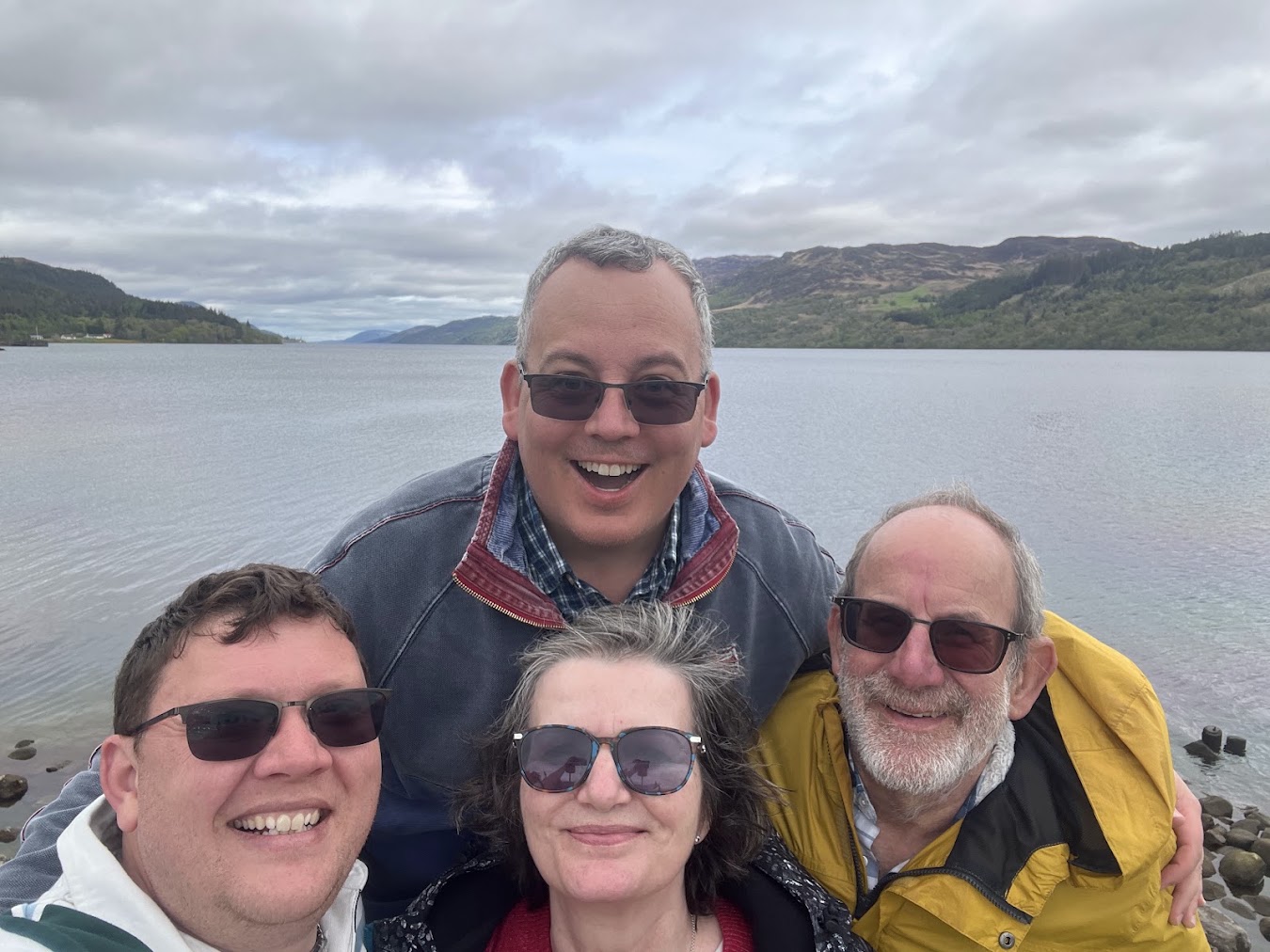
It was also an opportunity for Chris, Neil, Naomi and me to reflect upon the journey so far.

Only two days earlier, we had been driving north from East Sussex. We were now sitting beneath Ben Nevis, having crossed Loch Lochy aboard our own temporary floating home.

Returning to the canal

Later that afternoon, we caught the bus back to our mooring.

The light had begun to soften across the surrounding hills, giving the landscape a different character from the scenery we had experienced that morning.

Back aboard, we settled down for a quiet evening beside the canal. After the anticipation of the previous two days, it was satisfying to have completed our first proper cruise and begun discovering the Highlands from both water and land.

Our first day on the Great Glen

Today captured everything we had hoped this holiday might offer.

We crossed an immense Highland loch, travelled through magnificent scenery, explored the history of Fort William and enjoyed good food with close friends.

Most importantly, we experienced the distinctive rhythm of the Caledonian Canal for the first time: moments of adventure and discovery balanced by the peace of travelling slowly through an extraordinary landscape.

Our journey through the Great Glen was now properly under way—and there was still much more waiting ahead.
Posted on

Day 2: From Gretna Green to Laggan—Our Caledonian Canal Adventure Begins

After spending our first night in Scotland at historic Gretna Green, it was time to continue north towards the real beginning of our adventure.

Our destination was Laggan, where our hire boat awaited us on the Caledonian Canal. After months of anticipation—and a long journey from East Sussex—we were finally going to step aboard and begin exploring the Scottish Highlands from the water.

Farewell to Gretna Green

We began the day with a hearty Scottish breakfast, providing essential fuel for the drive ahead.

Gretna Green had been an enjoyable introduction to Scotland. Its history of runaway weddings, anvil ceremonies and romantic rebellion made it much more than a convenient overnight stop.

However, the Highlands were calling.

After loading the car, Chris and I set off with Neil and Naomi for the journey north. The previous day had been about covering the distance from home; today, the changing landscape became an important part of the adventure.

Driving into the Highlands

As we travelled north, Scotland gradually revealed its more dramatic character.

The scenery became increasingly spectacular: wooded valleys, open hills and lochs reflecting the shifting sky. Mountains rose around us as the road carried us deeper into the Highlands.

Almost every bend seemed to reveal another view worthy of a photograph.

After the long motorways of the previous day, this part of the journey felt completely different. The landscape demanded our attention and built our anticipation for the days ahead.

We were approaching the Great Glen—an immense natural fault line cutting across the Highlands from Fort William to Inverness and forming the route followed by the Caledonian Canal.

Arriving at Laggan

Eventually, we reached Laggan and caught our first proper sight of the waterway that would become our home for the coming days.

The Caledonian Canal stretches for approximately 60 miles across the Scottish Highlands, connecting Corpach, near Fort William, with Inverness. Rather than being entirely artificial, much of its route passes through the natural waters of Loch Lochy, Loch Oich, Loch Ness and Loch Dochfour.

Only around one-third of the route consists of constructed canal sections. Together, they create a navigable passage between Scotland’s east and west coasts through some of the country’s most extraordinary scenery.

After travelling for two days by road, seeing the canal before us made the holiday suddenly feel real.

Meeting our boat

Our hire cruiser was ready and waiting.

Unlike the narrowboats we knew from England, this boat was designed for the broader waters and expansive lochs of the Caledonian Canal. It would be our transport, accommodation and floating viewpoint as we travelled through the Great Glen.

Before setting off, we received a thorough handover and safety briefing. There was plenty to absorb: the controls, equipment, mooring arrangements and practicalities of handling an unfamiliar boat.

Even with previous boating experience, every vessel behaves differently. The scale and exposed nature of the Scottish lochs also meant that weather and water conditions would play a much greater role than on many sheltered canals farther south.

Once the briefing was complete, we began unpacking and transforming the boat into our temporary home.

Settling into life aboard

There is a distinctive moment at the beginning of every boating holiday when bags disappear into cupboards, provisions find their places and an unfamiliar boat starts to feel like your own.

We explored the cabins, organised the galley and worked out where everything needed to go. With four people aboard for several days, good use of space would be important.

Outside, the peaceful surroundings provided an irresistible preview of what awaited us.

The Caledonian Canal felt spacious and remote, framed by wooded hills and Highland scenery. It was very different from the narrower, more enclosed waterways on which we had previously travelled aboard Tilly Mint.

The possibilities ahead felt enormous.

An evening beside the canal

Our first evening at Laggan was deliberately unhurried.

After two days of travelling, there was no need to rush away from the base. Instead, we spent time becoming familiar with the boat and enjoying the tranquillity of our surroundings.

As daylight softened across the water, the canal took on a golden glow. The only sounds were the gentle movement of water against the hull and the occasional signs of life from the surrounding landscape.

Sitting aboard with Chris, Neil and Naomi, it was wonderful to realise that we had finally arrived.

The long drive from East Sussex was behind us. Our provisions were aboard, the briefing was complete and our floating home was ready.

Ready for the Great Glen

Tomorrow, we would begin navigating the Caledonian Canal in earnest.

Ahead lay locks, swing bridges, Highland villages and some of Scotland’s most famous lochs. We would experience the scale of the Great Glen from the water and discover how different this journey would be from our previous canal adventures.

For now, however, we were content simply to be aboard.

Our Scottish canal adventure had officially begun.

Posted on

Driving to Gretna Green: Our Scottish Canal Adventure Begins

After months of anticipation, our 12-day Scottish adventure had finally arrived.

Leaving East Sussex behind, we began the long journey north with our dear friends Neil and Naomi. Their narrowboat, Tilly Mint, had already carried us on many memorable weekends, but this time we were exchanging the familiar canals of southern England for the dramatic landscapes of Scotland and the Caledonian Canal.

Our first destination was not yet the canal itself. We had a considerable distance to travel, so Gretna Green provided the perfect place to break the journey and spend our first night in Scotland.

The long road north

The drive from East Sussex took us along much of the spine of Britain.

As the miles passed, familiar surroundings gradually gave way to the landscapes of northern England. Despite the length of the journey, there was a growing sense of excitement in the car. Every mile carried us closer to the Highlands and the boating adventure we had spent so long imagining.

Travelling with Neil and Naomi made the journey part of the holiday. There was plenty of conversation, laughter and speculation about what the following days might bring.

By the time we crossed the border into Scotland, we were ready to stop—but delighted that the adventure was properly under way.

Our first night in Gretna Green

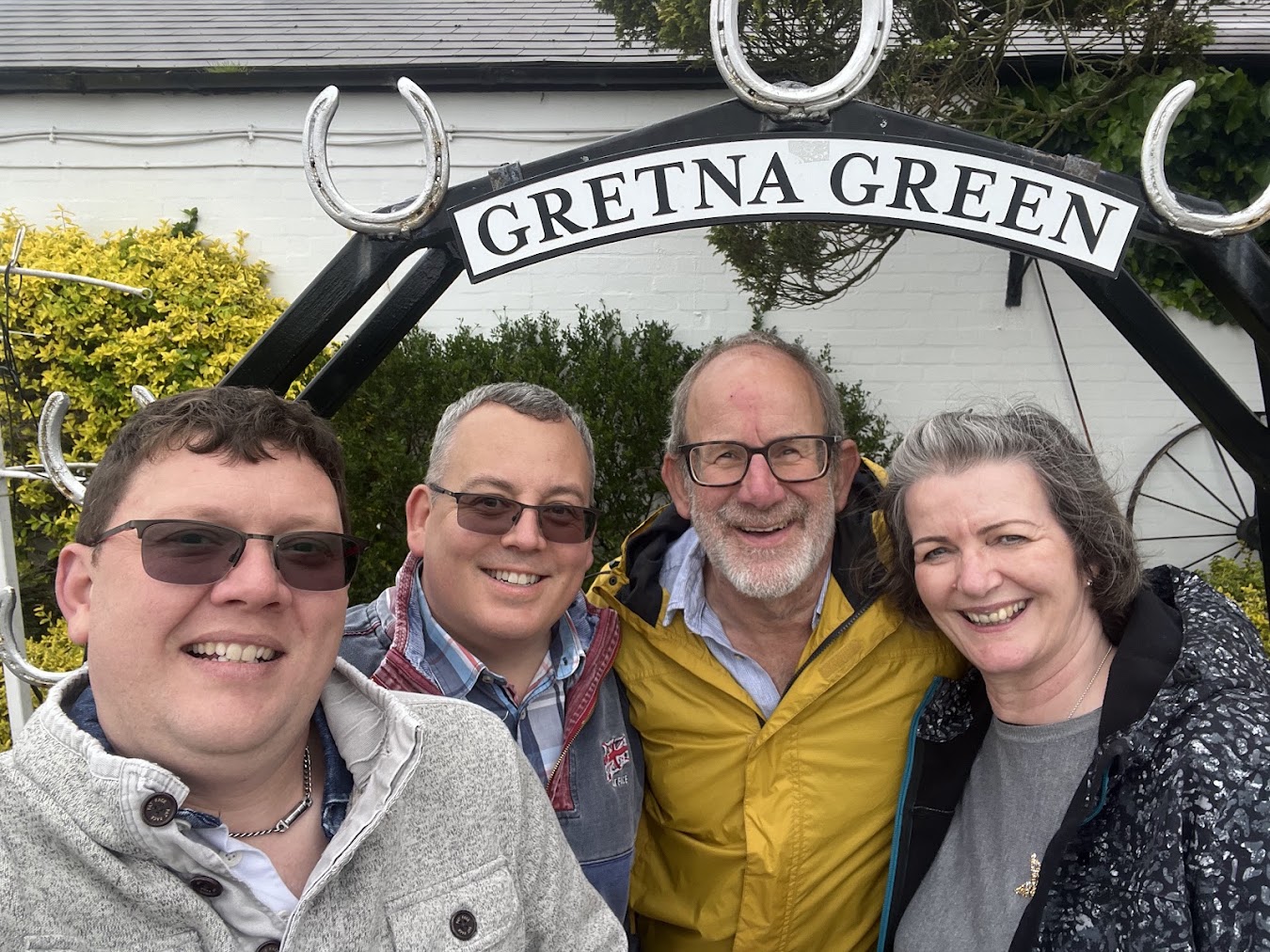
Situated immediately beyond the English border, Gretna Green has welcomed travellers arriving in Scotland for centuries.

For us, it offered a comfortable overnight stop before continuing north. It also gave us an opportunity to explore a village with one of the most romantic—and rebellious—histories in Britain.

Gretna Green became famous following the introduction of the Marriage Act 1754 in England and Wales. The legislation imposed stricter requirements upon marriages, including parental consent for people under the age of 21.

The Act did not apply in Scotland, where couples could marry at a younger age and without the same formalities. Gretna Green was conveniently located just across the border, making it a natural destination for young couples escaping disapproving families.

Marriage over the anvil

The village’s Old Blacksmith’s Shop became particularly associated with these runaway weddings.

Under Scottish law, marriages could historically be conducted by declaration before witnesses. Local blacksmiths became known as “anvil priests”, joining couples together in the same way that they joined pieces of metal.

The anvil consequently became an enduring symbol of marriage at Gretna Green.

It is wonderfully dramatic to imagine couples racing north by carriage, pursued by angry parents and determined to reach Scotland before being caught. The reality may not always have been quite so theatrical, but the stories gave Gretna Green a lasting reputation as the home of romantic rebellion.

Weddings continue to take place there today, preserving a tradition extending back for generations.

An evening with friends

After checking into our accommodation, we had time to wander around the village and absorb some of its history.

This was not intended to be a demanding sightseeing day. After the long drive, a leisurely evening was exactly what we needed.

Dinner with Neil and Naomi provided the perfect conclusion to the first day. We could relax, enjoy each other’s company and look forward to everything awaiting us farther north.

The holiday had begun with roads rather than waterways, but our conversation was already firmly focused upon boats, locks and the Scottish scenery ahead.

Towards the Caledonian Canal

The following morning, we would continue north towards the Caledonian Canal.

Stretching for approximately 60 miles between Corpach, near Fort William, and Inverness, the canal links a series of natural lochs through the Great Glen. Its route includes Loch Lochy, Loch Oich and the immense Loch Ness, surrounded by some of Scotland’s most spectacular scenery.

Unlike the more sheltered waterways we knew, the Caledonian Canal promised vast stretches of open water, mountains rising around us and an entirely different boating experience.

For several days, our hire boat would become both our transport and our home as we explored one of Britain’s greatest waterways.

The adventure begins

Gretna Green may only have been the first stop on our journey, but it marked the moment when the holiday truly began.

We had crossed into Scotland, shared our first evening together and reached the starting point of an adventure that would take us deep into the Highlands.

There were still many miles to travel before we stepped aboard our boat, but the excitement was already building.

Tomorrow, we would continue north—and the Caledonian Canal would be waiting.

Posted on

Returning to the Scene of the Crime: Tilly Mint Remains in Newbury

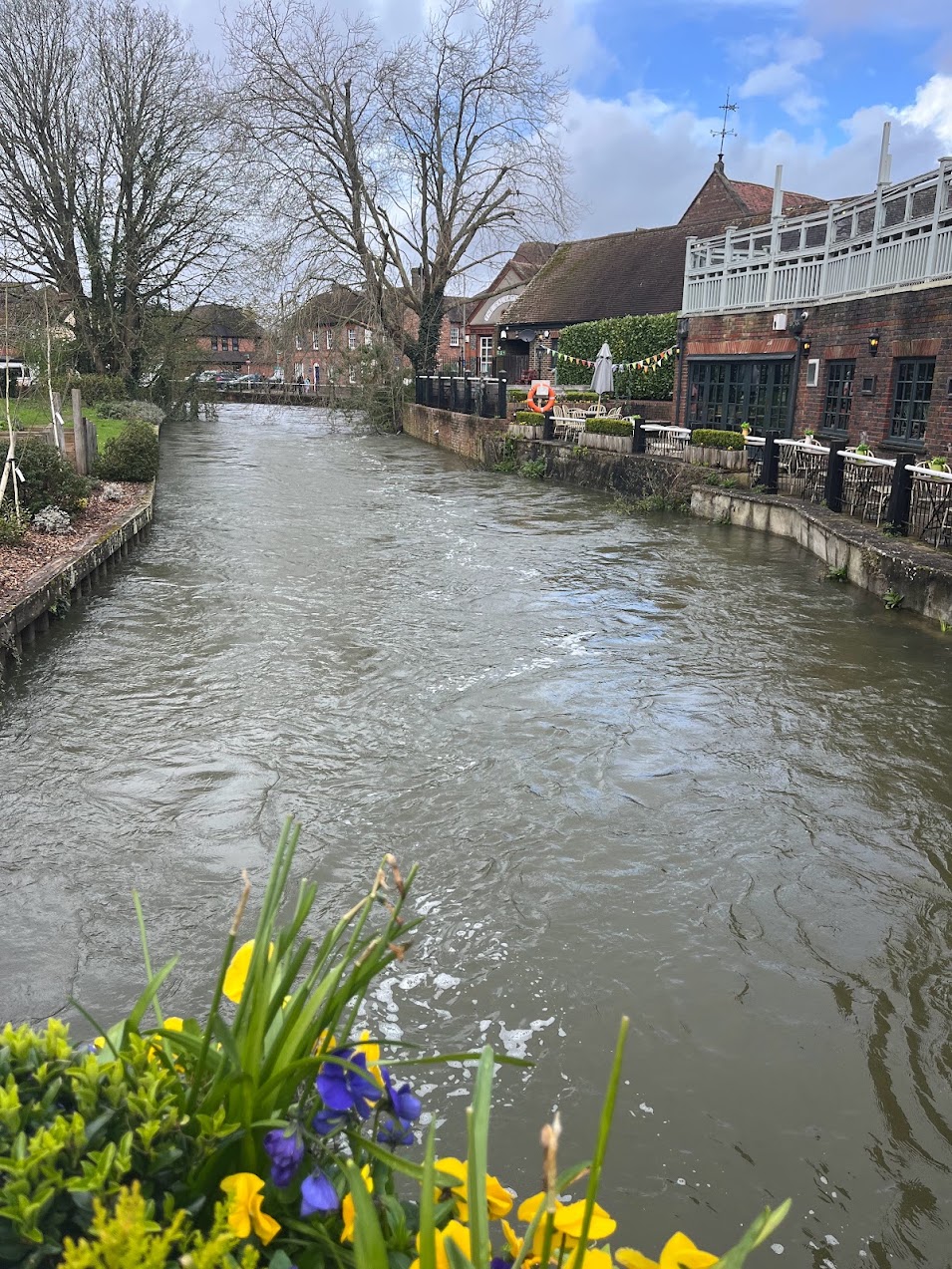
Six days after we nearly sank Tilly Mint while attempting to moor in Newbury, Chris and I returned to check on the boat—and decide whether it was safe to move her.

Our plan appeared straightforward: inspect the water levels and, if conditions had improved sufficiently, carefully take Tilly Mint back downstream.

Unfortunately, the Kennet & Avon Canal had other ideas.

Back to Newbury

The memory of our previous visit remained painfully fresh.

Strong flows had caught Tilly Mint as we attempted to moor, forcing her sideways and wedging her across the navigation. For 15 frightening minutes, we had struggled to regain control before five members of the public helped us bring her safely alongside the bank.

Leaving the boat in Newbury had been the only sensible option. Nevertheless, we remained concerned about her and hoped that a week of calmer conditions might allow us to move her somewhere safer.

As we travelled back to Newbury, we were cautiously optimistic.

That optimism did not last long.

The flooding had worsened

Rather than subsiding, the floodwaters had continued to rise.

The railway was disrupted by flooding, while replacement buses offered little assistance because several local roads were also affected. Simply reaching Newbury became considerably more difficult than expected.

It felt as though the entire transport network was delivering the same unmistakable message:

Do not move the boat.

When we finally reached the canal, the conditions confirmed it. Water levels remained dangerously high, the flow was powerful and the familiar waterway looked increasingly unpredictable.

Any hope of a gentle cruise back downstream quickly disappeared.

Assessing Tilly Mint

Our first priority was checking that Tilly Mint remained safe.

After the drama of the previous weekend, it was an enormous relief to find her still securely moored. We inspected the ropes, checked the boat and considered whether there was any safe way to move her.

There was not.

Attempting to set off would mean releasing Tilly Mint back into the same powerful flow that had overwhelmed us only days earlier—except conditions were now even worse.

Moving downstream might sound easier than travelling against the current, but strong water can carry a narrowboat far more quickly than expected. Bridges, bends, locks, weirs and moored boats leave very little margin for error once control is lost.

We had already received one warning. Ignoring the second would have been reckless.

The hardest decision was to do nothing

We had returned prepared to move the boat, but the responsible decision was to leave her exactly where she was.

It was disappointing. We wanted to take Tilly Mint somewhere safer and had hoped to spend the weekend aboard. After all the effort involved in reaching Newbury, turning around without cruising felt frustrating.

However, boating safely sometimes means accepting that the conditions—not the crew—will determine the plan.

No journey was worth risking the boat, ourselves or anyone who might once again have to come to our assistance.

We checked that Tilly Mint was as secure as possible, stepped back onto the towpath and left her to wait out the floods.

A lesson in patience

Canal boating is usually associated with freedom: releasing the ropes, choosing a direction and travelling at your own pace.

This experience reminded us that the waterways always retain the final say.

After prolonged rainfall, water levels and flows can change quickly. A stretch that normally appears calm can become hazardous, and confidence gained in ordinary conditions may offer little protection when nature behaves differently.

Knowing how to handle a boat is important. Knowing when not to move it can be even more important.

Waiting for calmer water

Our return to Newbury was not the adventure we had hoped for.

There was no cruise, no peaceful evening aboard and no satisfying moment when we finally carried Tilly Mint away from the scene of our narrow escape.

Instead, there was a careful inspection, a difficult decision and a journey home.

Yet doing nothing was unquestionably the right choice.

Tilly Mint would remain in Newbury until the floods subsided and the Kennet & Avon Canal became safe enough to navigate again. Our next adventure would simply have to wait.

Sometimes the most successful boating trip is the one during which the boat does not move at all.

Posted on

We Nearly Sank Tilly Mint: A Narrow Escape in Newbury

Our journey aboard Neil and Naomi’s narrowboat, Tilly Mint, from Hungerford to Newbury should have been a peaceful cruise along the Kennet & Avon Canal.

Instead, persistent rain, unusually strong flows and one frightening attempt to moor turned it into the closest we had ever come to losing control of the boat—and possibly sinking her.

Leaving Hungerford in difficult conditions

The weather had been poor, with recent heavy rainfall raising water levels and strengthening the flow along the canalised sections of the route.

We knew conditions were more challenging than usual, but the journey began without incident. Despite the drizzle, the Kennet & Avon remained beautiful: green countryside, trees leaning over the water and the familiar rhythm of locks carrying us towards Newbury.

The stronger flow demanded more concentration at bridges, bends and lock approaches, but we continued making steady progress.

As the day drew to a close, we began looking forward to securing Tilly Mint and settling down for the evening. We thought the most demanding part of the journey was behind us.

We were wrong.

The current takes control

As we attempted to moor in Newbury, the current caught Tilly Mint before we could bring her safely alongside the bank.

Within moments, the boat was being pushed sideways across the navigation. One end became trapped against the bank while the other was forced towards a moored boat on the opposite side.

We were wedged across the canal.

Normally, a narrowboat responds slowly but predictably. This time, the force of the moving water was greater than the control available from the engine and tiller. Every attempt to correct the boat’s position seemed to make another part of the situation worse.

The canal was no longer the calm, sheltered waterway we knew. It had taken control of the boat—and us.

Fifteen frightening minutes

For approximately 15 minutes, we struggled to free Tilly Mint.

The current continued pressing against the side of the hull, pinning the boat more firmly in place. The engine could provide power, but there was little room to manoeuvre and no safe angle from which to escape.

As the boat remained trapped awkwardly across the flow, the situation became genuinely frightening. A narrowboat caught against a strong current can begin to list, allowing water to reach openings that would ordinarily remain safely above the surface.

We became increasingly concerned that water might enter the boat. What had begun as a difficult mooring attempt now carried the very real possibility of serious damage—or worse.

Help arrives from the towpath

Thankfully, people nearby quickly recognised that we were in trouble.

Five members of the public came to help, taking hold of ropes and adding the strength we desperately needed from the bank. Their assistance gave us something the engine alone could not: the ability to control the boat from several directions at once.

Working together, we gradually changed Tilly Mint’s angle against the current. It was not a quick or graceful manoeuvre, but centimetre by centimetre the boat began to move.

Eventually, she came free.

With the helpers controlling the ropes from the towpath and those aboard managing the engine and tiller, we finally brought Tilly Mint safely alongside the bank.

The ropes were secured, the engine was stopped and, for the first time in what felt considerably longer than 15 minutes, we could breathe properly.

The kindness of strangers

Our overwhelming feeling was relief—but also gratitude.

The five people who stopped to help had no obligation to become involved. They saw a boat and its crew in difficulty and responded immediately.

Without them, freeing Tilly Mint against the force of the water would have been considerably harder and the outcome could have been very different.

Their kindness transformed a frightening situation into a powerful reminder of the community surrounding Britain’s waterways. When something goes wrong, assistance often comes from people who were strangers only moments earlier.

Respecting the water

The experience changed how we thought about boating in poor conditions.

Canals can appear gentle and predictable, particularly during calm weather. However, many sections interact with rivers, weirs, sluices and changing water levels. After prolonged rainfall, familiar stretches can behave very differently.

A heavy narrowboat may feel reassuringly solid, but it remains vulnerable when caught broadside by moving water. Once the flow takes control, the weight and momentum of the boat can make recovery extremely difficult.

Conditions must always be treated with respect, particularly when approaching locks, bridges, bends and moorings where space is limited.

Lessons from a narrow escape

Once Tilly Mint was safely secured, we could begin reflecting upon what had happened.

The experience reinforced several important lessons:

  • Check water conditions and warnings before setting out.
  • Allow considerably more room and time when manoeuvring in a strong flow.
  • Prepare ropes early and agree clearly who will do what.
  • Avoid becoming trapped broadside to moving water.
  • Never hesitate to accept—or call for—help.
  • If conditions feel unsafe, stopping early is better than pressing ahead.

Most importantly, never underestimate the power of water simply because it happens to be flowing through a canal.

An adventure we will never forget

Our cruise from Hungerford to Newbury became one of the most dramatic journeys we had experienced aboard Tilly Mint.

There was no triumphant arrival or elegant mooring—just an exhausted crew, a securely tied boat and enormous relief that everyone was safe.

It may become a story we can laugh about with the benefit of hindsight, but we will never forget the fear of being pinned across the canal or the sight of strangers rushing forward to help us.

Canal boating brings freedom, tranquillity and wonderful adventures. Occasionally, it also provides a sharp reminder that the waterways deserve our complete respect.

That day, teamwork and the kindness of five strangers prevented our narrow escape from becoming something much more serious.

Posted on

Designing Serenity: Our First Narrowboat Layout

By July 2023, our dream of retiring aboard a narrowboat was beginning to develop into a practical design.

We were still several years away from commissioning our boat, and Priscilla, Queen of the Canal had not yet emerged as the bold vision she would later become. At this stage, we called our imagined boat Serenity—a floating sanctuary designed around comfort, intelligent use of space and long-term life aboard.

Our earliest layout placed the bedroom at the bow, followed by a full-width bathroom, galley and lounge, leading through to a sociable square cruiser stern. Every section had a clear purpose, while storage and flexibility were built into almost every available space.

A king-sized bed at the bow

The master bedroom would occupy the forward section of the boat, creating a quiet and private retreat away from the main entrance at the stern.

At its centre would be a fixed king-sized bed, positioned as far into the bow as the shape of the hull allowed. While ambitious for a narrowboat, we wanted our future home to provide the same comfort as a conventional bedroom.

The bed would be raised approximately 700mm above the floor, creating substantial storage beneath. Pull-out drawers or wheeled storage units at the foot would make the space accessible without requiring us to lift the mattress whenever we needed something.

A built-in headboard would provide further storage, alongside integrated reading lights, electrical sockets and USB charging points. These small conveniences would help the bedroom feel properly designed rather than simply fitted into the available space.

Wardrobes and shelving opposite the foot of the bed would complete the room, with a door leading into the walkthrough bathroom.

A full-width walkthrough bathroom

Moving towards the centre of the boat, the bedroom would open into a full-width bathroom.

Using the entire width of the cabin would create a more generous room and avoid the cramped corridor arrangement found in some narrowboat layouts. Closing the doors at either end would provide complete privacy while retaining a natural route through the boat.

Frosted portholes would bring daylight into the room without compromising privacy. We imagined a fully waterproof wet-room design, making the space easier to clean and allowing the shower to occupy more of the available area.

Our preferred toilet was a Thetford ceramic cassette model. Although other systems offered advantages, cassettes provided flexibility and avoided relying entirely upon pump-out facilities.

A waterproof storage seat within the shower area would conceal spare empty cassettes. The washbasin would sit above a fitted cupboard, ensuring that even the smallest spaces contributed useful storage.

A galley designed as a proper kitchen

The galley would follow the bathroom and form the practical heart of the boat.

We favoured a U-shaped arrangement because it offered generous work surfaces and storage while keeping appliances within easy reach. As we intended the boat to become our home, the kitchen needed to support everyday cooking rather than merely occasional holiday meals.

Our early equipment list included:

  • An induction hob
  • A conventional oven
  • A combination steam and microwave oven
  • A full-sized fridge
  • A separate freezer
  • A washer-dryer

Choosing electrical appliances reflected our early interest in an all-electric boat. It would require careful planning around batteries, charging and power generation, but we wanted to explore what might become possible as marine electrical technology developed.

Breakfast with the canal outside

A breakfast bar would provide our principal dining space without requiring room for a separate table.

Positioned between a pair of side hatches, it would allow us to sit with the doors open and enjoy uninterrupted views across the canal. It could also serve as additional preparation space, a desk or somewhere to plan the next day’s journey.

We wanted the internal faces of the hatches to display the plaques collected during our travels. Embedding them into the woodwork would turn a familiar boating tradition into part of the interior design, revealed whenever the hatches were opened.

One of our more unusual ideas involved glazed inner panels that could slide vertically into the gunwales. These would allow light and views into the galley while providing protection when conditions were too cold or windy for completely open hatches.

It was an ambitious detail, but exactly the sort of idea we wanted to investigate before settling upon a final design.

A flexible and spacious lounge

Beyond the galley, the lounge would provide our main place to relax, entertain guests and enjoy quieter evenings aboard.

The television would be mounted high on the wall between the windows, keeping the floor and walkway clear. Seating would face towards it while still allowing us to enjoy views through the windows and glazed stern door.

A generously sized sofa bed would offer comfortable everyday seating and convert into accommodation for visitors. Finding a model capable of fitting through a narrowboat doorway—and functioning properly once inside—would inevitably require careful measurement.

The lounge needed to feel open rather than crowded. Furniture would therefore have to earn its place by offering storage, flexibility or more than one function.

Connecting the lounge and stern

A half-width glazed door on the starboard side would connect the lounge with the rear deck.

Positioning the door to one side, rather than centrally, would create a more usable wall within the lounge and preserve a clear route through the boat. The glazing would bring additional light inside and allow us to enjoy the view even when the weather kept the doors closed.

When open, it would help the lounge and stern feel like one continuous entertaining space.

A square cruiser stern

At the rear of the boat, we imagined a square cruiser stern with built-in seating.

Traditional cruiser sterns provide valuable outdoor space, but their curved edges can restrict seating and make the deck feel smaller than it is. A squared design would create a more defined social area and make better use of the boat’s footprint.

Integrated seating would offer somewhere for friends to gather while cruising or moored. Storage beneath could accommodate ropes, outdoor equipment and other boating essentials.

This would be more than the place from which we steered. It would become an outdoor lounge: somewhere to enjoy breakfast, share drinks with friends and watch the canal disappear behind us.

Designing for life, not just holidays

Our first layout was not intended for a conventional holiday boat.

We were beginning to design a full-time home that needed to remain comfortable through changing seasons and changing stages of our lives. Storage, accessibility, electrical capacity and ease of movement mattered just as much as colours, finishes and furniture.

Some of these early ideas would inevitably change. Technology would develop, our priorities would evolve and every boatbuilder would bring different possibilities and constraints.

That was part of the value of beginning early. We had time to question each assumption, learn from existing boaters and gradually distinguish the essentials from the attractive ideas that might not survive contact with reality.

From Serenity towards Priscilla

Looking back, this design represented an important step in our journey.

Serenity was the working title for a calm, comfortable retirement home. The later vision for Priscilla, Queen of the Canal would become bolder, more distinctive and more ambitious, but many of the underlying principles began here.

The king-sized bed, generous bathroom, capable galley, flexible lounge and sociable stern all reflected the life we wanted to create: comfortable, adventurous and unmistakably our own.

The final boat might eventually look very different, but this was where we first began transforming an idea into a layout—and a distant dream into something we could imagine calling home.

Posted on

From Hungerford to Crofton aboard Tilly Mint

Two days after exploring the remarkable Crofton Beam Engines, we returned to the Kennet & Avon Canal aboard Tilly Mint to enjoy the journey through the landscape that those engines have helped sustain for more than two centuries.

Beginning in Hungerford, our route carried us through the peaceful countryside of the North Wessex Downs towards Crofton—a journey combining narrowboat life, beautiful scenery and some extraordinary waterways heritage.

Beginning in Hungerford

Our day began in the historic market town of Hungerford.

Known for its antiques shops and ancient Hocktide traditions, the town is surrounded by some of southern England’s most attractive countryside. The Kennet & Avon Canal passes quietly through it, offering a particularly inviting starting point for a journey by boat.

Once aboard Tilly Mint, we prepared to cast off and leave the town behind. Ropes were released, the engine settled into its familiar rhythm and we returned to the wonderfully unhurried pace of canal travel.

Into the North Wessex Downs

Beyond Hungerford, the canal enters a tranquil rural landscape within the North Wessex Downs.

Trees and hedgerows lined the water while open fields stretched towards the surrounding hills. Sheep grazed beyond the towpath, birds moved between the branches and the occasional waterside cottage appeared through the greenery.

From the stern of Tilly Mint, the landscape unfolded gradually. There was time to notice reflections moving across the water, listen to birdsong and enjoy the small details that would be missed when travelling by road.

The gentle sound of the boat moving through the water provided the soundtrack to our journey.

Life at narrowboat pace

A day aboard Tilly Mint was never simply about reaching our destination.

Canal travel creates its own rhythm. Locks and bridges divide the journey into a succession of small tasks, while stretches of open water provide time to relax, talk and enjoy the surroundings.

There is always something requiring attention: the position of the boat, an approaching bridge, activity at the next lock or wildlife deciding that the centre of the canal is the only reasonable place to be.

Yet none of it feels hurried. Progress is measured in miles rather than minutes, and the journey becomes every bit as important as the destination.

Approaching Crofton

As we continued towards Crofton, the engineering behind the canal became increasingly apparent.

The Kennet & Avon must climb to its summit before descending again towards Wiltshire and the Avon Valley. Maintaining sufficient water at this highest section was one of the greatest challenges faced by the canal’s original engineers.

Every boat passing through a lock carries water downhill. Without a reliable means of replacing it, the summit pound would gradually become unnavigable.

The solution was Crofton Pumping Station, built between 1807 and 1809 to raise water from the springs and reservoir below into the canal above.

Seeing Crofton from the water

Approaching Crofton aboard Tilly Mint gave us a different perspective from our earlier visit on foot.

The tall chimney and historic engine house rise beside the canal, immediately distinguishing the site from the surrounding countryside. It is an impressive reminder that even the most peaceful waterways depend upon substantial infrastructure.

Inside the Grade I-listed pumping station are two working steam-powered beam engines dating from 1812 and 1846. The older Boulton & Watt engine is celebrated as the world’s oldest working beam engine remaining in its original location and capable of performing its original purpose.

On selected steaming days, the engines still lift water into the summit pound—living machinery continuing the work for which it was created more than two centuries ago. Crofton Beam Engines

Engineering brought to life

Having recently explored the engine house, we could now connect the machinery inside with the waterway outside.

The great beams, pistons and pumps were no longer isolated museum exhibits. They formed part of the landscape through which Tilly Mint was travelling and helped explain how boats could continue navigating this elevated section of canal.

That connection made Crofton particularly memorable. The engines are magnificent examples of Industrial Revolution engineering, but their real significance becomes clearest when viewed alongside the canal they were built to serve.

Watching the water beside our boat, it was remarkable to consider the effort required to maintain something that appeared so calm and natural.

A pause beside the canal

Crofton provided an ideal place to pause and enjoy the surroundings.

The grounds overlook the canal and nearby railway, with the Wiltshire countryside extending beyond. It is a landscape shaped by several generations of transport history: canal boats moving at walking pace, trains passing nearby and historic steam engines standing between them.

After exploring, there was time to relax and reflect on the journey before returning to Tilly Mint.

A picnic beside the canal is one of boating’s simplest pleasures. Food somehow tastes better after a morning on the water, particularly when accompanied by attractive views and nowhere urgent to be.

Heritage that remains alive

The Kennet & Avon Canal has survived because generations of volunteers and campaigners refused to allow it to disappear.

The same spirit is evident at Crofton, where volunteers maintain the buildings, boilers and engines, operate the machinery and share its history with visitors.

Without their skill and commitment, the pumping station might have become a static monument—or been lost entirely. Instead, it remains connected to the working canal and continues to demonstrate the ingenuity of its original designers.

The Canal & River Trust describes the 1812 and 1846 engines as being among the world’s oldest working steam beam engines. Seeing their setting from the canal reinforced just how exceptional their survival is.

A journey through two landscapes

Our cruise from Hungerford to Crofton brought together two contrasting elements of the inland waterways.

There was the natural beauty of the North Wessex Downs: green fields, mature trees, wildlife and tranquil water. Alongside it stood the engineered landscape of locks, reservoirs, channels and pumping machinery that makes navigation possible.

Neither exists independently of the other. The apparent tranquillity of the canal is sustained by centuries of engineering, continual maintenance and the efforts of those who care for it today.

Travelling aboard Tilly Mint allowed us to experience both.

More than a destination

Crofton Beam Engines may have been our destination, but the journey from Hungerford was an essential part of the experience.

At narrowboat pace, we watched the landscape change, worked through the canal’s structures and gained a deeper appreciation of the infrastructure supporting the water beneath us.

It was another memorable day aboard Tilly Mint—and a wonderful reminder that Britain’s canals are not merely routes through the countryside. They are living pieces of history, best understood by travelling slowly through them.

Posted on

Crofton Beam Engines: Where Steam Still Powers the Canal

Hidden beside the Kennet & Avon Canal in the Wiltshire countryside stands one of Britain’s most remarkable pieces of working industrial heritage.

Crofton Beam Engines has supplied water to the canal’s summit for more than two centuries. Its magnificent steam engines survive in their original engine house—and, on selected steaming days, still perform the job for which they were built.

Solving the canal’s water problem

The Kennet & Avon Canal created a navigable route between Bristol and Reading, linking the Bristol Channel with the River Thames and London.

One of its greatest engineering challenges was maintaining the water supply at its summit near Crofton. Every time a boat passed through the locks, water flowed downhill and had to be replaced.

The solution was to construct a pumping station beside the canal. Water could be drawn from natural springs and Wilton Water, then lifted approximately 12 metres into the summit pound.

Crofton Pumping Station began operating in 1809, shortly before the canal fully opened in 1810.

The oldest working beam engine in the world

The oldest surviving engine at Crofton was manufactured by Boulton & Watt and installed in 1812.

It is recognised as the world’s oldest working beam engine still in its original location and capable of performing its intended task.

Watching the machinery reveals the impressive simplicity of its design. Steam drives a piston connected to the enormous rocking beam overhead. At the opposite end, pump rods descend into the well and lift water towards the canal.

The beam moves slowly and rhythmically, but the apparent gentleness disguises the tremendous power involved.

Crofton’s second engine

The second engine dates from 1846 and was originally constructed as a compound engine using components supplied by Harvey of Hayle.

It was substantially rebuilt by the Great Western Railway at Swindon in 1905, becoming the single-cylinder engine seen today.

Together, the two engines demonstrate how steam technology developed and how working machinery was repeatedly adapted rather than simply discarded.

These were practical machines, expected to operate reliably for decades. Their survival owes much to both the quality of their construction and the generations of engineers who maintained them.

Steam, sound and movement

Even when stationary, the scale of the machinery is impressive. The beams dominate the engine house, surrounded by polished metalwork, pipework, valves and the accumulated details of more than two centuries of engineering.

On steaming days, however, the building truly comes alive.

Heat rises through the engine house, the machinery settles into its measured rhythm and the sounds of steam and moving metal fill the space. It becomes easier to imagine Crofton as a working pumping station rather than a museum.

When the steam engines are operating, the modern electric pumps are switched off and the historic machinery once again supplies water to the canal.

Decline and rescue

By the twentieth century, commercial traffic on the Kennet & Avon Canal had declined considerably, and much of the waterway became virtually impassable.

Crofton’s steam engines nevertheless continued working because water was still required for nearby farms and railway locomotives. The 1812 engine remained operational until 1958.

The Kennet & Avon Canal Trust acquired the redundant pumping station for preservation in 1968. Volunteers then undertook the enormous task of restoring the engines, returning both to working order by 1971.

Their achievement formed part of the wider campaign to save the canal. Following decades of restoration, the Kennet & Avon reopened throughout in 1990.

Preserved by volunteers

Crofton’s survival is an extraordinary example of volunteer-led conservation.

Maintaining large steam engines, boilers and a Grade I-listed pumping station requires specialist knowledge, considerable expense and continual work. Volunteers operate the site, care for its collections and pass the skills needed to run the machinery to future generations.

Without that dedication, the engines could easily have become static exhibits—or disappeared entirely.

Instead, visitors can still experience them as their designers intended: moving, pumping and serving the canal.

More than a museum

Crofton is special because its story remains connected to the living waterway outside.

The engines were created to solve a practical problem, and more than two centuries later they can still fulfil that purpose. The canal may now be used principally for leisure, but its continued operation depends upon the same careful management of water that challenged its original engineers.

Visiting Crofton helped us appreciate the hidden infrastructure behind a canal journey. Locks and boats may receive most of the attention, but reservoirs, pumping stations and countless acts of engineering keep the entire system functioning.

A monument that still works

The Crofton Beam Engines are far more than impressive relics of the Industrial Revolution.

They represent ingenious engineering, generations of skilled maintenance and the extraordinary determination of volunteers who refused to allow an important part of Britain’s waterways heritage to disappear.

There is something deeply satisfying about seeing historic machinery continue to perform its original purpose. At Crofton, steam does not merely recreate the past—it still helps keep the Kennet & Avon Canal alive.

Posted on

Crick Boat Show 2023: The Countdown to Priscilla Begins

The May Bank Holiday weekend of 2023 marked an important milestone for us: our first visit to the Crick Boat Show and the beginning of our seven-year countdown to retirement aboard our own narrowboat.

We had enjoyed narrowboat holidays and trips with friends for years, but Crick offered something different. It was our first opportunity to step aboard a wide selection of newly built boats, meet the people shaping the future of inland boating and begin turning a distant ambition into something more tangible.

Our first Crick Boat Show

We arrived on Saturday to find Crick Marina transformed into the heart of the inland waterways world.

Rows of narrowboats and wide-beams filled the marina, while boatbuilders, equipment suppliers and waterways organisations occupied the surrounding showground. Everywhere we looked, there was another boat to explore, product to investigate or idea to consider.

Crick is the UK’s largest inland waterways festival and hosts the country’s biggest display of new inland boats. For two people beginning to think seriously about commissioning a narrowboat, it was difficult to imagine a better place to start. Crick Boat Show

Stepping aboard our possible future

Our priority was viewing the new boats.

Walking through them was exciting, but it also encouraged us to look beyond attractive interiors and consider how a narrowboat would function as our future home. Layouts, storage, lighting, kitchens, bathrooms and living spaces all began to take on greater significance.

Some boats impressed us with their contemporary styling; others offered ingenious solutions to the practical limitations of life in a long, narrow space. Even features that did not suit us helped clarify what we might eventually want aboard our own boat.

For the first time, we were not simply admiring narrowboats. We were studying them.

Learning what matters to us

The show gave us an opportunity to compare different builders and approaches in quick succession.

We began noticing how much character could be created through materials, colours and detailing. We also saw the importance of less visible decisions: power systems, heating, insulation, ventilation and ease of maintenance.

Our eventual boat build was still around six years away, so we were not ready to choose a builder or finalise a specification. Instead, the weekend was about learning the language of boat design and beginning to distinguish passing trends from features that could genuinely improve our life aboard.

A notebook quickly began filling with ideas, questions and things we wanted to research further.

Meeting the waterways community

Crick was about far more than boats.

The show brought together builders, suppliers, experienced boaters, aspiring owners and familiar faces from the waterways world. We also had the chance to meet some of the vloggers whose journeys we had followed online.

Those conversations made the prospect of our own future afloat feel more real. Each person offered a different perspective on buying, building and living aboard, reinforcing the importance of taking our time and learning from those already doing it.

Saturday night at Crick

When the boat viewing finished, the entertainment continued.

The beer tent became the social centre of the show, with live music, drinks and a wonderfully relaxed atmosphere. After a day spent discussing layouts, engines and equipment, it was time to enjoy ourselves.

We raised a glass to the future, surrounded by people united by a shared enthusiasm for boats and waterways.

Our base for the weekend was the nearby Holiday Inn at a motorway service area. It lacked the romance of sleeping beside the canal, but after full days walking around the show, it provided a comfortable and conveniently located retreat.

Neil and Naomi join us

Our friends Neil and Naomi arrived on Sunday, bringing their own experience of narrowboat ownership.

They were considering whether to upgrade their existing boat, so we explored the show together, comparing layouts, discussing features and exchanging opinions about what worked—and what most certainly did not.

Their practical perspective was invaluable. Ideas that looked impressive at first glance could be tested against the realities of spending time aboard, while seemingly modest details sometimes proved far more important than elaborate finishes.

Sharing the experience with friends also made the weekend considerably more entertaining.

From a dream to a plan

By the time we left Crick, we had gathered far more than brochures.

We had a growing list of ideas, a better understanding of the decisions ahead and renewed excitement about the life we were working towards. Our future boat remained several years away, but the route towards it had begun to feel clearer.

This was not yet Priscilla, Queen of the Canal. We did not know precisely what she would look like, who would build her or how all our ambitions would eventually fit within the confines of a narrowboat.

What we did know was that we wanted to create something distinctly ours: a comfortable home, an adventurous base and a boat capable of carrying us into the next chapter of our lives.

Crick Boat Show 2023 was where that long countdown truly began.

Posted on

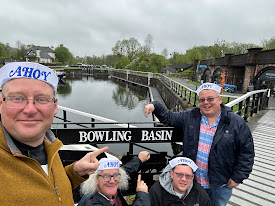
Bowling Basin: Where the Canal Meets the Clyde

At the western end of the Forth & Clyde Canal lies Bowling Basin, where the sheltered inland waterway meets the broad tidal waters of the River Clyde.

Once a busy industrial harbour, the basin has been transformed into an attractive destination for walkers, cyclists and visitors. Its railway heritage, regenerated arches and expansive views make it a fascinating place to explore—but we could not help feeling that it deserves to welcome many more visitors by water.

Reaching the western end of the canal

After our Scottish waterways holiday, we visited Bowling Basin to see where the Forth & Clyde Canal completes its journey west.

The canal stretches across central Scotland, linking the Clyde with the Forth and creating a navigable route between the country’s east and west coasts. Bowling therefore feels like more than simply another canal basin: it is the threshold between inland cruising and considerably more adventurous tidal waters.

Standing beside the basin, we could look beyond the protective sea lock towards the Clyde and enjoy those wonderful views “doon the watter”.

A harbour shaped by industry

Bowling Basin was once a thriving centre of trade, boatbuilding and industry.

Canal boats brought goods westwards to meet vessels using the Clyde, while the surrounding railways connected the harbour with Scotland’s expanding industrial network. The surviving railway arches, disused tracks and swing bridge all provide reminders of the basin’s working past.

Although the commercial traffic has largely disappeared, its history remains clearly visible. This is not a heritage site preserved behind barriers; it is a landscape that has been adapted and given a new purpose.

A railway transformed

One of Bowling Basin’s most distinctive features is its former railway infrastructure.

The abandoned tracks and striking swing railway bridge have been incorporated into a linear park, allowing visitors to walk through parts of the site that were once dominated by industry. The old railway arches have also been restored and repurposed for small businesses and visitor facilities.

The result is an atmospheric mixture of canal, harbour and railway heritage. Rusting metalwork and old stone structures sit alongside improved paths, landscaped areas and modern activity.

It is regeneration that respects the site’s character rather than attempting to erase it.

Views “doon the watter”

The views from Bowling are tremendous.

Looking west, the Clyde opens towards Dumbarton and the distant hills, creating a dramatic contrast with the narrow, sheltered canal behind. The broad water and changing light give the basin an atmosphere unlike anywhere else along the Forth & Clyde Canal.

It feels simultaneously like the end of one journey and the beginning of another.

For generations of Glaswegians, travelling “doon the watter” meant heading along the Clyde towards the coastal resorts and holiday towns beyond. Standing at Bowling, it was easy to understand the enduring pull of that journey.

A destination deserving more boats

The regeneration work has helped establish Bowling Basin as a popular destination for walkers, cyclists and day visitors.

However, we would love to see more people arriving in the way that feels most appropriate: by boat.

More visiting boats would bring additional life and activity to the basin while strengthening its connection with the wider canal network. It could become a natural destination for boaters travelling west along the Forth & Clyde Canal, rather than simply somewhere to reach, turn around and leave.

With its history, views and restored surroundings, Bowling has all the ingredients needed to become one of Scotland’s most memorable waterways destinations.

Where canal, river and history meet

Our visit to Bowling Basin offered a fitting conclusion to our exploration of the Forth & Clyde Canal.

From the Falkirk Wheel and the journey into Glasgow to the open views across the Clyde, the canal had revealed engineering, industrial heritage and extraordinary contrasts throughout its length.

Bowling brings all those elements together. It is a canal terminus, a former industrial harbour, a regenerated public space and a gateway to the Clyde.

Most importantly, it is a place with enormous potential—both as a destination on land and as somewhere that could once again come alive with boats.